I first understood the charm of a Cape Cod kitchen during a weekend visit to a small coastal cottage where the kitchen seemed to hold the whole house together. The room had white cabinets, sun-faded wood floors, a blue striped towel near the sink, and a bowl of oranges sitting on the counter like it had been waiting for company. Nothing looked overly decorated, yet every detail felt intentional, warm, and quietly beautiful. I remember standing there with a cup of coffee, listening to the soft clink of dishes and thinking, this is what a kitchen should feel like.
Cape Cod kitchen decor has that rare ability to feel classic and fresh at the same time, which is probably why it never really goes out of style. It borrows from seaside cottages, New England architecture, old family homes, and relaxed coastal living, then blends everything into a look that feels bright, practical, and deeply comforting. You get crisp whites, soft blues, natural textures, beadboard walls, polished hardware, woven baskets, and just enough vintage character to make the space feel collected. The best part is that Cape Cod style does not ask your kitchen to be perfect; it asks it to feel loved.
When I think about classic Cape Cod kitchen decor ideas, I picture morning light sliding across shaker cabinets, a farmhouse sink full of fresh herbs, and a window curtain moving gently with the breeze. I picture a kitchen that welcomes sandy feet, busy breakfasts, quiet dinners, and late-night snacks without losing its easy grace. You do not need a beachfront home or a full renovation to bring this look into your space, either, which is pretty clutch if you want charm without a massive project. With the right colors, textures, finishes, and small decorating choices, you can create a fresh Cape Cod kitchen that feels timeless, coastal, and completely livable.
Start With Warm White Shaker Cabinets
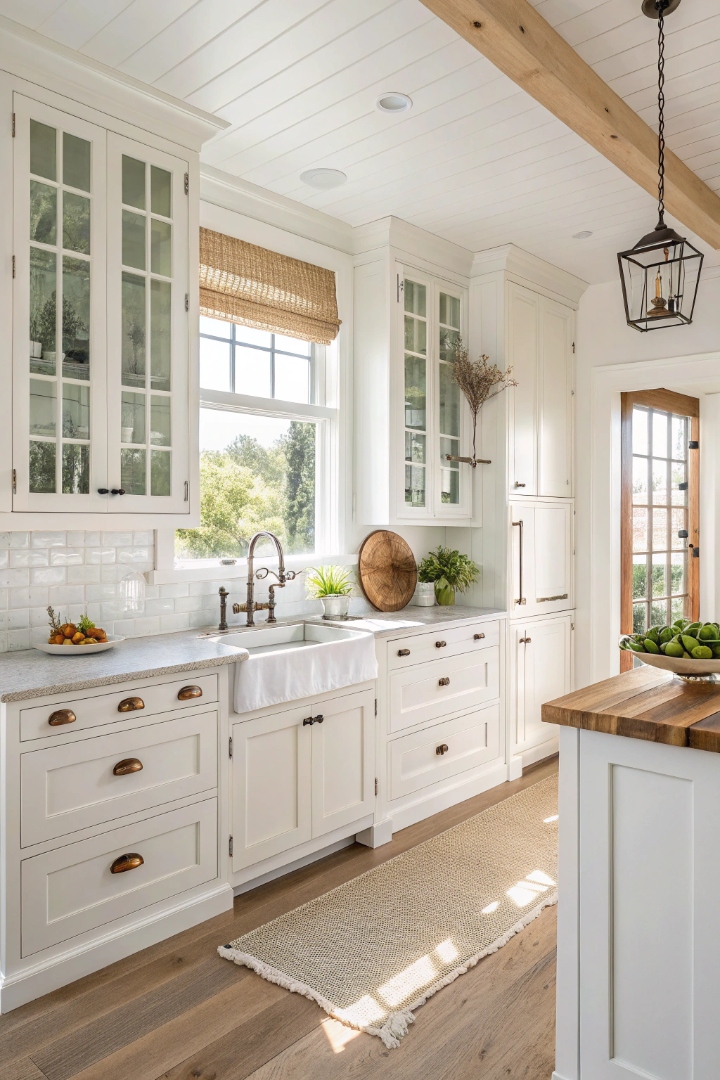
Warm white shaker cabinets create the classic foundation of a Cape Cod kitchen because they make the room feel bright, clean, and calm without looking cold. I love how their simple lines feel timeless, almost like painted cottage trim that has seen years of family meals and slow Sunday mornings.
The key is choosing a soft white with a hint of warmth, because harsh blue-white cabinets can make a coastal kitchen feel sterile instead of welcoming.
Pair them with light countertops, natural wood accents, and simple hardware so the whole space feels fresh but still grounded. Isn’t it amazing how one cabinet color can change the way the entire kitchen breathes, especially when sunlight hits the doors just right?
Pro Tip: Test white paint samples beside your backsplash and flooring before committing, because undertones can shift dramatically in natural light.
Add Beadboard For Cottage Character
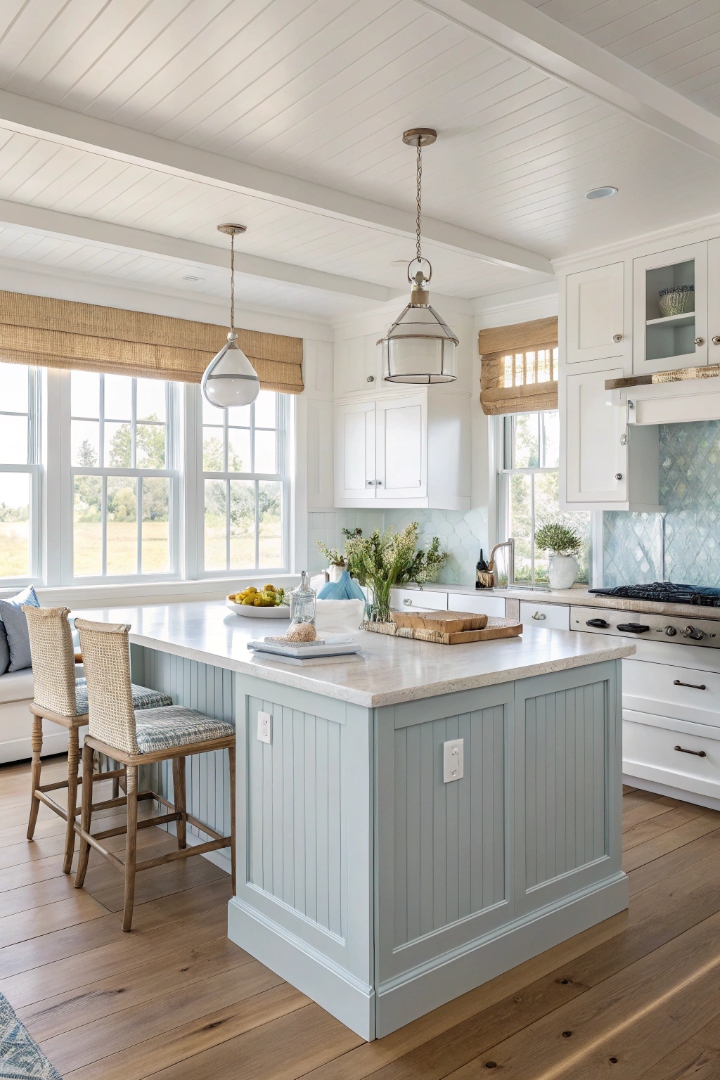
Beadboard brings instant Cape Cod personality because it adds texture, history, and cottage charm without overwhelming the kitchen. I always think beadboard looks especially lovely on island panels, backsplash areas, breakfast nook walls, or the sides of built-in cabinetry. Those slim vertical lines make the room feel taller and more detailed, while the painted finish keeps everything light and breezy. Use white beadboard for a traditional coastal look or soft blue-gray beadboard if you want a quiet color moment that still feels classic. It gives newer kitchens that collected-over-time feeling, like the room has a few summer stories tucked into every groove.
Pro Tip: Choose satin or semi-gloss paint for beadboard near cooking zones so splashes and fingerprints wipe away easily.
Layer Soft Ocean-Inspired Blues
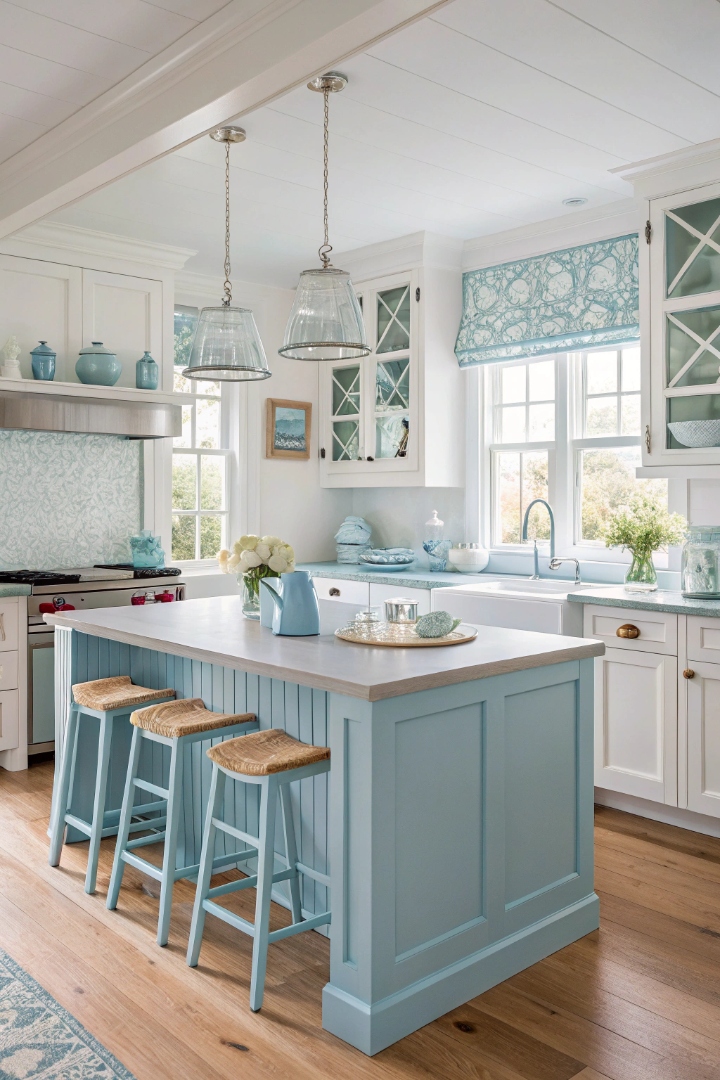
Soft blue accents bring that peaceful Cape Cod feeling into the kitchen without turning the room into a themed beach display. I love misty blue, faded denim, powder blue, sea-glass blue, and gentle gray-blue because they feel relaxed, natural, and timeless. You can repeat blue through bar stools, dishware, Roman shades, backsplash tile, island paint, or a vintage pitcher on an open shelf. The color looks especially beautiful beside white cabinets and warm wood, like sky meeting sand on a quiet morning walk. If navy feels too bold, a lighter sun-washed blue can still add depth while keeping the room soft and airy.
Pro Tip: Repeat your chosen blue shade in three small places so the kitchen feels cohesive instead of randomly decorated.
Warm The Room With Natural Wood
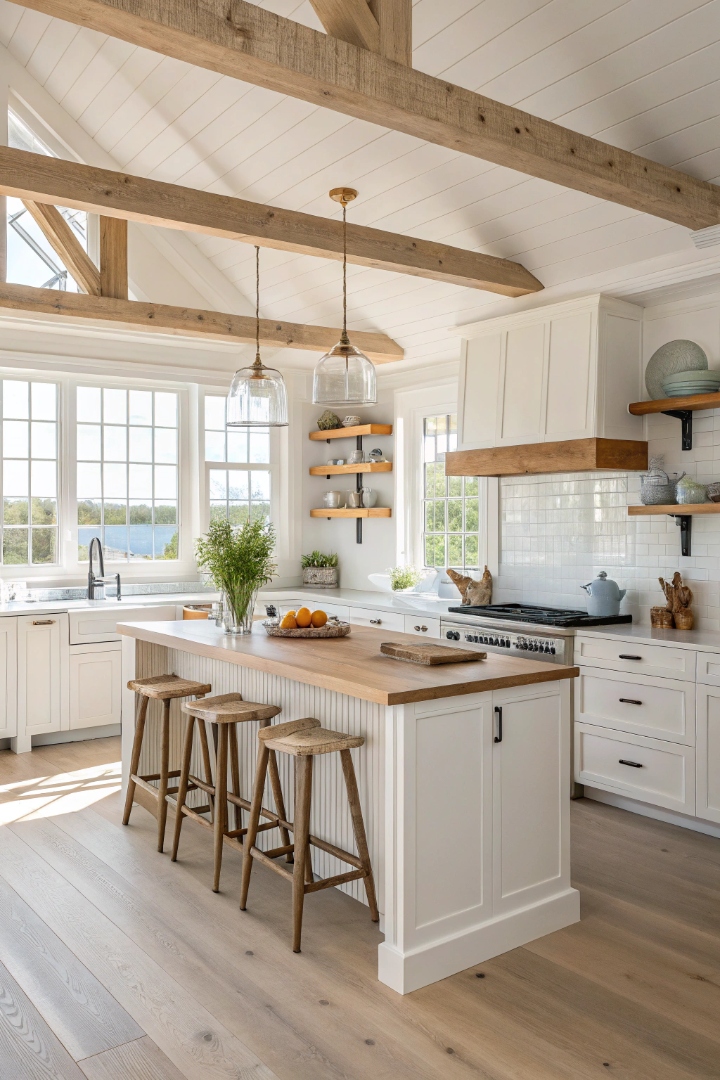
Natural wood keeps a Cape Cod kitchen from feeling too polished, too flat, or too perfect, especially when the room uses a mostly white palette. I love pale oak floors, butcher block details, wood stools, floating shelves, ceiling beams, and cutting boards because they add warmth and texture. The best wood tones feel like driftwood, old docks, sun-warmed porch steps, and weathered cottage floors under bare feet. Use matte or satin wood finishes so the kitchen feels relaxed and organic instead of glossy or overly formal. Without wood, an all-white kitchen can feel stiff, but with it, the space suddenly feels softer, friendlier, and more lived-in.
Pro Tip: Mix one large wood element with two smaller wood accents to create balance without making the kitchen feel heavy.
Make A Farmhouse Sink The Focal Point
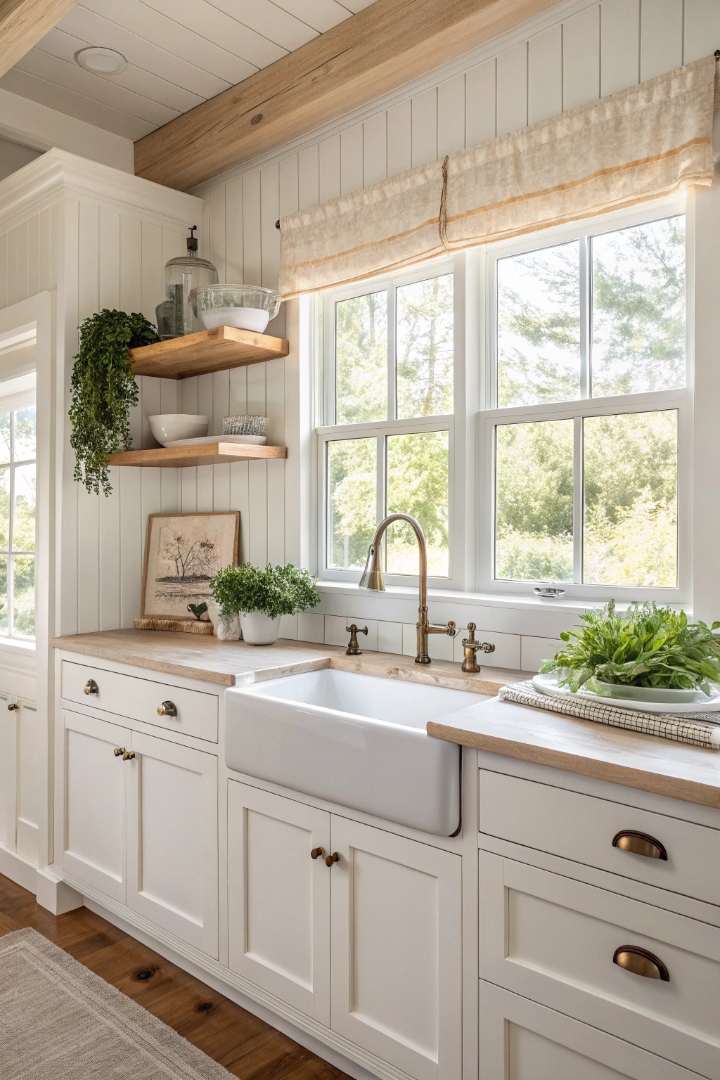
A farmhouse sink fits beautifully in Cape Cod kitchen decor because it combines old-fashioned function with easy cottage beauty. A deep white apron-front sink feels practical, charming, and ready for real life, from rinsing berries to soaking dinner plates after a busy meal. I love pairing a white fireclay farmhouse sink with shaker cabinets, a bridge faucet, and a window that lets in soft morning light. The bold front panel gives the kitchen a focal point, but it still feels humble and useful rather than flashy. Can you picture fresh herbs on the sill, a linen curtain moving slightly, and the sink catching that bright coastal glow?
Pro Tip: Confirm your cabinet size and support needs before buying, because farmhouse sinks often require special installation.
Choose Classic Nickel Or Brass Hardware
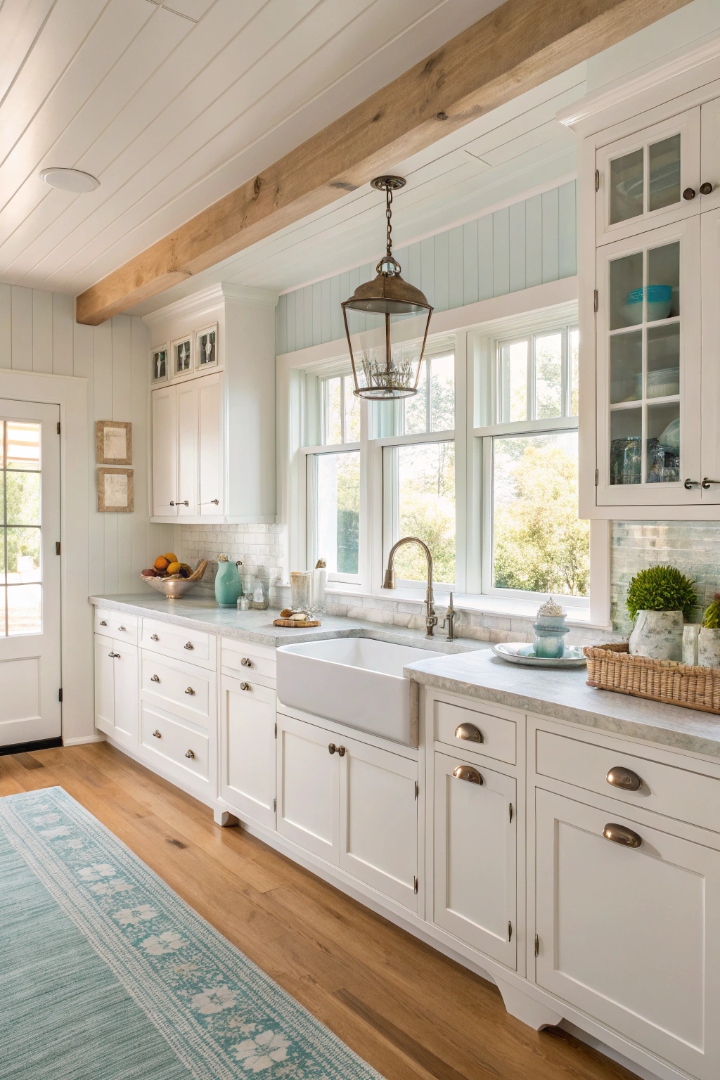
Cabinet hardware may look small, but it quietly sets the tone for a classic Cape Cod kitchen with fresh style. Polished nickel feels crisp, clean, and slightly nautical, while brushed brass adds warmth, age, and a soft vintage glow.
I love cup pulls, round knobs, and traditional cabinet latches because they make basic cabinets feel more custom and cottage-inspired. If your kitchen has lots of white and blue, brass can warm everything up, while nickel keeps the look tailored and breezy. This is one of those updates that looks expensive without requiring a full remodel, and yep, that is a win.
Pro Tip: Match your faucet, lighting, and cabinet hardware finish for a polished look, or mix only two metals with clear intention.
Style Open Shelves With Everyday Pieces
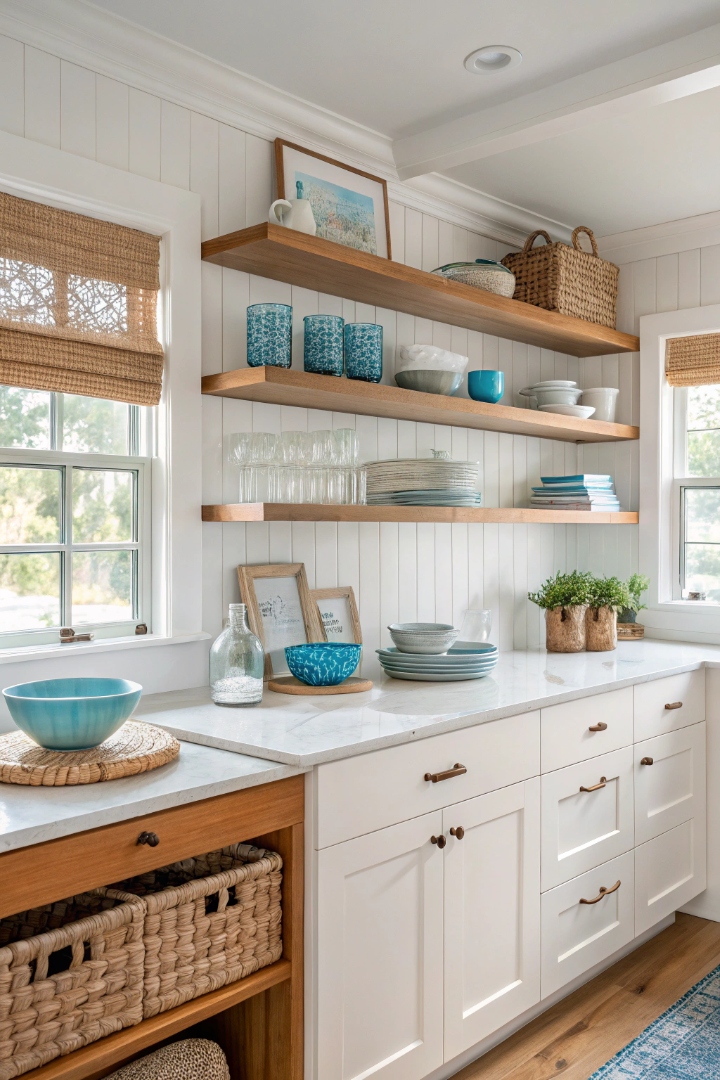
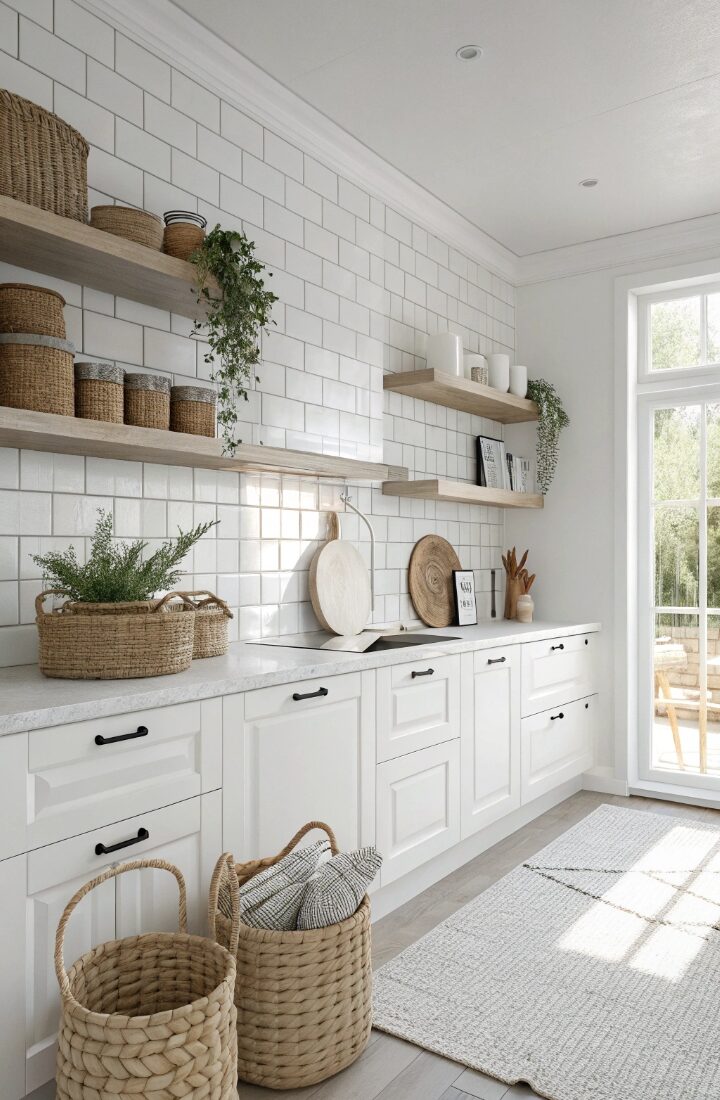
Open shelving can make a Cape Cod kitchen feel lighter, more personal, and more relaxed when you style it with pieces you actually use. I like shelves filled with white plates, clear glasses, blue bowls, cookbooks, woven trays, and a few small natural accents. The goal is not perfection; the goal is a breezy display that makes everyday dishes feel beautiful and easy to reach. Choose warm wood shelves or white painted shelves depending on whether your kitchen needs more texture or more brightness. Wouldn’t it feel sweeter to grab your morning mug from a charming shelf instead of digging through a crowded cabinet?
Pro Tip: Keep open shelves mostly functional, then add one or two decorative pieces so they stay useful and uncluttered.
Use Glass-Front Cabinets For Airy Storage
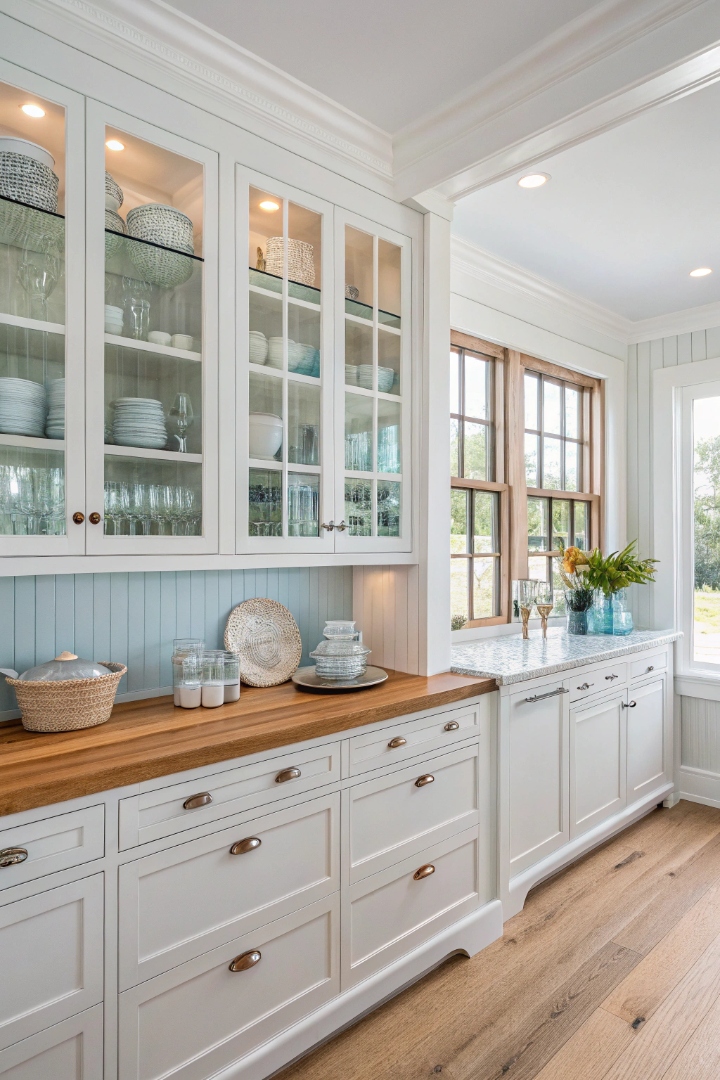
Glass-front cabinets give you the breezy feeling of open shelving while still keeping the structure and storage of traditional upper cabinets. They remind me of old coastal homes where dishes sat behind slightly wavy glass and the kitchen felt collected instead of designed overnight. Try clear glass, seeded glass, or reeded glass depending on how much you want to show or soften what sits inside. I love them near windows because they catch light and make the whole kitchen feel more open, especially in smaller layouts. If open shelving feels too exposed for daily life, glass-front cabinets offer a polished middle ground that still feels light.
Pro Tip: Store matching white dishes or clear glassware inside glass cabinets to keep the look calm and visually tidy.
Keep The Backsplash Simple And Bright
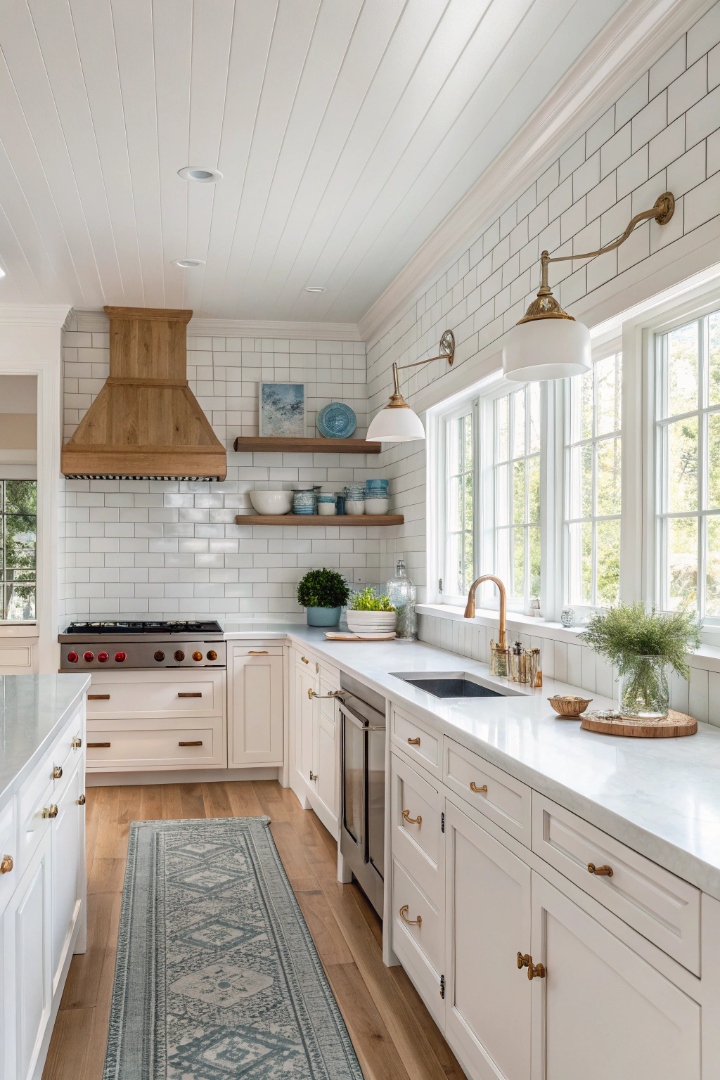
A simple backsplash keeps Cape Cod kitchen decor feeling clean, classic, and easy to live with through changing trends. White subway tile works beautifully because it reflects light, pairs with almost any cabinet color, and gives the kitchen a fresh coastal rhythm. I especially love slightly handmade-style subway tile because the uneven surface catches shadows and adds quiet character. Choose white grout for a seamless look or soft gray grout if you want the pattern to show gently. The backsplash should support the room, not steal the whole show, because Cape Cod style feels best when details work together.
Pro Tip: Use glossy tile in darker kitchens because it helps bounce natural and artificial light around the room.
Paint The Island A Coastal Color
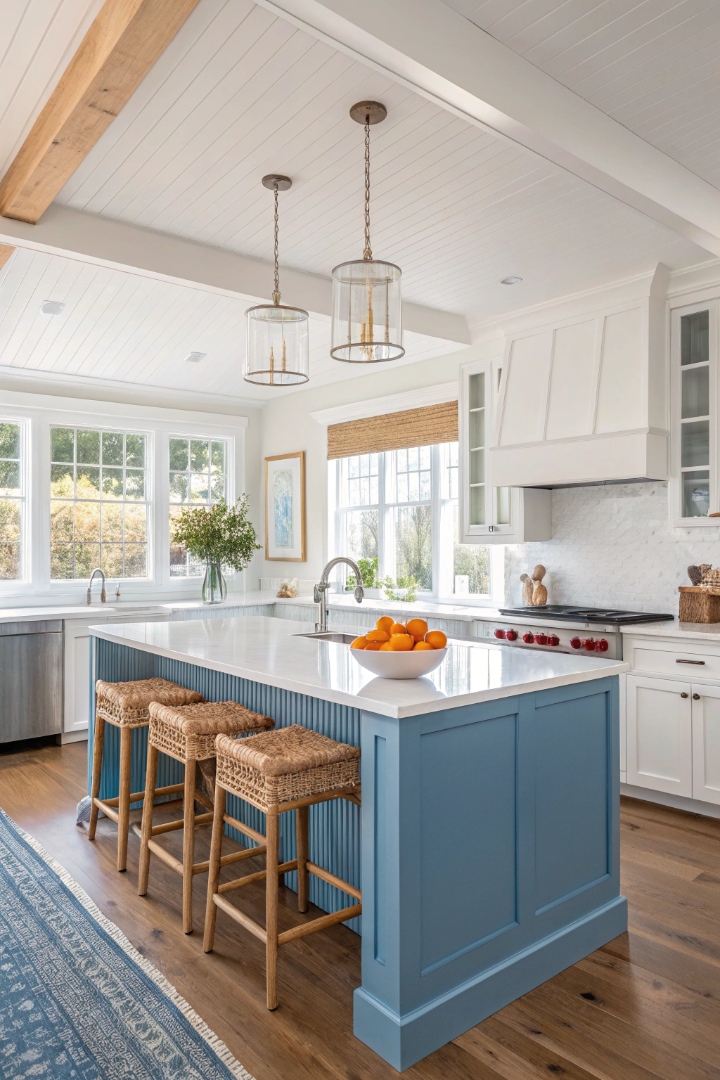
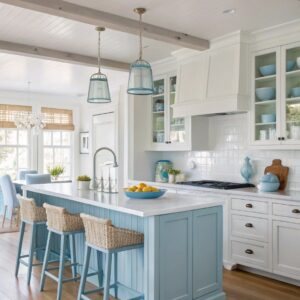
A painted island can give a Cape Cod kitchen depth, personality, and a fresh focal point without overwhelming the whole space. I love coastal blue, weathered gray, slate blue, soft sage, or muted blue-gray because these shades feel calm and timeless. Keep surrounding cabinets white so the island color feels intentional, like an anchor in the middle of all that brightness.
Top it with white quartz, marble-look stone, or warm butcher block for a clean yet welcoming finish. Imagine woven stools tucked underneath, a bowl of oranges on top, and sunlight making the paint color shift through the day.
Pro Tip: Paint a large sample board first and view it morning, afternoon, and evening before choosing your island color.
Bring In Woven Baskets And Natural Fibers
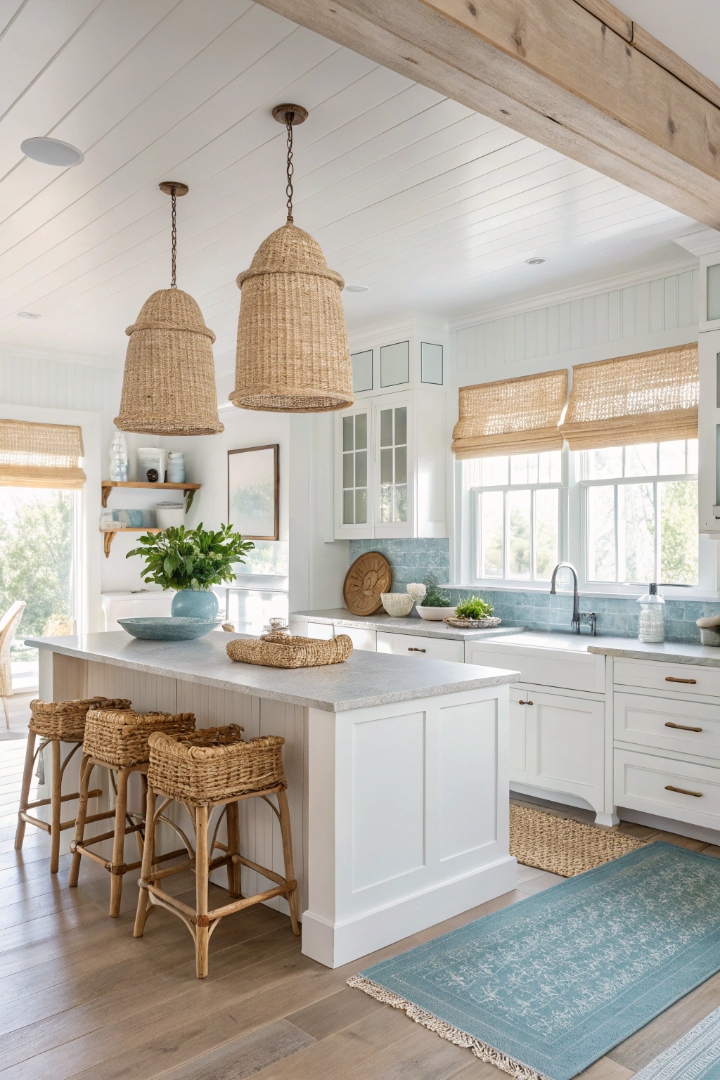
Woven textures add the relaxed coastal warmth that keeps Cape Cod kitchens from feeling too crisp or formal. I love rattan baskets, seagrass trays, cane stools, jute runners, bamboo shades, and woven pendant lights for this exact reason. They bring in that sandy, organic feeling that hints at the beach without needing shells or signs everywhere. Use natural fiber decor on shelves, counters, windows, and seating to soften painted cabinets and stone surfaces.
Texture gives the room movement, and honestly, it adds that barefoot-summer energy that makes a kitchen feel alive.
Pro Tip: Mix two or three woven materials in similar tones so the room feels layered but not chaotic.
Add Vintage-Inspired Lighting
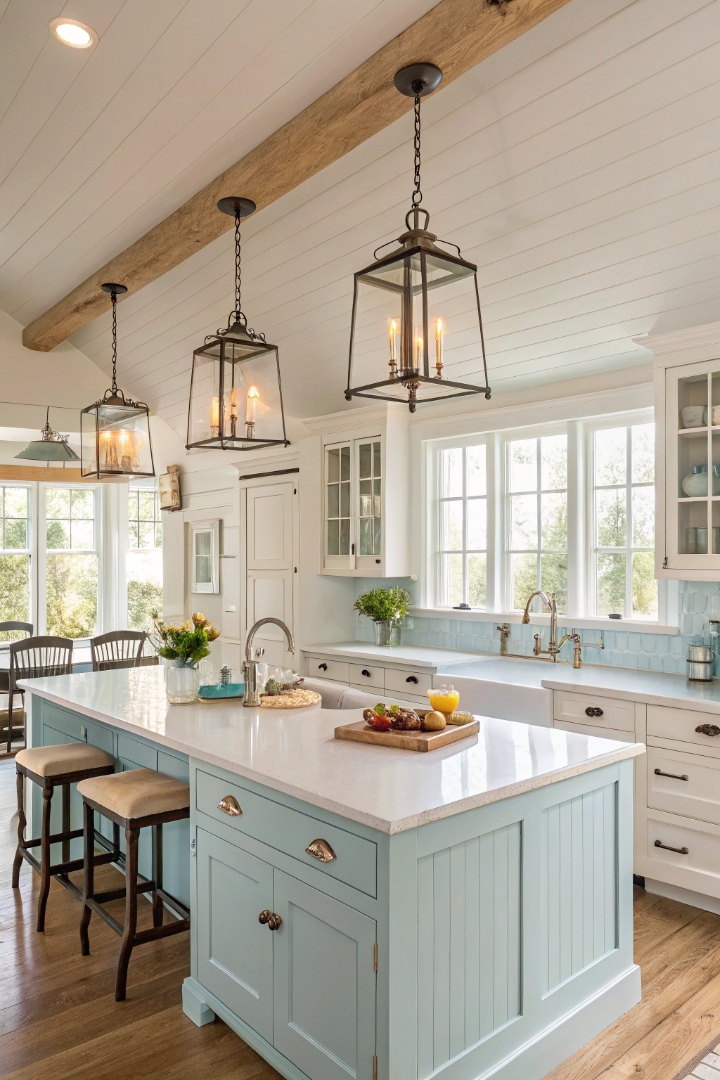
Vintage-inspired lighting can make a Cape Cod kitchen feel charming, historic, and thoughtfully finished in one simple move. Lantern pendants feel slightly nautical, while schoolhouse lights bring that classic New England character over an island or sink. I love milk glass, clear glass, aged brass, polished nickel, or simple black metal because each finish feels timeless in a coastal kitchen. Warm light in the evening can turn even a simple dinner prep moment into something soft and memorable. Have you ever noticed how the right pendant light makes a kitchen feel less like a work zone and more like a gathering place?
Pro Tip: Choose warm white bulbs so your kitchen feels cozy and flattering after sunset instead of harsh and clinical.
Decorate With Subtle Coastal Accents
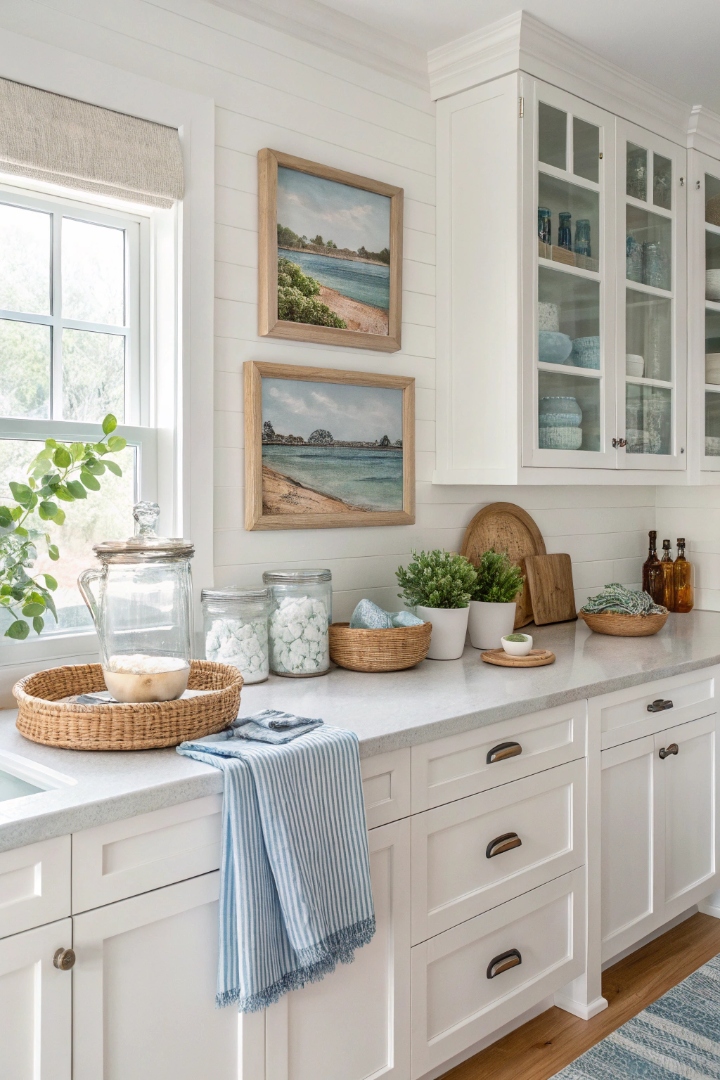
Subtle coastal accents work better than obvious beach themes because they let the kitchen feel elegant, relaxed, and personal. I prefer glass jars, striped towels, ceramic pitchers, wooden bowls, framed seascapes, linen napkins, and simple greenery. These pieces suggest the coast gently, like a memory of salt air, instead of turning the kitchen into a souvenir shop. Use one or two coastal decor moments and let light, color, texture, and natural materials do most of the storytelling. The result feels more expensive, more timeless, and much easier to update when the seasons change.
Pro Tip: Remove one decorative item after styling your counters, because Cape Cod decor usually looks best with a little breathing room.
Keep The Layout Open, Useful, And Welcoming
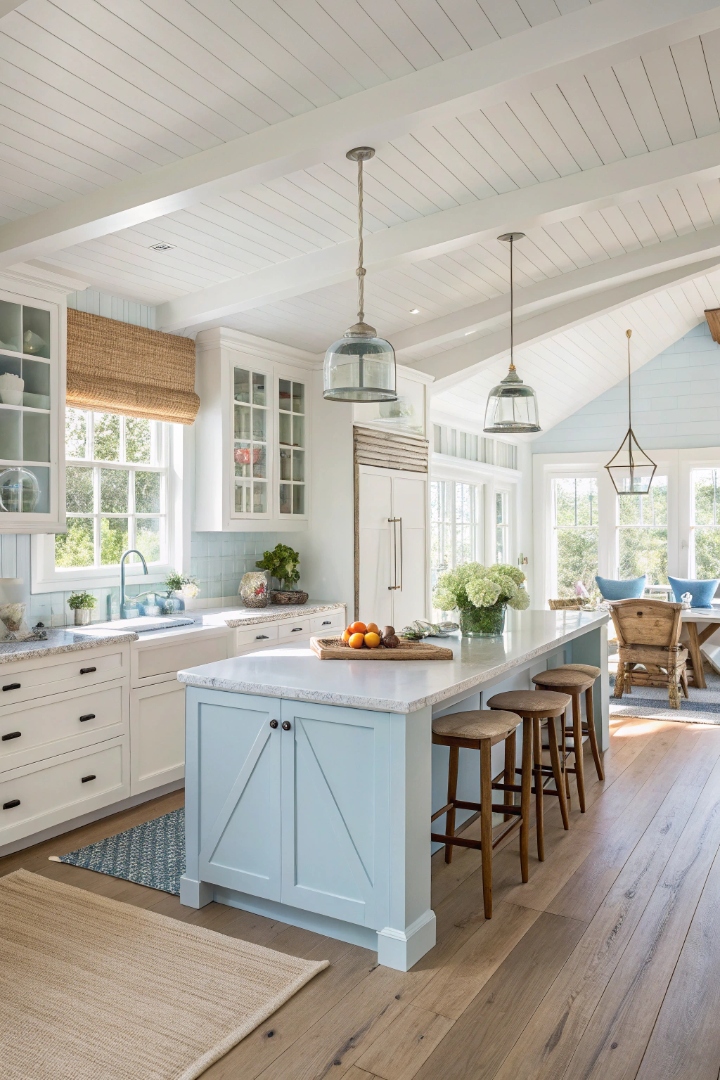
A beautiful Cape Cod kitchen should support real life, not just look pretty in photos, because coastal homes thrive on easy gathering. Clear counters, open walkways, smart storage, and cozy seating make the kitchen feel generous even when the footprint stays modest. I love island stools, breakfast nooks, window benches, and tidy prep zones because they invite people to settle in and stay awhile. Cape Cod style should welcome coffee spills, sandy feet, second helpings, and late-night conversations without feeling too precious.
When the layout works, the decor feels better too, because the whole room moves with your daily rhythm instead of fighting it.
Pro Tip: Improve storage and traffic flow before buying decor, because a practical kitchen always feels more peaceful and polished.
Conclusion
A classic Cape Cod kitchen does more than look bright and coastal; it changes the way the room feels when you walk in each morning. It invites you to slow down, open the curtains, pour coffee, and notice the sunlight on the cabinets before the day gets loud. The style works because it balances beauty with usefulness, softness with structure, and freshness with a sense of history. Every beadboard wall, woven basket, blue accent, and warm wood detail adds another layer of comfort. You do not need every idea at once to create that feeling in your own kitchen. You only need the details that make your space feel lighter, calmer, and more like home.
If your kitchen feels dark, dated, or disconnected from the rest of your home, Cape Cod decor gives you a gentle path forward. Start with one meaningful change, like new hardware, a painted island, open shelves, or a softer window treatment. Then build slowly, letting each choice add brightness, texture, and a little coastal ease. The freshest Cape Cod kitchens never feel forced; they feel collected, loved, and ready for real life. That is why this style keeps winning hearts year after year, from seaside cottages to everyday homes far from the water. A bright, classic kitchen can still carry the feeling of a breezy coastal morning, and that is a beautiful thing to bring home.
Leave a Reply