The first basement laundry room I ever used felt more like a forgotten storage corner than a place where anyone wanted to spend time, with one flickering bulb, cold concrete beneath my feet, and detergent bottles scattered across an old folding table. I remember carrying a heavy basket downstairs, stepping around boxes and dusty tools, and wondering why a chore I already avoided had to happen in such an uninspiring space. Eventually, I cleared the clutter, added better lighting, and created a simple shelf above the washer, and those small changes immediately made laundry days feel calmer and far less frustrating. That experience taught me that thoughtful basement laundry room ideas can transform even the darkest, most awkward space into a practical room that supports everyday routines.
Over the years, I have helped organize several basement laundry spaces, and I always notice how much easier chores become when storage, lighting, surfaces, and walking paths work together instead of competing for attention. One basement had exposed pipes and unfinished walls, yet a fresh coat of paint, warm bulbs, woven baskets, and a sturdy countertop made the room feel surprisingly welcoming without requiring an expensive renovation. The gentle hum of the washer, the clean scent of freshly folded towels, and the satisfying sight of supplies lined up neatly created a sense of order that made the entire basement feel better. Who says a hardworking utility room cannot also become one of the most organized and comfortable corners of the home?
The best basement laundry room ideas do not depend on perfect architecture, endless square footage, or a huge decorating budget, because practical improvements often create the biggest difference in how a room feels and functions. Maybe your laundry area sits beside a furnace, shares space with storage boxes, or occupies a narrow corner where every inch matters, but smart planning can still turn those limitations into opportunities. I have learned to focus on brighter lighting, useful vertical storage, comfortable flooring, dependable work surfaces, and small decorative touches that make the room feel intentional rather than forgotten. When a basement laundry room supports your routine instead of creating extra obstacles, washing, drying, folding, and organizing clothes suddenly feels much easier.
Brighten the Room with Layered Lighting
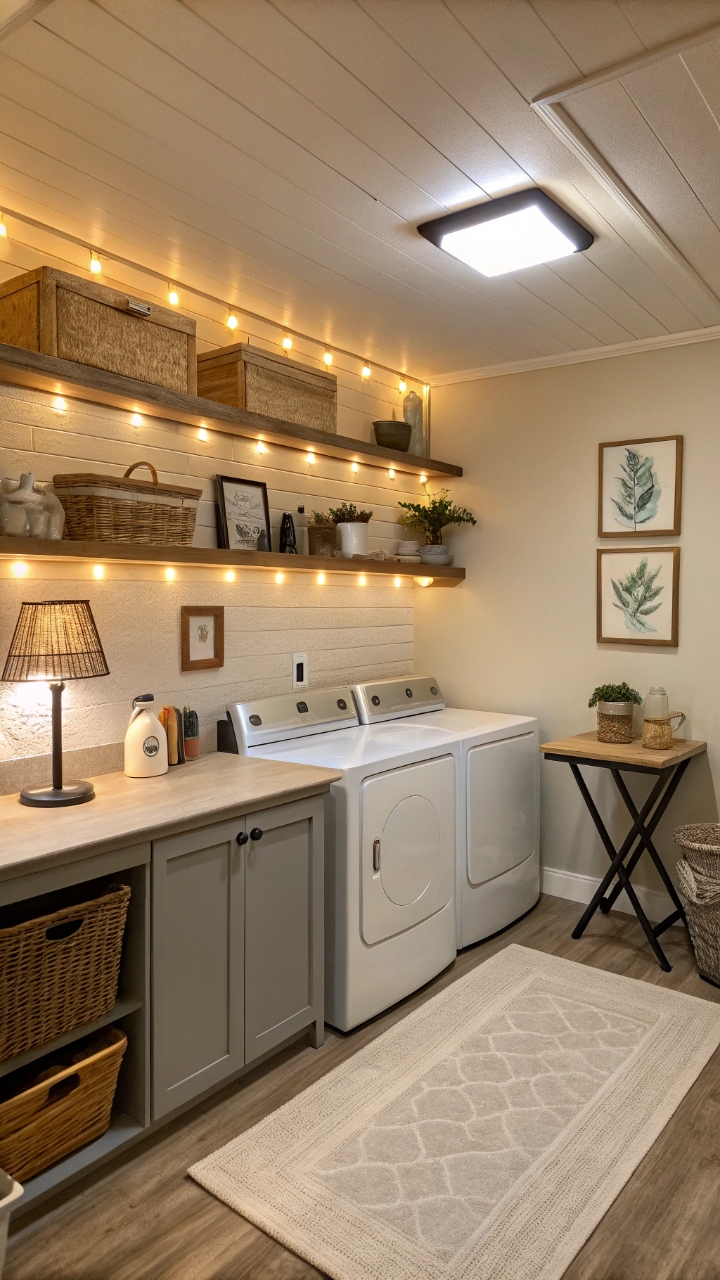
The fastest way I ever improved a gloomy basement laundry room involved replacing one harsh ceiling bulb with several layers of warm, practical lighting that made every corner easier to use. I installed bright overhead fixtures for general visibility, added under-shelf lighting above the folding counter, and placed a small lamp in a nearby storage corner to soften the room after dark. The difference felt dramatic because layered lighting removes deep shadows, improves visibility, and makes basement laundry rooms feel safer and more welcoming during early mornings or late-night loads. Why tolerate a dim utility space when affordable lighting upgrades can help you spot stains, match dark socks, and fold clothes without squinting beneath that sad, dungeon-like bulb?
Pro Tip: Choose LED bulbs with a warm-neutral color temperature between 3000K and 4000K for clear visibility without creating a cold, industrial atmosphere.
Install a Countertop Above Front-Loading Machines
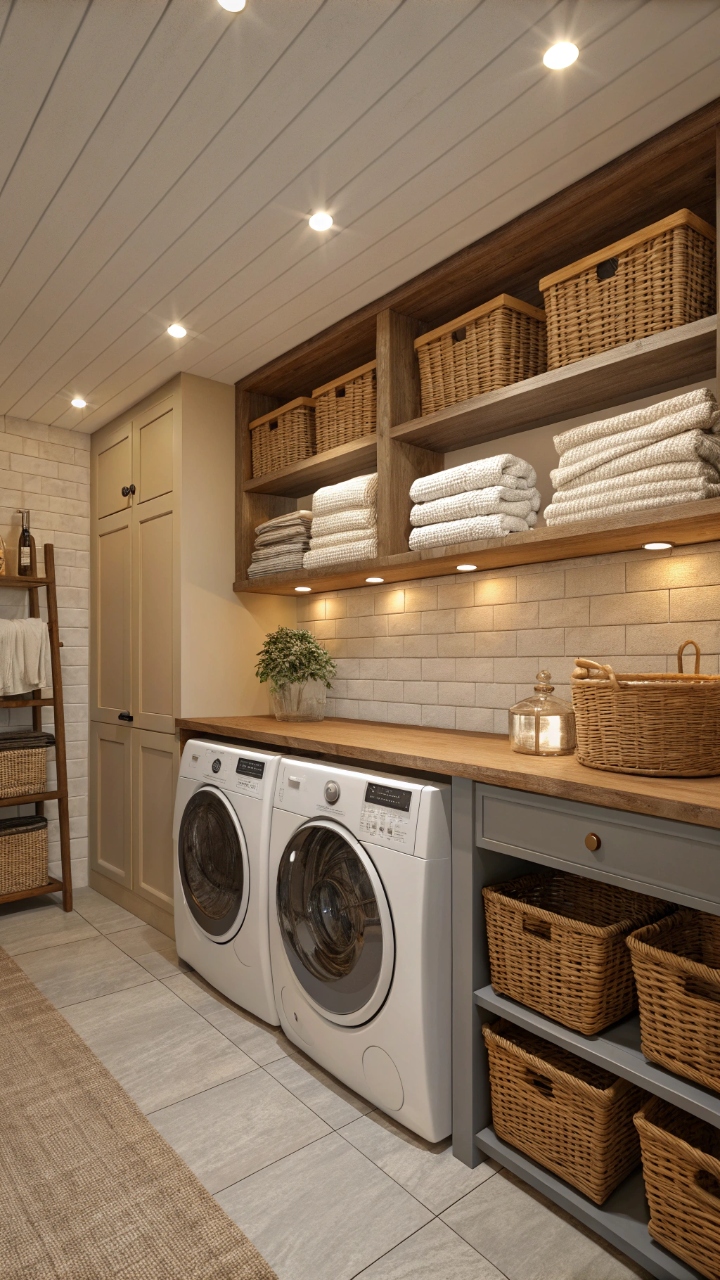
One of my favorite basement laundry room upgrades involved adding a smooth countertop above a side-by-side washer and dryer, instantly creating a generous folding station without using additional floor space. The sturdy surface gave me room to sort clean clothes, treat stubborn stains, stack baskets, and fold warm towels straight from the dryer before carrying them upstairs. I especially loved how a continuous countertop visually connects laundry appliances and makes an unfinished basement feel more polished and intentionally designed, while a wood surface adds warmth and laminate offers easy cleanup after spills. Is there anything better than finishing an entire load without balancing clothes on top of vibrating machines or searching for another place to fold them?
Pro Tip: Leave enough clearance around appliances and follow manufacturer ventilation recommendations so machines remain accessible for maintenance and repairs.
Use Open Shelves for Everyday Laundry Supplies
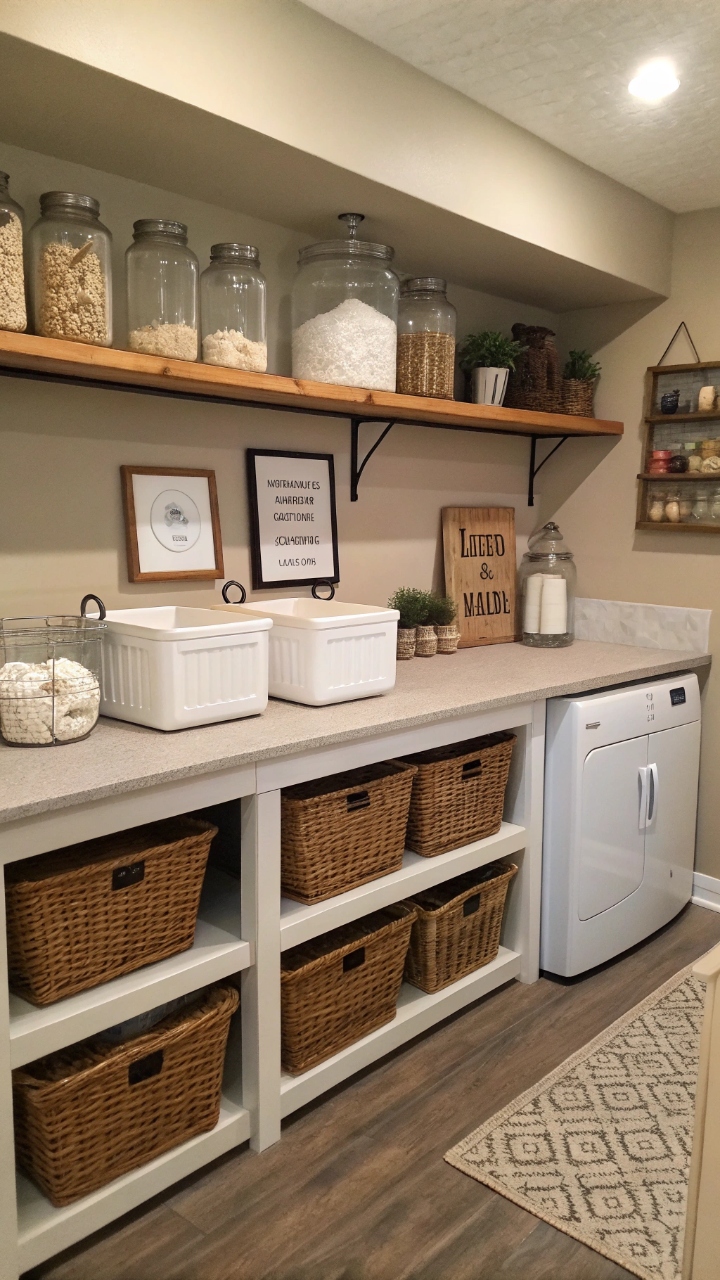
I once kept every detergent bottle, stain remover, and dryer product inside deep cabinets, and I wasted more time searching for supplies than I care to admit. Installing simple open shelves above the folding counter allowed me to keep frequently used products visible while storing them inside matching containers and easy-to-grab baskets. The arrangement worked beautifully because open shelving uses empty wall space, keeps essentials within reach, and prevents crowded countertops from slowing down laundry routines, while glass jars and woven baskets introduce texture without making the room feel overly decorated. Why dig through cluttered cabinets when a carefully organized shelf can show you exactly what you need at a glance?
Pro Tip: Place everyday supplies on the lowest shelves and reserve higher shelves for bulk refills, seasonal linens, and products you use less often.
Add Closed Cabinets to Hide Visual Clutter
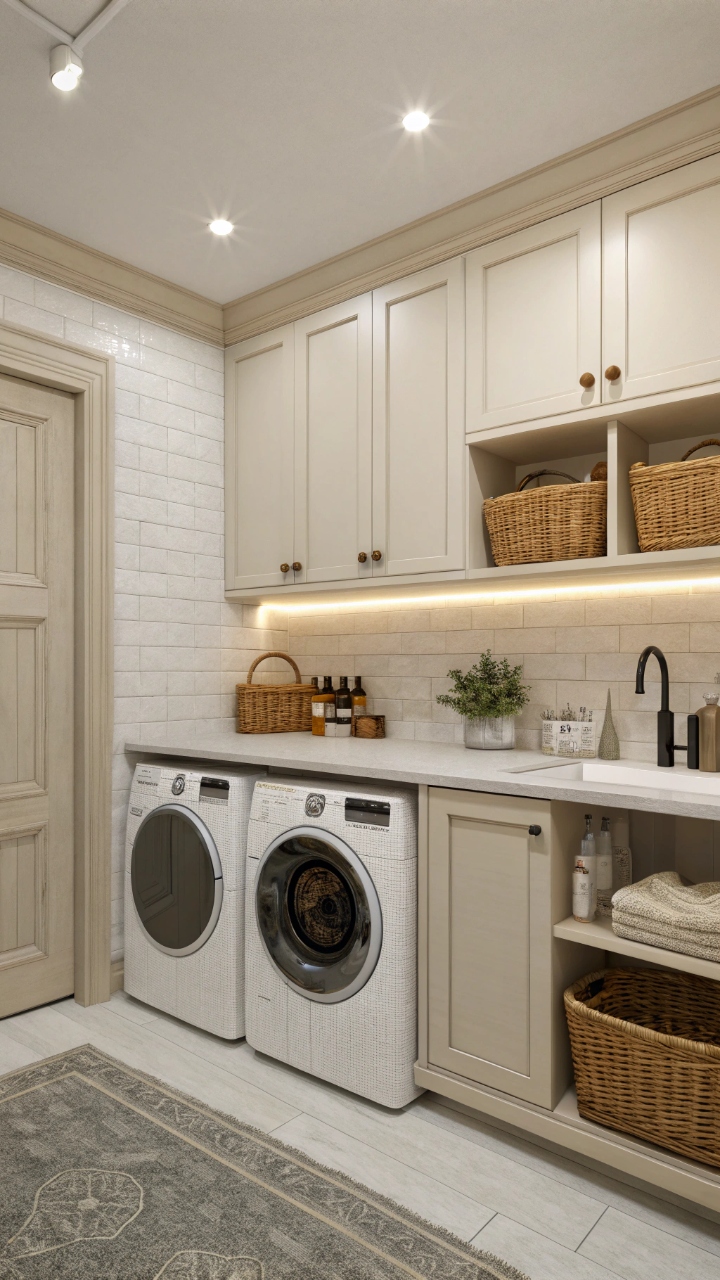
Although I love attractive open shelving, I quickly learned that not every laundry supply deserves to sit on display, especially bulky detergent refills, cleaning products, and mismatched household extras. Closed cabinets helped me create a calmer basement laundry room by hiding those practical necessities behind simple doors while keeping the most frequently used items nearby. The improvement felt immediate because concealed storage reduces visual clutter and helps a busy utility space look cleaner, and I chose light-colored cabinets that reflected overhead lighting and made the low-ceilinged basement feel brighter and less cramped. Could a few cabinet doors really make chores feel easier when they prevent distracting piles from taking over every available surface? Absolutely.
Pro Tip: Install adjustable shelves inside cabinets so you can change the layout whenever your laundry products, cleaning supplies, or storage needs evolve.
Create a Dedicated Folding Station
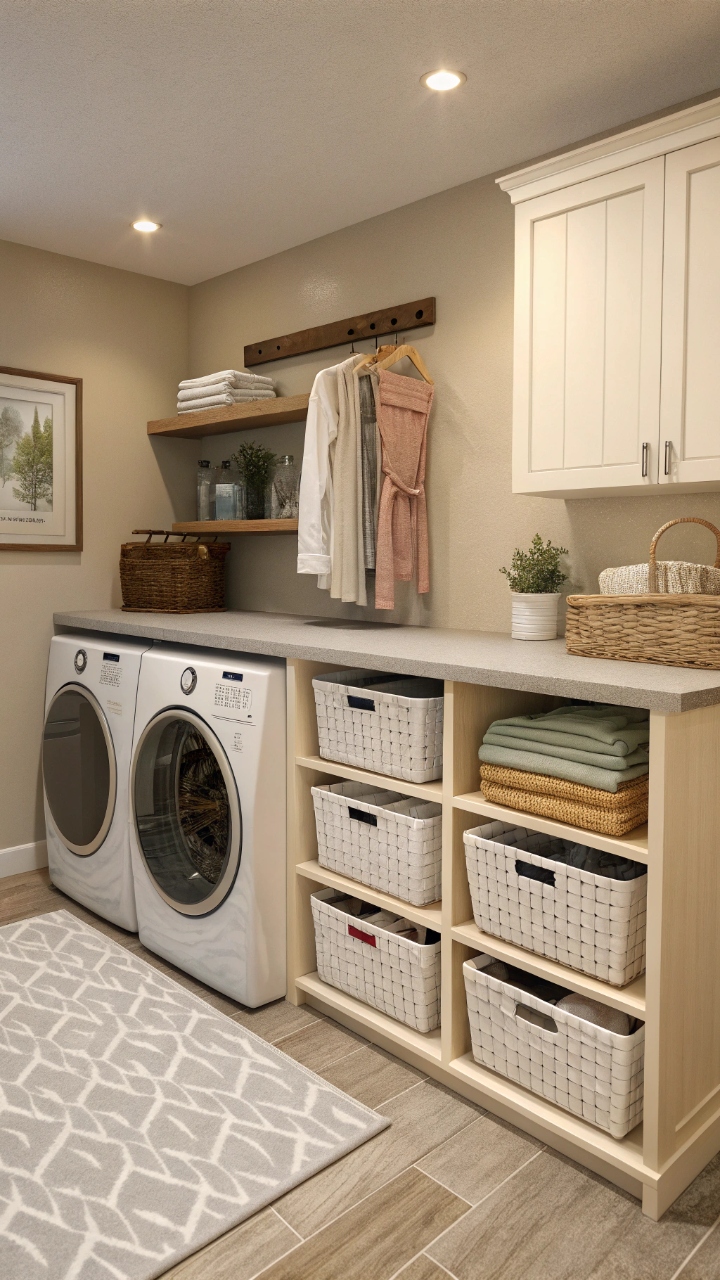
For years, I carried clean laundry upstairs before folding it, only to watch baskets sit untouched in the hallway because another task always seemed more urgent. Creating a dedicated folding station in the basement changed that habit by giving every warm load an immediate place to land, get folded, and return upstairs neatly organized. I added a waist-high counter, a small basket for stray socks, and divided bins for each family member, which made sorting and folding laundry faster, easier, and far less chaotic, while the smooth countertop and fresh cotton scent made the routine feel almost peaceful. Why create extra work by moving wrinkled clothes around the house when you can finish the job beside the dryer and call it a day?
Pro Tip: Build or choose a folding surface around waist height to reduce bending and make longer laundry sessions more comfortable for your back.
Hang a Wall-Mounted Drying Rack
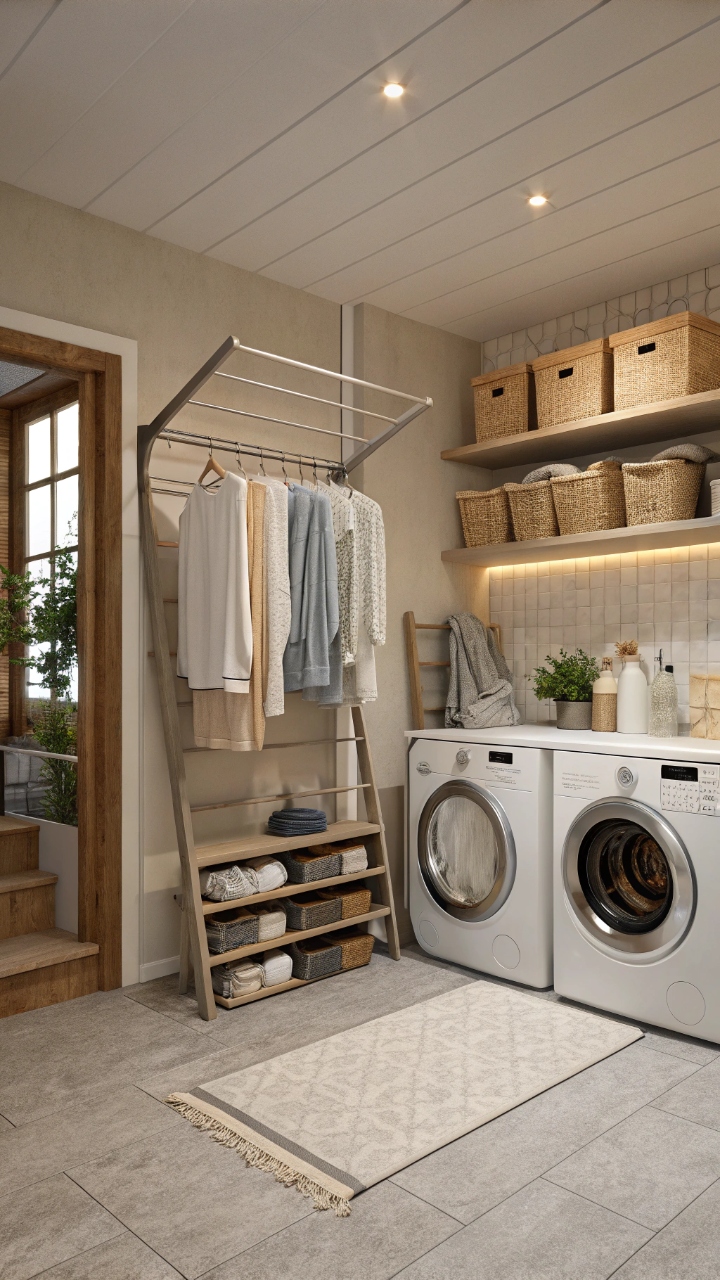
A bulky floor-standing drying rack once occupied half the walkway in my small basement laundry room, and I constantly bumped into it while carrying heavy baskets between machines. Replacing it with a wall-mounted drying rack opened the floor immediately while giving delicate sweaters, workout clothes, and damp towels a dependable place to air-dry. I especially appreciated how a fold-down drying rack provides useful hanging space when needed and disappears neatly against the wall when laundry day ends, leaving the basement easier to navigate and much less cluttered. Why surrender valuable basement floor space to equipment that can work just as effectively from an unused section of wall?
Pro Tip: Mount the drying rack near good ventilation or a dehumidifier while keeping electrical panels and essential utility equipment completely accessible.
Make Unused Wall Space Work Harder
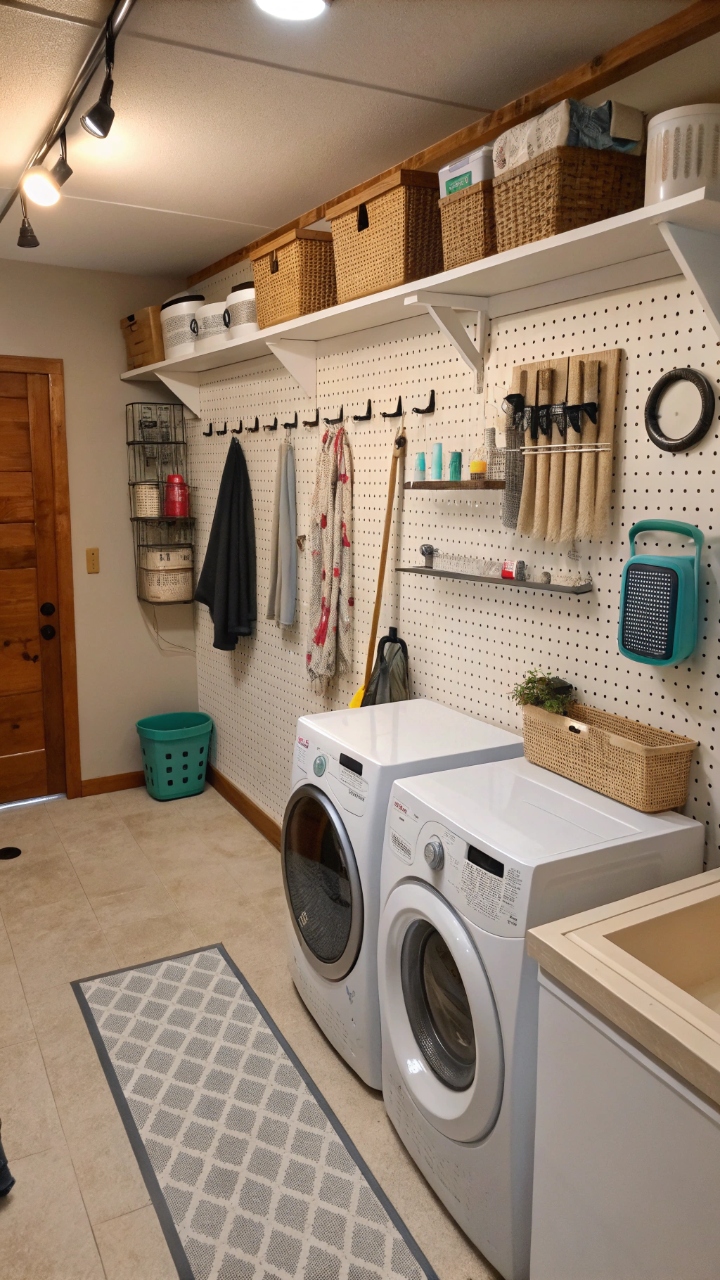
Basement laundry rooms often have awkward stretches of empty wall, and I learned that ignoring those surfaces usually leads to clutter piling across floors, machines, and folding counters. I installed pegboards, sturdy hooks, narrow shelves, and wall-mounted organizers to hold ironing tools, cleaning brushes, reusable bags, and lightweight laundry baskets. These additions made a surprising difference because vertical storage frees valuable floor space and keeps frequently used household items visible, organized, and easy to reach, even in tight basement layouts. Could the walls already surrounding your laundry area solve half of your storage problems without requiring another bulky cabinet?
Pro Tip: Group wall storage by task so laundry tools, cleaning supplies, and household extras stay in separate zones that remain easy to maintain.
Warm Up Concrete Floors with Practical Flooring
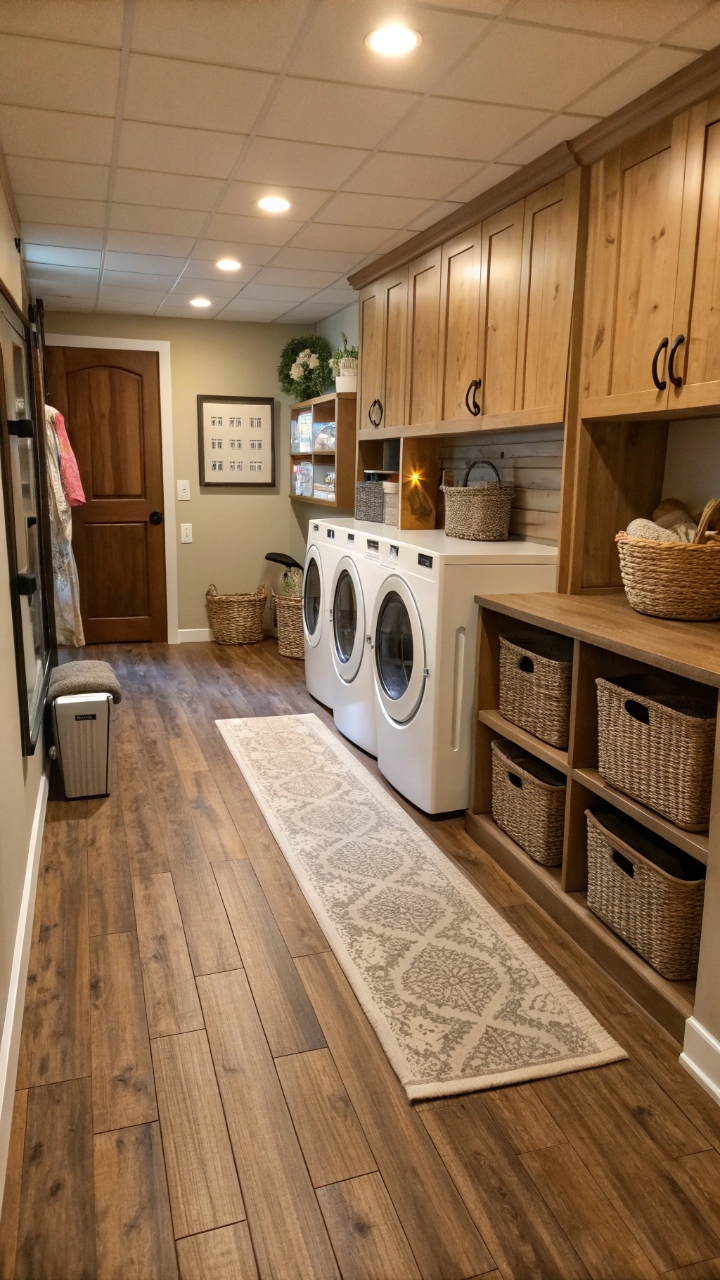
The cold concrete floor in my first basement laundry room made every winter laundry session feel uncomfortable, especially when I hurried downstairs wearing thin slippers. I eventually added waterproof luxury vinyl flooring and a washable runner, and the room immediately felt warmer, quieter, and more connected to the rest of the house. Choosing moisture-resistant basement flooring improves comfort while protecting the room from splashes, damp conditions, and everyday wear, while wood-look finishes can add natural warmth without demanding complicated maintenance. Why accept a cold, unfinished floor when practical materials can improve both appearance and daily comfort without turning the project into a major renovation?
Pro Tip: Choose flooring rated for below-grade installation and address existing moisture problems before covering concrete with any finished flooring material.
Add a Utility Sink for Messy Household Tasks
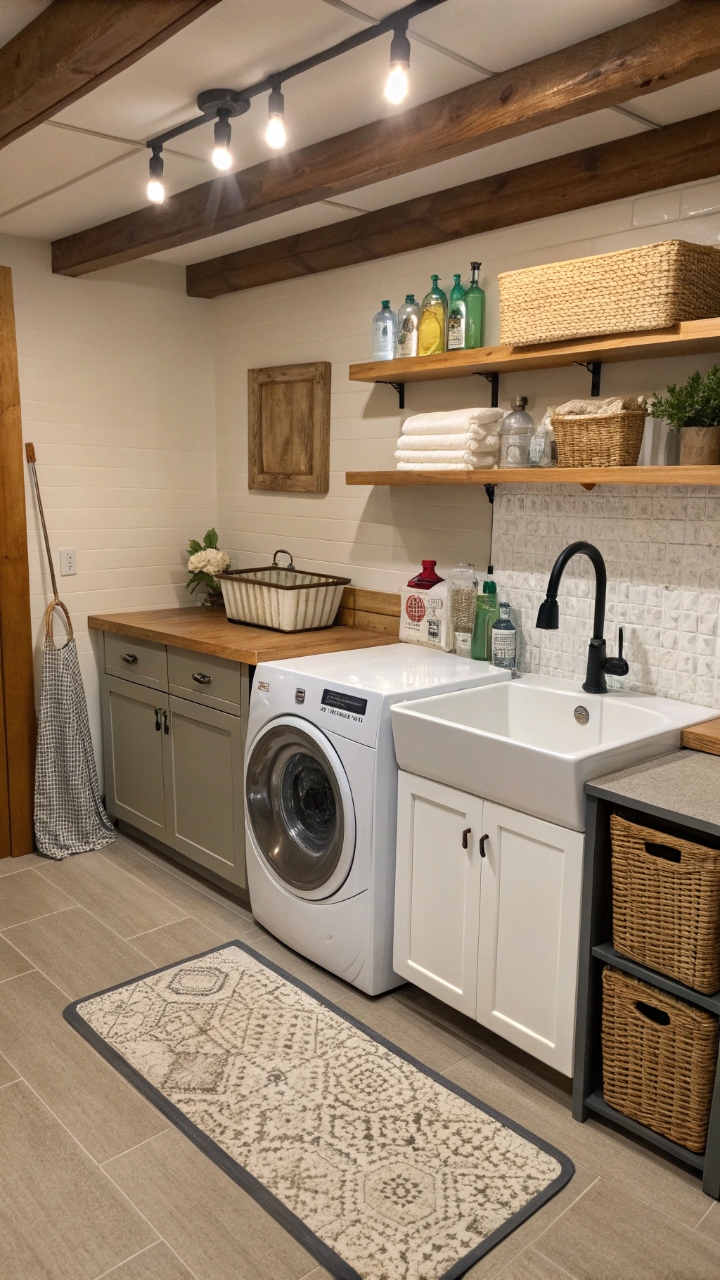
After installing a deep utility sink beside the washing machine, I wondered how I had managed muddy shoes, paintbrushes, hand-washed sweaters, and stubborn stains without one. The sink created a dedicated place for messy household jobs and prevented me from carrying dripping items upstairs through hallways and kitchens. I chose a deep basin with a pull-down faucet because a functional basement laundry sink makes soaking, rinsing, stain treatment, and cleanup dramatically more convenient, while a washable mat nearby caught splashes and made standing more comfortable. Would you rather scrub muddy gardening tools in your kitchen sink or handle the whole messy job downstairs without stressing about splashes?
Pro Tip: Choose a deep sink basin and install a faucet with an extendable sprayer to make rinsing oversized items and cleaning the sink itself much easier.
Separate Laundry from Basement Storage
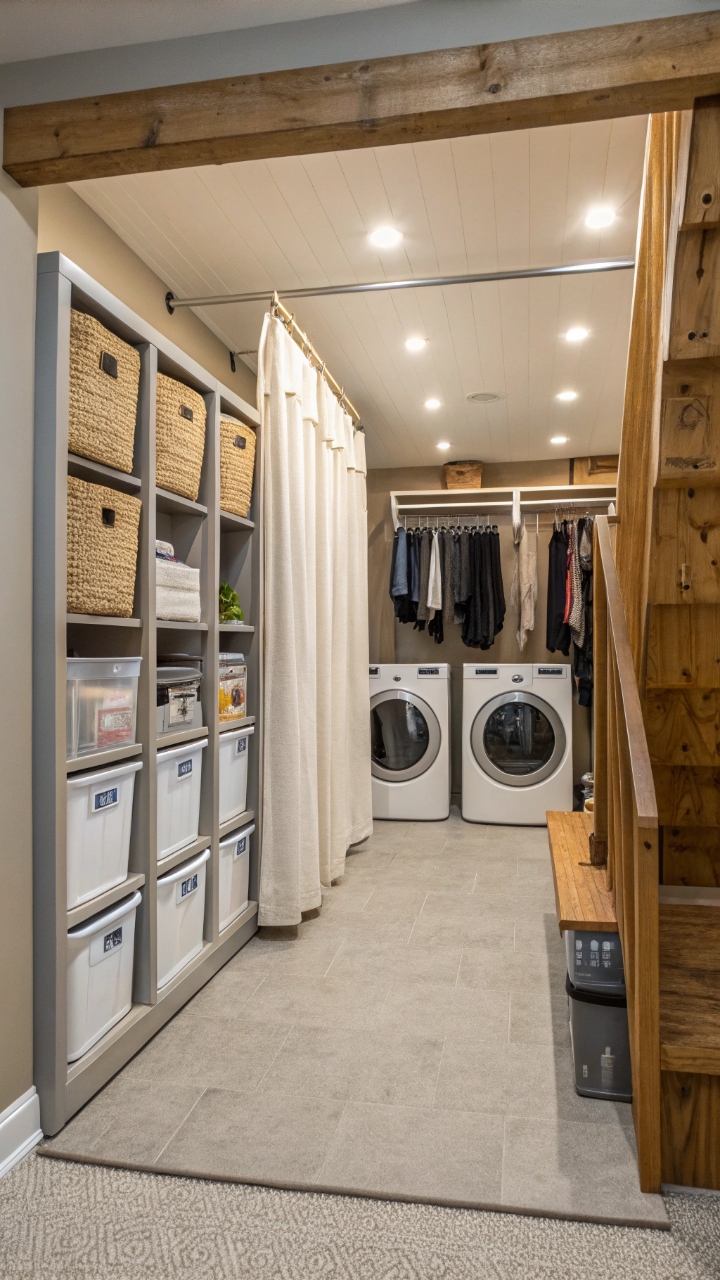
One basement laundry area I organized shared space with holiday decorations, sports equipment, old furniture, and enough mystery boxes to make every trip downstairs feel overwhelming. I created simple zones with freestanding shelves, labeled containers, and a curtain divider that visually separated laundry tasks from long-term household storage. The change worked because clear zones reduce distractions, improve walking paths, and help basement laundry rooms feel like purposeful spaces instead of cluttered storage areas, while making it easier to carry baskets safely between the stairs and machines. Why let unrelated storage creep into your laundry routine when a few simple boundaries can make the entire basement easier to navigate?
Pro Tip: Keep a clear walkway between the stairs, appliances, utility equipment, and storage areas so everyday movement and emergency access remain unobstructed.
Use Rolling Carts in Narrow Gaps
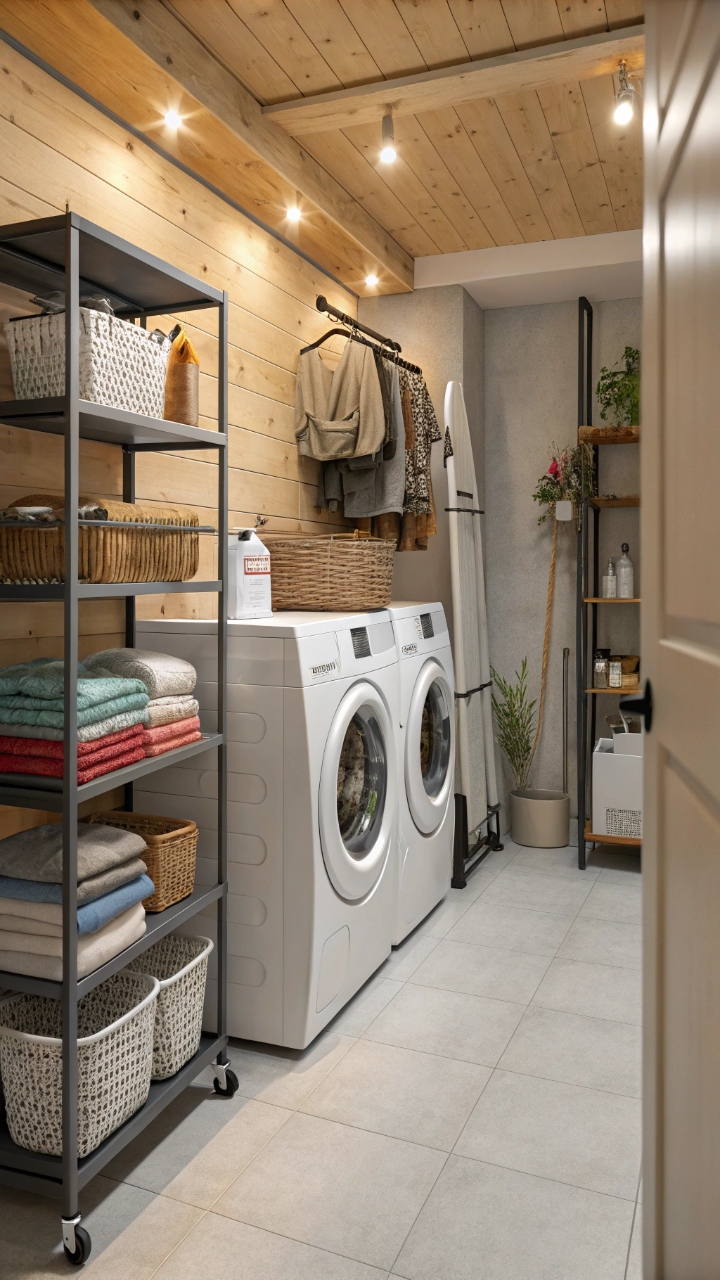
The skinny gap beside my washing machine once collected dust, missing socks, and empty detergent caps until I discovered a rolling cart narrow enough to slide inside. I filled the cart with stain removal products, cleaning cloths, mesh bags, and backup supplies, turning wasted space into one of the hardest-working storage spots in the room. The setup felt incredibly satisfying because slim rolling carts maximize narrow basement laundry rooms while keeping supplies portable, organized, and accessible during chores, and everything disappeared neatly once I pushed the cart back into place. Why waste those strange little gaps around appliances when a compact organizer can turn them into valuable storage without blocking the room?
Pro Tip: Measure the full gap, including baseboards and appliance connections, before buying a rolling cart so it slides smoothly without restricting airflow.
Create a Hanging Zone for Fresh Clothes
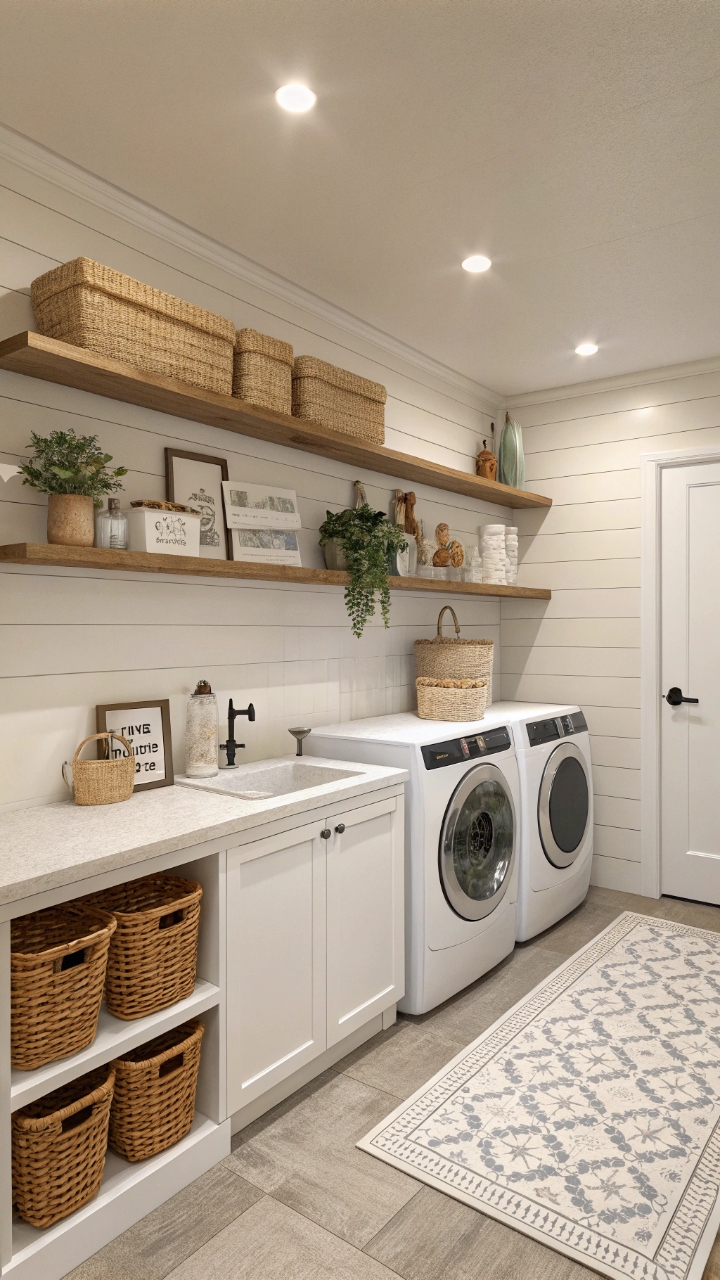
Nothing frustrated me more than carrying freshly dried shirts upstairs only to discover deep wrinkles after they sat folded awkwardly inside a crowded laundry basket. Adding a simple hanging rod above the counter gave me a place to hang shirts, dresses, jackets, and delicate pieces immediately after removing them from the dryer. This small improvement saved time because a dedicated hanging zone prevents wrinkles, supports air-drying, and keeps finished laundry organized before clothes return to closets, while the orderly row of clean garments made the whole room feel more efficient. Could one inexpensive rod really reduce ironing, prevent clothing piles, and make your laundry routine feel easier? You bet.
Pro Tip: Install the rod high enough for longer garments to hang freely while keeping the countertop below accessible for folding and sorting.
Paint the Basement Laundry Room a Lighter Color
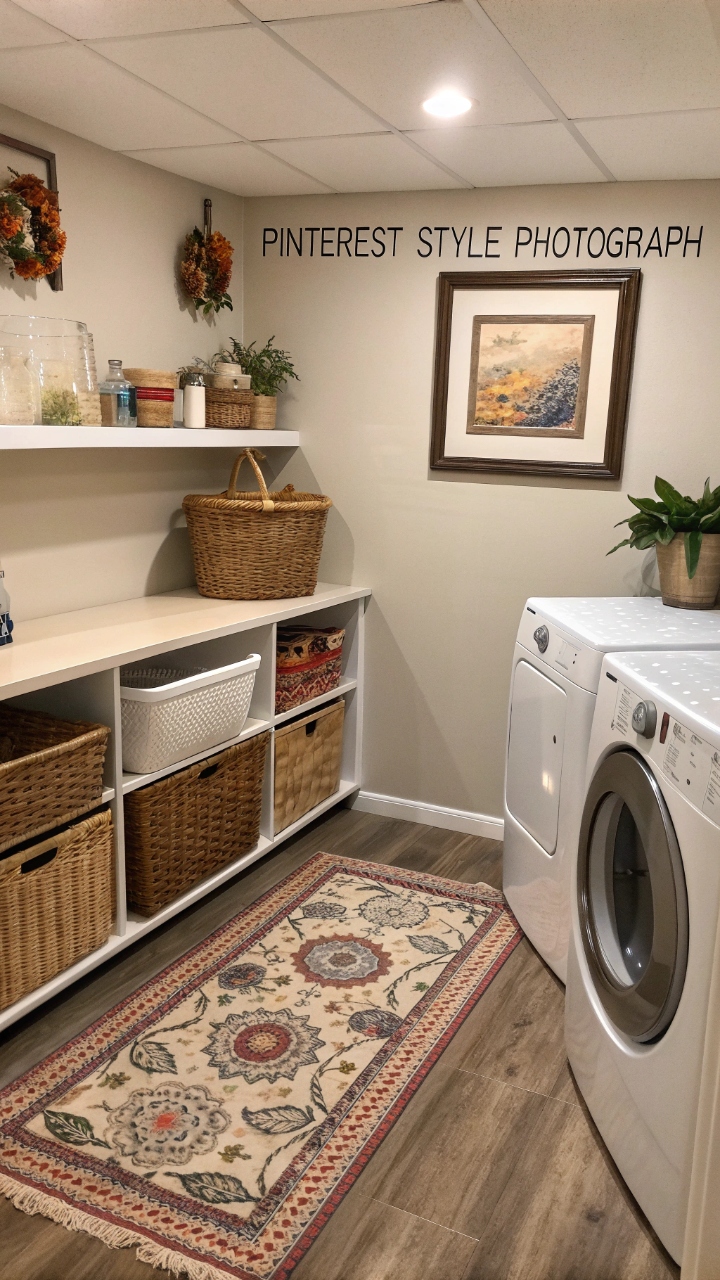
The unfinished gray walls in one basement laundry room absorbed every bit of light and made the space feel smaller, colder, and gloomier than it actually was. I painted the walls a soft warm white, and the brighter backdrop immediately reflected light around the room while making shelves, baskets, and appliances feel more coordinated. The transformation reminded me that light paint colors can visually expand basement laundry rooms and create a cleaner, fresher atmosphere without expensive structural changes, especially when soft greige, creamy white, pale sage, or gentle blue brings subtle personality into the space. Why underestimate a simple paintbrush when a weekend project can completely change the energy of a room where you spend hours every month?
Pro Tip: Use moisture-resistant interior paint designed for basement conditions and repair leaks, condensation problems, or damaged surfaces before painting.
Add Small Decorative Touches That Make You Smile
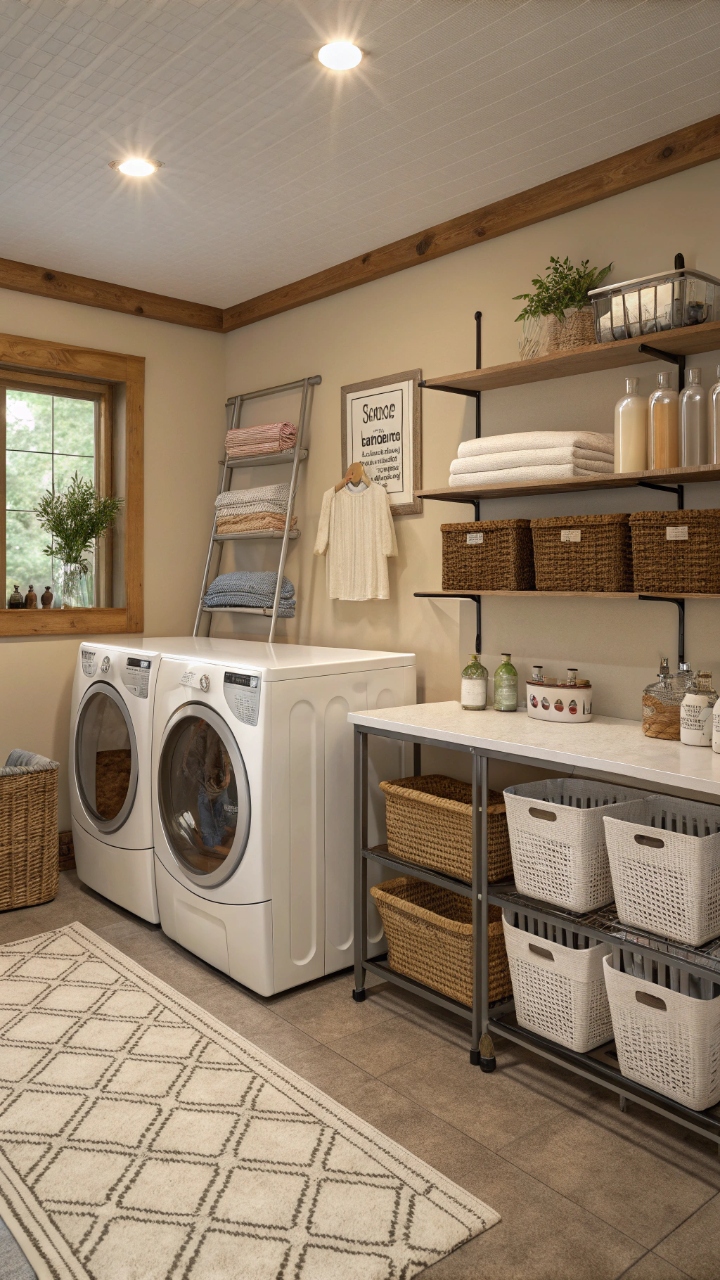
Once I solved the practical problems in my basement laundry room, I added a framed print, a small washable rug, two woven baskets, and a cheerful container for clothespins. Those details did not improve the washing machine or shorten drying times, but they made the room feel personal enough that I stopped rushing through every chore. I discovered that simple basement laundry room decor can create warmth and personality without sacrificing storage space or practical function, especially when a few carefully chosen pieces soften hard surfaces and connect the basement to the rest of the home. Why should kitchens and living rooms receive all the personality when laundry rooms support some of the most repetitive work we do every week?
Pro Tip: Choose only a few moisture-resistant decorations and keep counters mostly clear so personality never turns into another layer of clutter.
Finish Every Laundry Day with a Five-Minute Reset
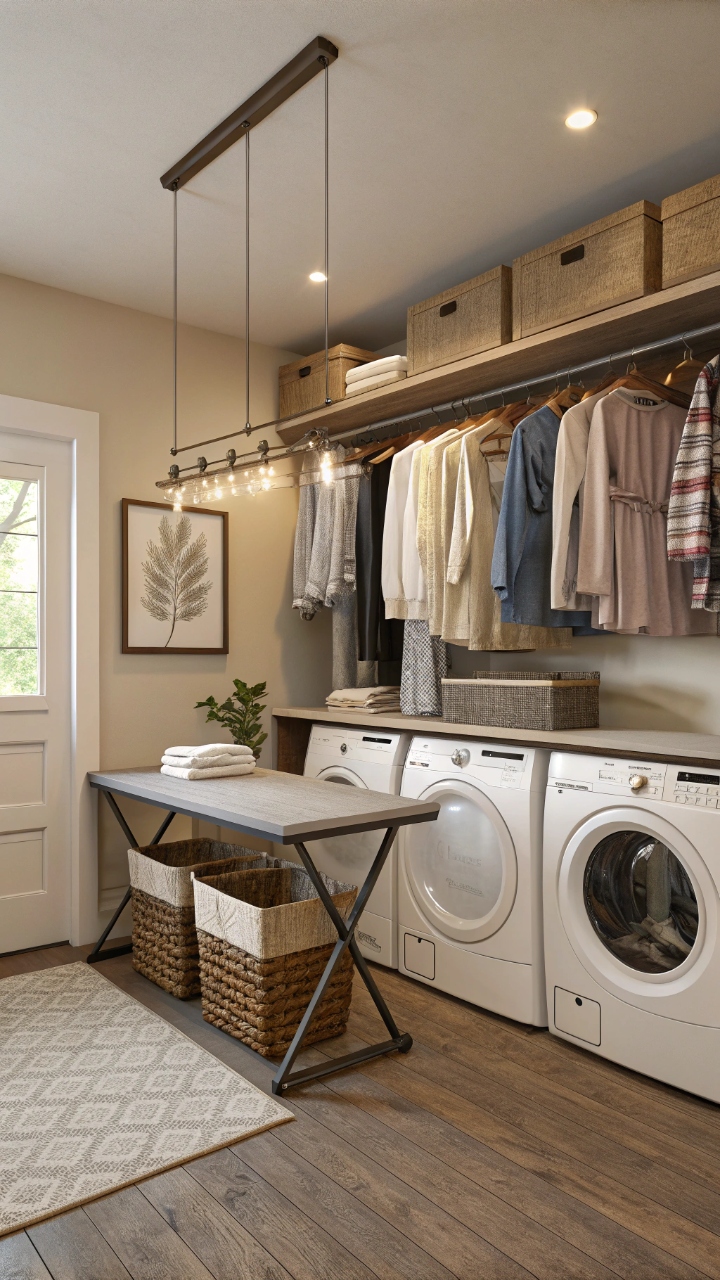
After trying countless basement laundry room ideas, I have learned that even the smartest organization system needs a simple routine to prevent clutter from slowly taking over again. I spend five minutes wiping appliance surfaces, returning supplies, emptying the lint bin, checking the drying rack, sweeping visible debris, and carrying finished clothes upstairs. The routine works because a quick laundry room reset keeps storage systems functional, prevents small messes from growing, and makes the next laundry session easier to begin, while the fresh scent, clear countertop, and neatly lined baskets give me a quiet sense of satisfaction. Could five focused minutes save you from facing an overwhelming basement mess at the end of a long, exhausting week? Without a doubt.
Pro Tip: Attach your reset routine to the final load of laundry each week so maintenance becomes a predictable habit instead of another forgotten household task.
Conclusion
Transforming a basement laundry room does not require perfect architecture, expensive finishes, or a massive renovation budget, because the most meaningful improvements often begin with solving everyday frustrations one at a time. Better lighting can make dark corners feel safer, a countertop can simplify folding, vertical storage can clear crowded floors, and comfortable flooring can make long laundry sessions surprisingly pleasant. I have watched neglected basement spaces become organized, welcoming rooms simply because someone decided that practical chores deserved a thoughtful environment too. Choose the basement laundry room ideas that solve your biggest problems first, then slowly add storage, comfort, and personality as your time and budget allow.
Every laundry room tells a story about daily life, and I think the best spaces embrace that reality instead of chasing a picture-perfect design that nobody can comfortably maintain. Your basement may have exposed pipes, low ceilings, awkward corners, or unfinished walls, but those challenges can inspire creative solutions that make the room more functional and uniquely yours. Start with one shelf, one brighter fixture, one clear countertop, or one five-minute reset routine, then notice how those small improvements gradually change the way you experience laundry day. When you create a hardworking basement laundry room that supports your household and respects your time, even ordinary chores can feel calmer, easier, and surprisingly satisfying.



Leave a Reply