A few years ago, I placed a small pot of basil beside my kitchen window because I wanted fresh leaves within reach while cooking, but I never expected that one little plant to completely change the atmosphere of the room. Every morning, sunlight filtered through the bright green leaves, the earthy scent of damp soil mixed with the aroma of coffee, and suddenly my ordinary countertop felt warmer, livelier, and much more personal. Before long, I added trailing pothos above the cabinets, tiny succulents near the sink, and a cheerful rosemary plant beside my cutting boards, turning everyday cooking into an experience surrounded by texture, color, and life. That simple transformation taught me that the best plant kitchen ideas do more than decorate empty corners because they create a calming connection to nature while making the heart of the home feel genuinely welcoming.
I have always believed that kitchens should feel lived-in rather than perfectly staged, and plants bring exactly the kind of relaxed beauty that makes a space comfortable enough for slow breakfasts, messy baking sessions, and late-night conversations. Whether you have a spacious farmhouse kitchen flooded with sunshine or a tiny apartment cooking area with limited counter space, there is always a creative way to introduce greenery without sacrificing valuable storage or functionality. I love how a single leafy plant can soften hard cabinetry, brighten a forgotten shelf, or create a refreshing focal point beside stainless steel appliances, and honestly, it is pretty cool how quickly the room starts feeling different. Once you begin experimenting with indoor plants in the kitchen, you may find yourself noticing every empty windowsill, bare wall, and unused corner as an opportunity to bring nature indoors.
Over the years, I have tried everything from hanging herb gardens to oversized floor plants, and I have learned that successful kitchen plant decor depends on choosing greenery that matches your light conditions, daily routine, and available space. Some plants thrive beside sunny windows, others happily trail from high shelves, and a few resilient varieties tolerate the humidity and changing temperatures that naturally come with cooking. The following plant kitchen ideas combine beauty with practicality, giving you inspiration for creating a fresh kitchen that feels lush without becoming cluttered or difficult to maintain. Ready to give your cooking space a little more life, personality, and natural charm while creating a kitchen you genuinely enjoy spending time in?
Grow Fresh Herbs Along a Sunny Windowsill
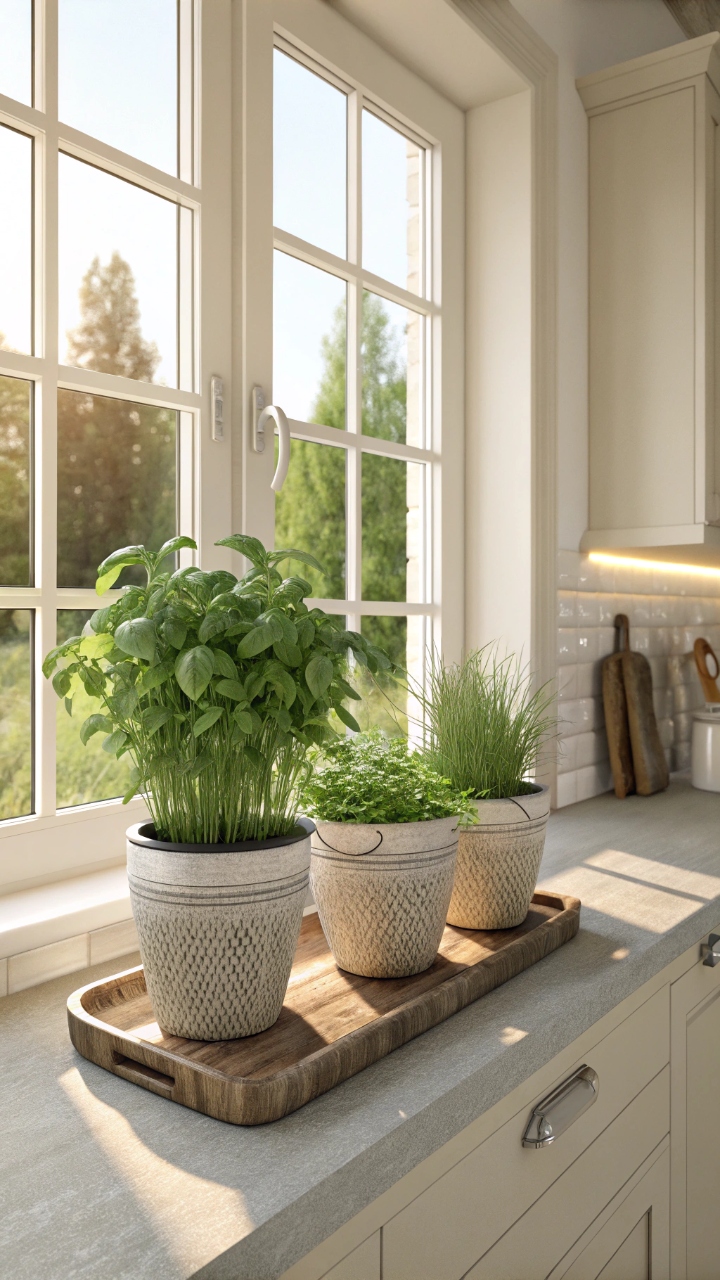
Nothing makes my kitchen feel more alive than a row of fresh herbs stretching toward the morning sunlight, especially when their bright leaves release a wonderful fragrance whenever I brush past them while opening the window. I like growing basil, parsley, mint, chives, and rosemary in simple matching pots because the coordinated containers create visual order while the different leaf shapes add plenty of natural texture. Imagine reaching across the counter while cooking pasta, pinching off fragrant basil leaves, and adding them directly to a bubbling tomato sauce—could kitchen decor get any more useful than that? A windowsill herb garden works beautifully in small kitchens because it turns overlooked space into a productive display without stealing precious countertop room. I rotate my pots every few days so each plant receives balanced sunlight, and this tiny habit helps them grow evenly while keeping the arrangement looking full and healthy.
Pro Tip: Choose containers with drainage holes and place a slim waterproof tray underneath them to protect your windowsill from moisture damage.
Let Trailing Plants Cascade from Upper Cabinets
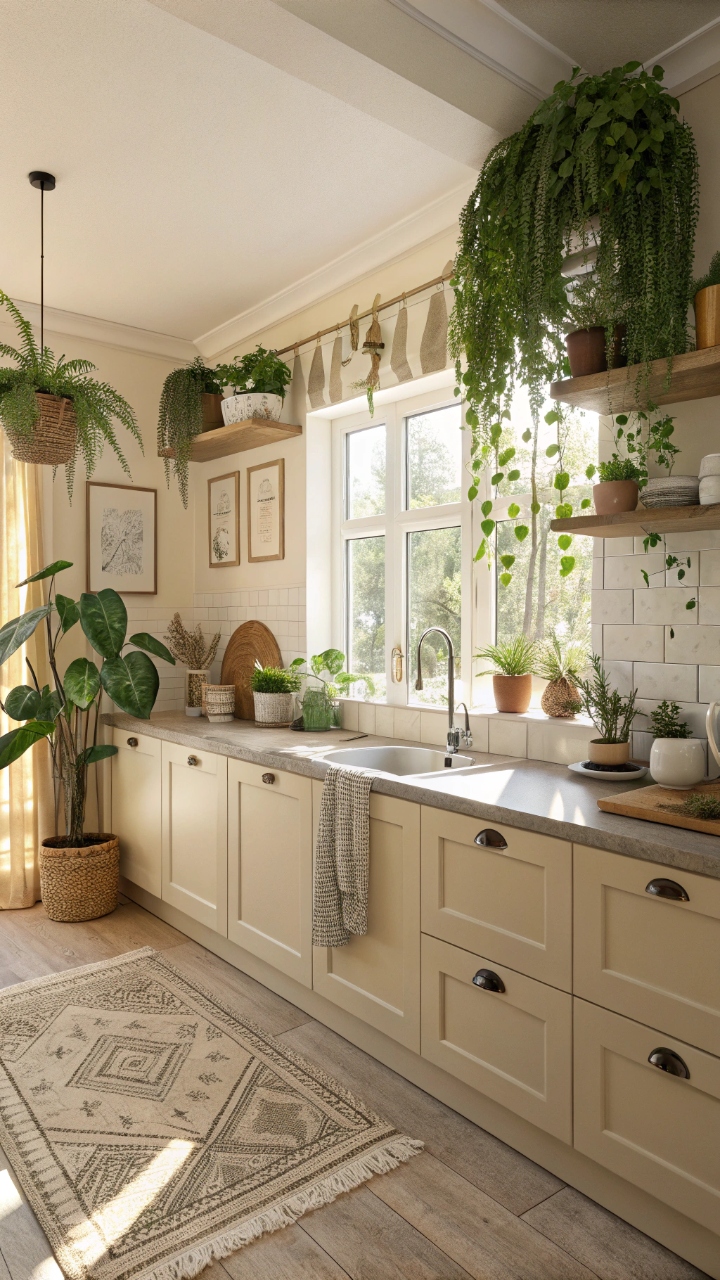
The empty space above kitchen cabinets once bothered me because decorative objects collected dust while storage baskets made the room feel visually heavy, but trailing plants finally gave that awkward area a purpose. I love placing pothos, heartleaf philodendron, and trailing peperomia in lightweight pots where their vines can spill gently over cabinet edges and soften the straight lines of the cabinetry. As the vines grow longer, they create beautiful movement and make even basic kitchen cabinets feel layered, relaxed, and intentionally styled. Would you rather stare at another dusty decorative sign or watch glossy green leaves create a living waterfall above your morning coffee station? I occasionally guide the vines around cabinet corners or trim them when they grow too wild, which keeps everything looking lush without letting the greenery take over the room.
Pro Tip: Place trailing plants in removable nursery pots inside decorative planters so watering and draining them stays easy and mess-free.
Create a Small Indoor Herb Garden on the Counter
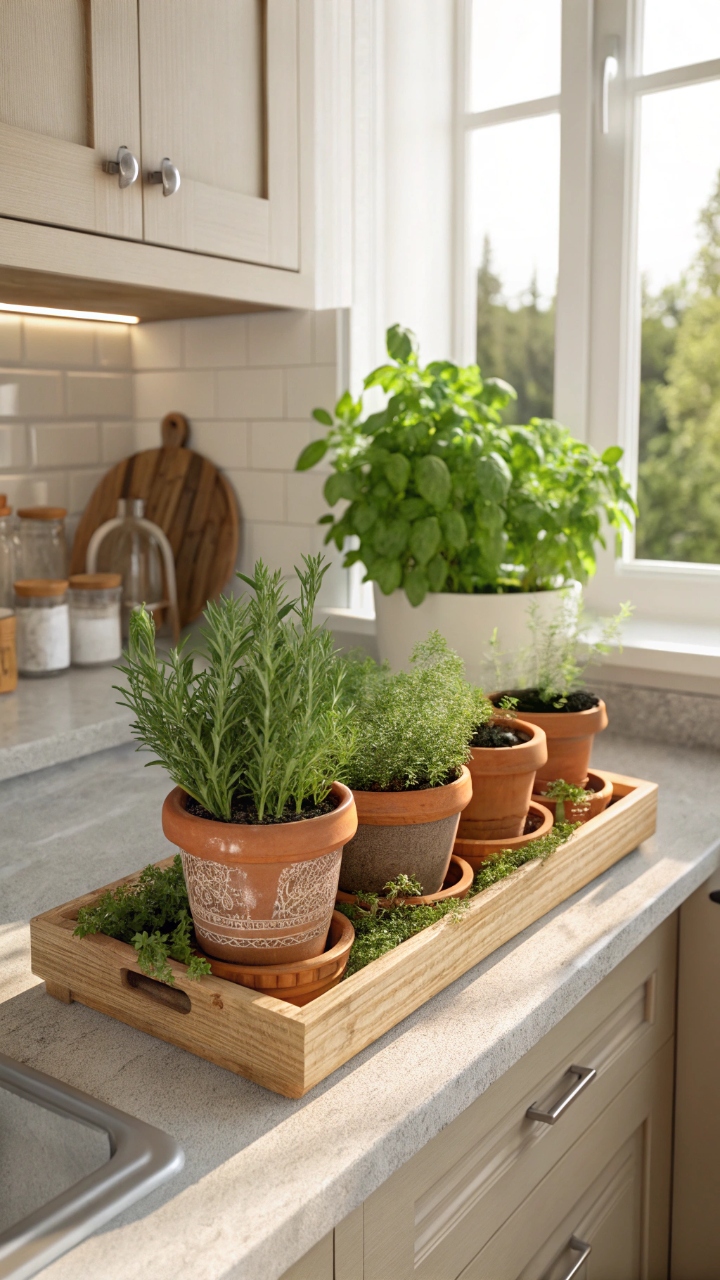
When my windowsills became crowded, I started grouping herbs together on one section of the countertop, and the compact arrangement quickly became one of my favorite plant kitchen ideas. A wooden tray filled with small terracotta herb pots creates a defined gardening zone while keeping loose soil, fallen leaves, and watering drips away from food preparation surfaces. I enjoy combining upright rosemary with feathery parsley and leafy basil because the different heights make the display feel naturally layered rather than overly arranged. There is something deeply satisfying about chopping vegetables beside herbs you have grown yourself, especially when their fresh fragrance fills the kitchen with every snip. Keep the arrangement near a bright window whenever possible, and rotate individual pots regularly so slower-growing plants do not disappear behind taller companions.
Pro Tip: Use a waterproof tray with raised edges beneath your herb garden to contain moisture and make weekly cleaning much faster.
Hang Plants Above a Kitchen Island
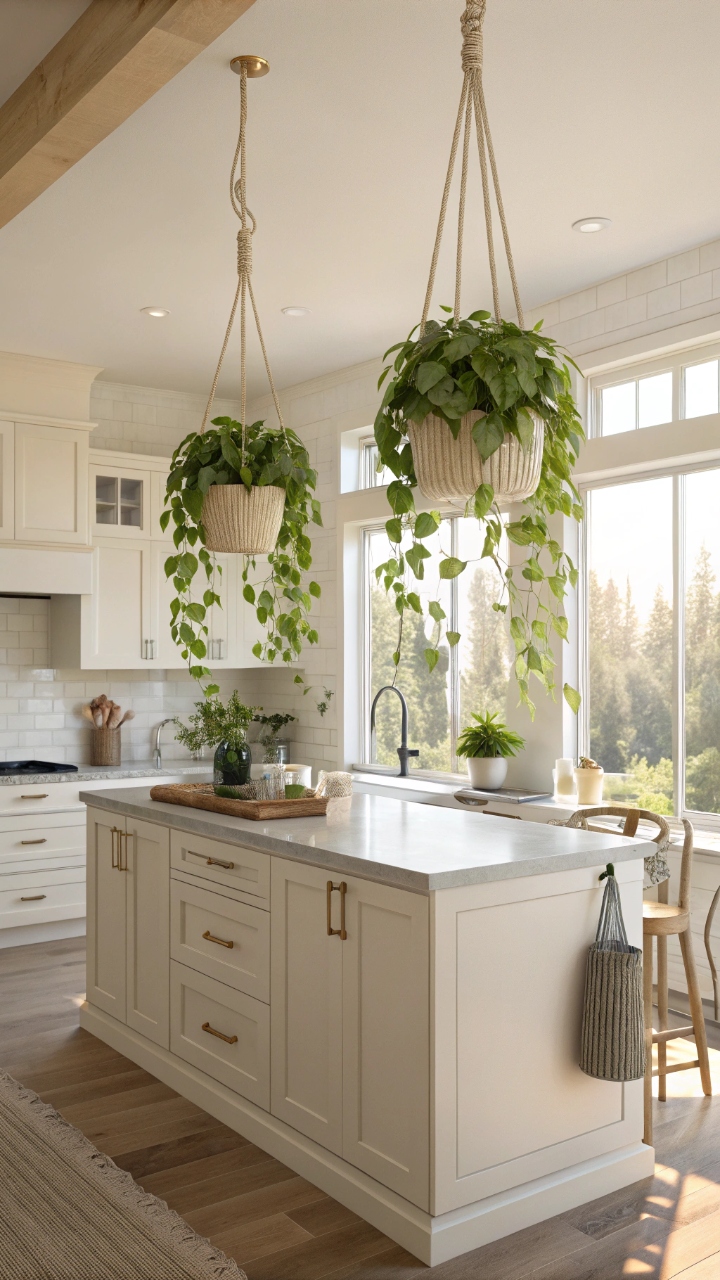
The ceiling above a kitchen island often feels like wasted decorating space, especially in rooms where countertops already hold appliances, dishes, and everyday cooking essentials. Hanging compact trailing plants in lightweight planters draws the eye upward while adding softness and greenery without sacrificing valuable work surfaces. I once hung two pothos plants at slightly different heights above the end of my island, and their cascading vines immediately made the entire kitchen feel more relaxed and thoughtfully layered. Why crowd another counter when you can transform unused vertical space into a beautiful garden feature that gently moves whenever a breeze enters the room? Make sure plants hang away from cooking zones, walking paths, and frequently opened cabinets so the arrangement stays attractive without becoming an everyday nuisance.
Pro Tip: Install ceiling hooks into secure framing and choose lightweight containers with removable liners to make watering safer and easier.
Style Open Shelves with Plants and Everyday Dishes
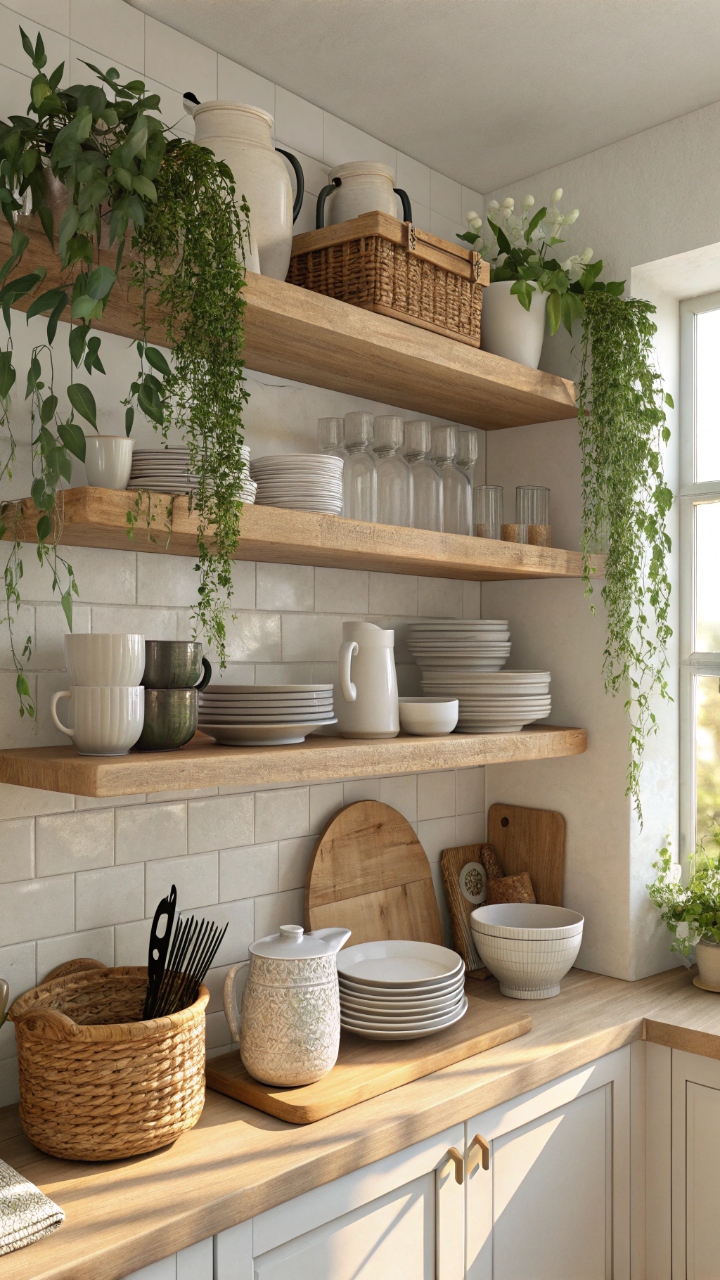
Open kitchen shelves can quickly feel crowded when every inch holds stacks of dishes, glassware, and decorative accessories, so I like using plants to create visual breathing room between practical items. A small trailing plant beside white bowls, wooden cutting boards, and ceramic mugs introduces color and texture while helping the entire shelf arrangement feel warmer and more balanced. I usually choose plants with relaxed growth habits because their natural shapes soften rigid stacks of dinnerware and keep the display from looking too perfect or staged. Have you ever noticed how one splash of living green can make ordinary dishes suddenly look like part of a carefully collected kitchen? The trick involves leaving enough empty space around each plant so the leaves can grow freely and the shelves remain easy to clean.
Pro Tip: Choose compact, slow-growing plants for open shelves so you spend less time trimming leaves and rearranging your kitchen essentials.
Place a Statement Plant in an Empty Kitchen Corner
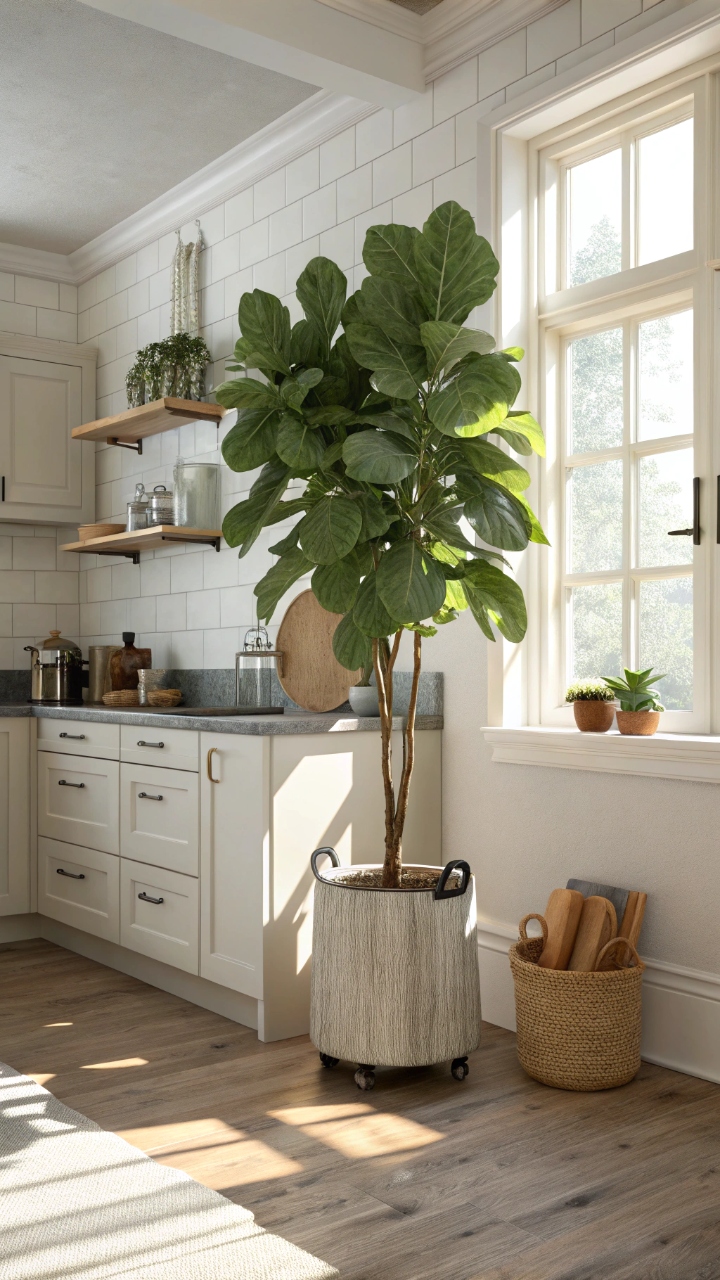
Every kitchen seems to have one awkward corner that never quite feels finished, and I have found that a large statement plant can transform that forgotten space faster than almost any decorative accessory. A tall fiddle leaf fig, bird of paradise, or rubber plant in a substantial floor planter adds height, drama, and natural warmth while creating a beautiful connection between the kitchen and nearby living areas. I especially love the way broad leaves catch afternoon sunlight and cast soft shadows across the walls, making the entire room feel calmer and more dynamic. Why fill an empty corner with another storage cabinet when a living plant can create personality without adding visual clutter? Give large plants enough room for air circulation and leaf growth, and turn the container occasionally so the plant develops a balanced shape.
Pro Tip: Set heavy floor planters on rolling plant caddies so you can easily move them for cleaning, watering, and better seasonal light.
Build a Vertical Herb Garden on a Blank Wall
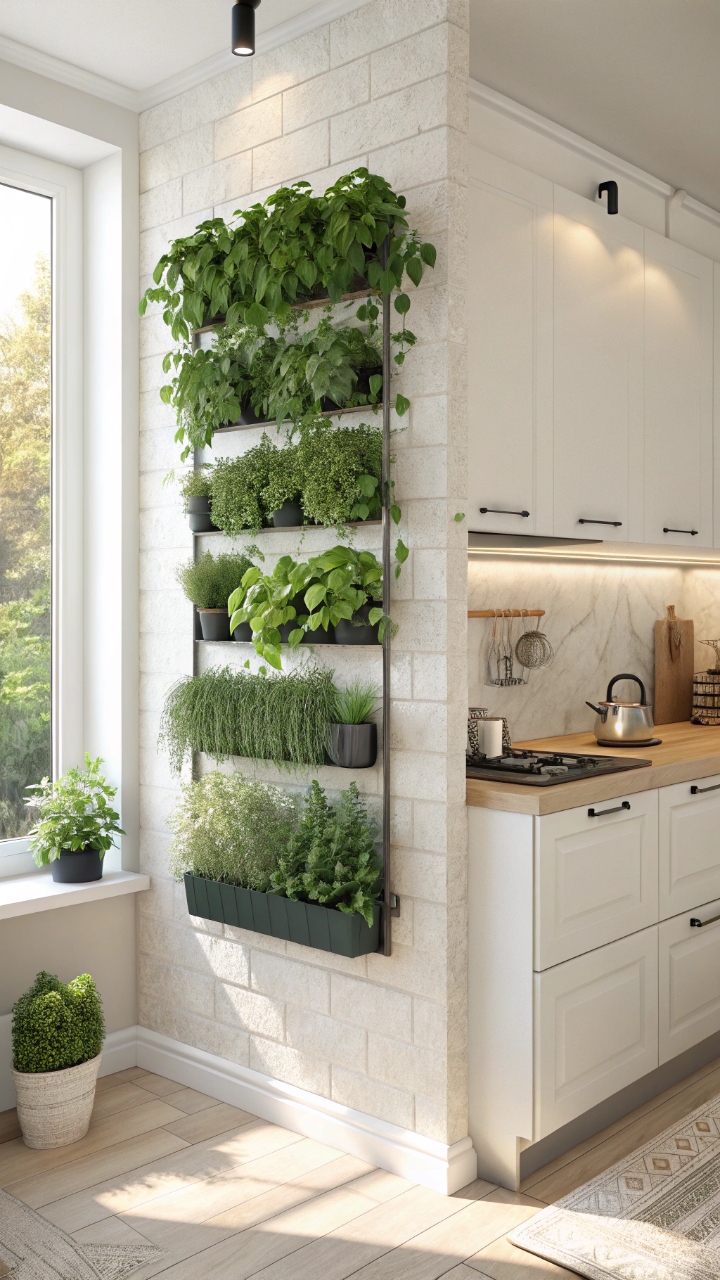
When countertop space runs short, blank kitchen walls offer a brilliant opportunity to grow plants vertically while creating an eye-catching natural feature. A wall-mounted herb garden with individual removable containers lets you grow culinary favorites without sacrificing preparation areas, shelves, or valuable cabinet storage. I love seeing rows of fragrant thyme, oregano, parsley, and mint arranged against a simple wall because the greenery turns an ordinary surface into something vibrant and useful. Wouldn’t dinner preparation feel more inspiring if you could reach toward the wall and gather fresh herbs instead of searching through plastic packages in the refrigerator? Keep your vertical garden away from direct stove heat and choose a location where watering spills can be wiped away easily.
Pro Tip: Install a waterproof backing panel behind wall-mounted planters to prevent moisture stains and protect painted or tiled surfaces.
Add Small Plants Around the Kitchen Sink
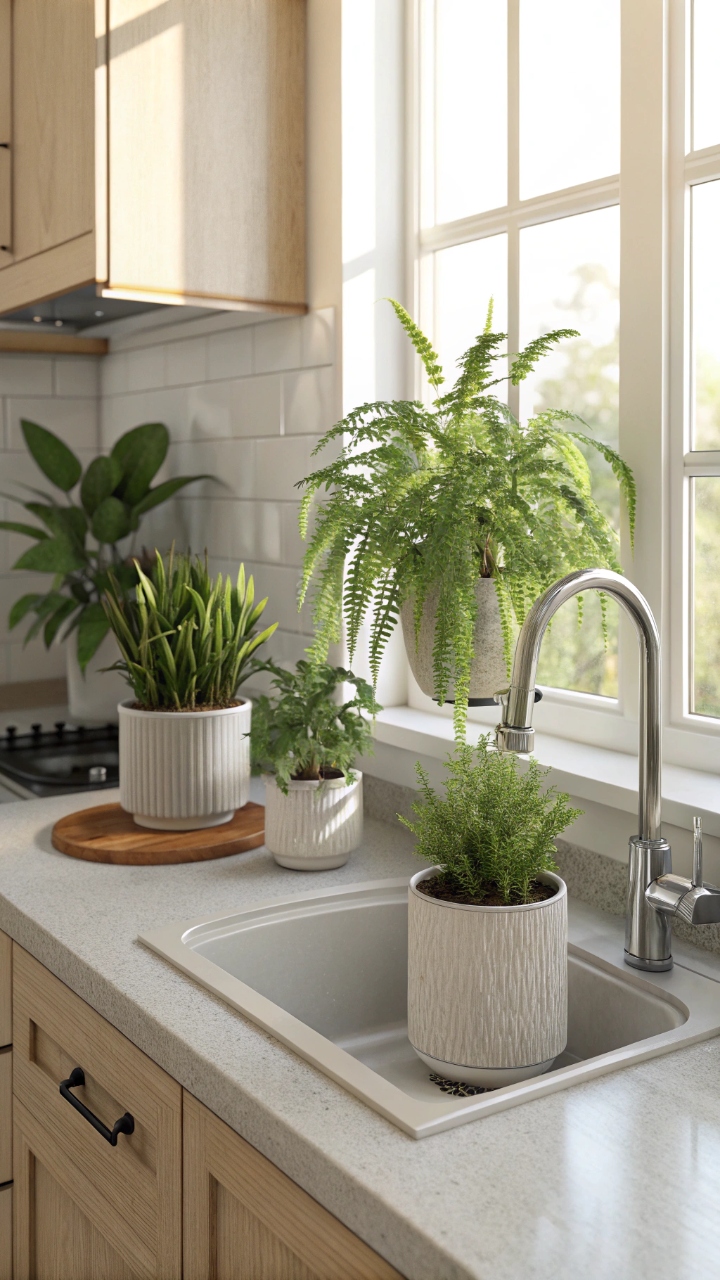
The area around my kitchen sink used to feel completely functional and a little boring until I added two small plants that enjoyed the extra humidity created by daily dishwashing. Compact ferns, peperomia, and lucky bamboo can bring refreshing greenery to this hardworking zone without crowding soap dispensers, brushes, or drying racks. I love looking at fresh leaves while washing dishes because even a tedious evening cleanup feels calmer when something living and beautiful sits nearby. Who says the busiest part of the kitchen cannot also become one of the prettiest spots in the room? Keep containers away from constant splashing, wipe standing water regularly, and select pots that fit comfortably behind or beside the faucet.
Pro Tip: Choose moisture-loving plants for sink areas and use waterproof saucers to protect countertops from scratches, mineral rings, and trapped water.
Display Plants on a Rolling Kitchen Cart
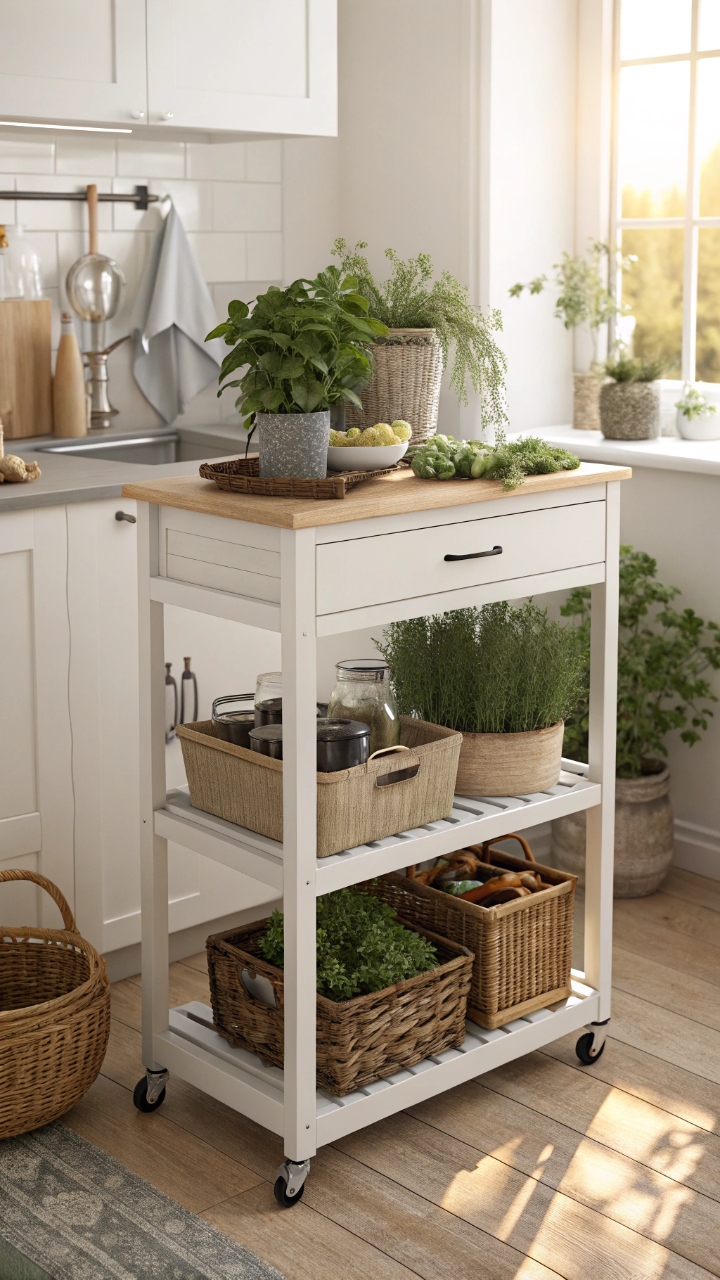
A rolling kitchen cart gives plant lovers the freedom to create a flexible green display that can move around the room as sunlight conditions and daily activities change. I like arranging herbs on the top shelf, small foliage plants in the middle, and gardening supplies in baskets below so everything stays organized and easy to reach. When I need extra preparation space, I simply roll the cart toward a bright corner, and when guests arrive, I bring the greenery closer to the dining area for an instant decorative boost. How handy is it to have a miniature movable garden that works around your kitchen routine instead of getting in the way? Choose a cart with locking wheels and moisture-resistant shelves so watering plants never becomes a stressful balancing act.
Pro Tip: Rotate your rolling plant cart toward brighter windows every few days to give each plant balanced light exposure and encourage even growth.
Mix Plants with Natural Wood Accents
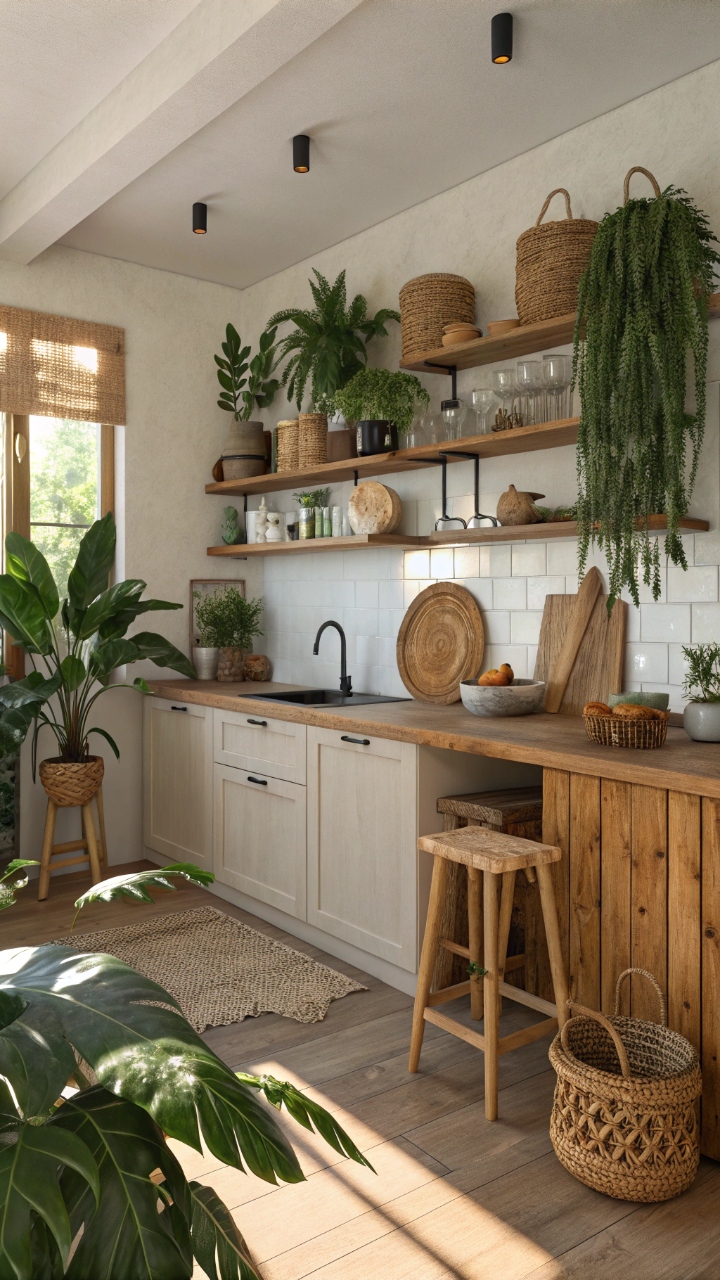
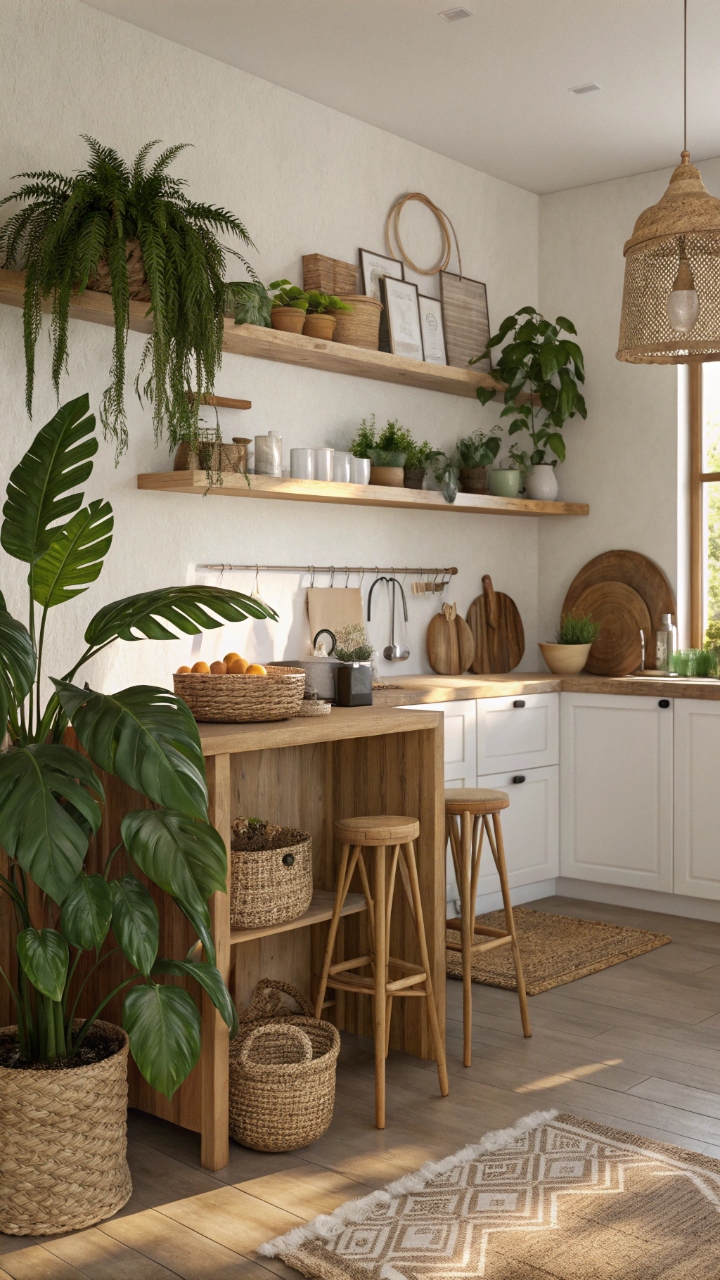
Plants already bring beautiful organic texture into the kitchen, but pairing them with wood creates an especially warm and inviting atmosphere that never feels overly decorated. I love combining lush green foliage with wooden shelves, cutting boards, stools, and woven baskets because the earthy materials complement each other while softening cold countertops and modern appliances. The grain of unfinished wood beside glossy leaves creates a rich sensory contrast that makes me want to slow down, brew coffee, and linger in the kitchen a little longer. Could there be an easier way to make a plain cooking space feel grounded, comfortable, and connected to nature? Keep your color palette simple and allow the different textures to create visual interest rather than filling every surface with decorative objects.
Pro Tip: Repeat the same wood tone in two or three areas of the kitchen to make your plant displays feel intentional and visually connected.
Create a Mini Greenhouse Cabinet for Plants
A glass-front kitchen cabinet can become a charming mini greenhouse when you dedicate a few shelves to plants that enjoy consistent humidity and filtered light. I once cleared an underused display cabinet, added small ferns, mossy terrariums, and humidity-loving tropical plants, and the result felt like a tiny secret garden tucked inside the kitchen. Condensation occasionally softened the glass while layers of green leaves created depth, turning a forgotten storage area into a conversation piece that guests always noticed. Sounds a little extra, right, but why not transform unused cabinetry into something that brings genuine joy every time you walk into the room? Good airflow remains essential, so open the doors regularly and avoid overcrowding plants against the glass or each other.
Pro Tip: Place a small digital humidity gauge inside the cabinet so you can monitor growing conditions and prevent excessive moisture buildup.
Decorate the Refrigerator Top with Greenery
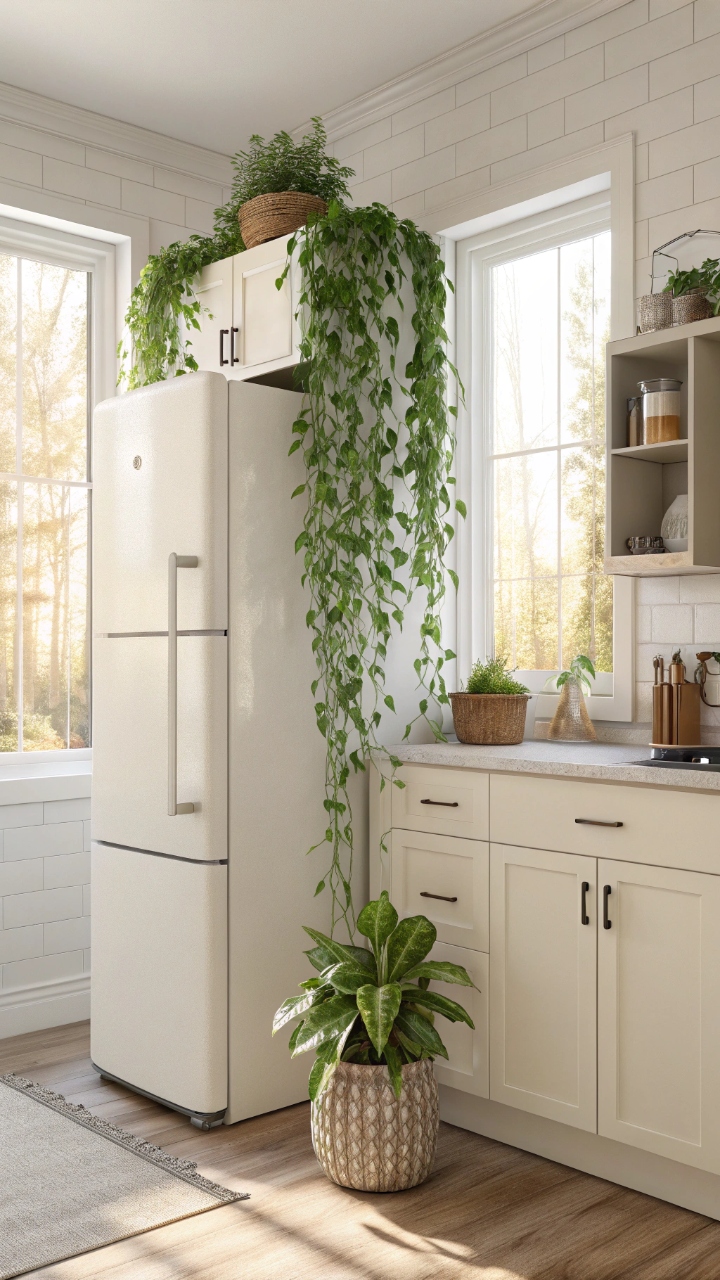
The top of the refrigerator often becomes a random storage zone for cereal boxes and forgotten kitchen supplies, but plants can turn this overlooked surface into an attractive extension of your decor. A trailing pothos or hardy philodendron in a lightweight planter softens the bulky shape of the refrigerator and creates beautiful vertical movement along the side of the appliance. I love allowing vines to cascade toward an empty wall because the greenery draws attention away from clutter and makes the kitchen feel more thoughtfully finished. Why waste a high surface when it can support a low-maintenance plant that brings color and personality into the room? Check the temperature above your refrigerator before placing plants there because some appliances release enough heat to dry soil faster than expected.
Pro Tip: Use a lightweight self-watering planter and check soil moisture weekly since elevated kitchen locations often become warmer and drier.
Arrange Plants on a Decorative Ladder Shelf
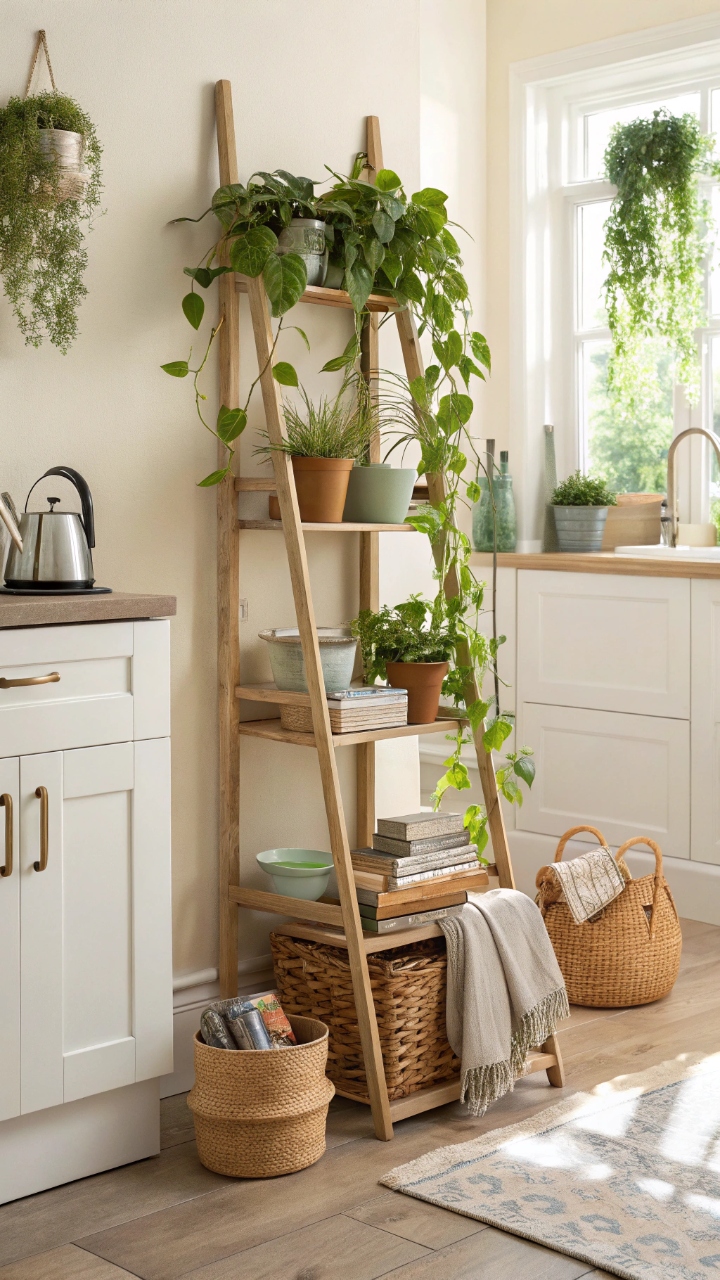
A slim ladder shelf offers an easy way to create a layered indoor garden when you have limited floor space but still want plenty of greenery in your kitchen. I like arranging upright plants on lower shelves and trailing varieties near the top because the different growth patterns create movement while keeping every plant visible. Add a watering can, a stack of cookbooks, or a small woven basket between pots, and the display starts feeling collected and personal instead of looking like a crowded plant shop. Wouldn’t an unused strip of wall look better filled with fragrant herbs and leafy textures than another generic piece of kitchen artwork? Secure tall ladder shelves to the wall, especially in busy households where children, pets, and everyday traffic could accidentally bump the structure.
Pro Tip: Place waterproof trays beneath every planter to prevent moisture from damaging wooden shelves or dripping onto plants below.
Use Matching Planters for a Clean, Cohesive Look
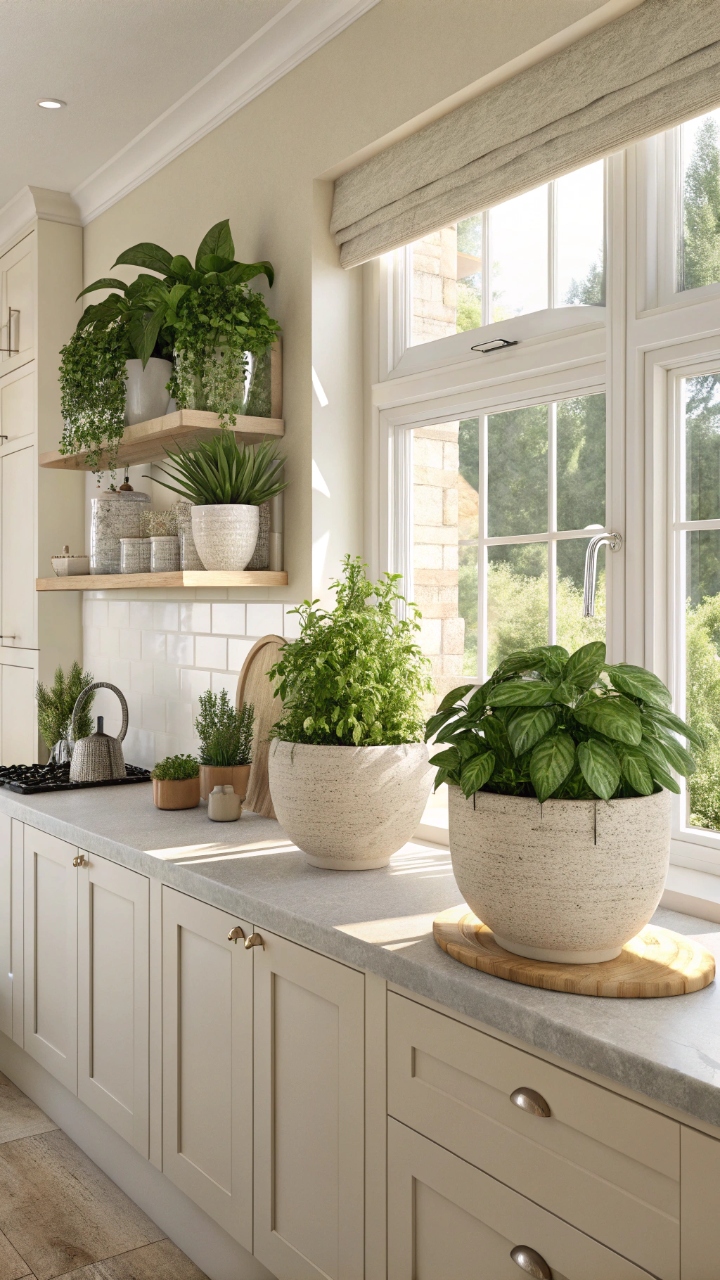
My plant collection once looked chaotic because every container featured a different color, shape, and pattern, but switching to coordinated planters instantly made the entire kitchen feel calmer. Choosing matching ceramic pots, terracotta containers, or neutral planters in varied sizes allows the plants themselves to become the main attraction while creating visual consistency throughout the room. I love repeating similar containers on windowsills, open shelves, and countertops because the subtle connection makes separate plant displays feel like parts of one thoughtful decorating plan. Do matching pots sound too simple to make a difference, or could this small styling choice finally bring order to a growing collection of greenery? You do not need identical containers; repeating one material, finish, or color family creates enough consistency while preserving personality.
Pro Tip: Buy planters in three graduated sizes within the same collection so you can accommodate different plants while maintaining a cohesive kitchen design.
Create a Relaxed Indoor Kitchen Jungle
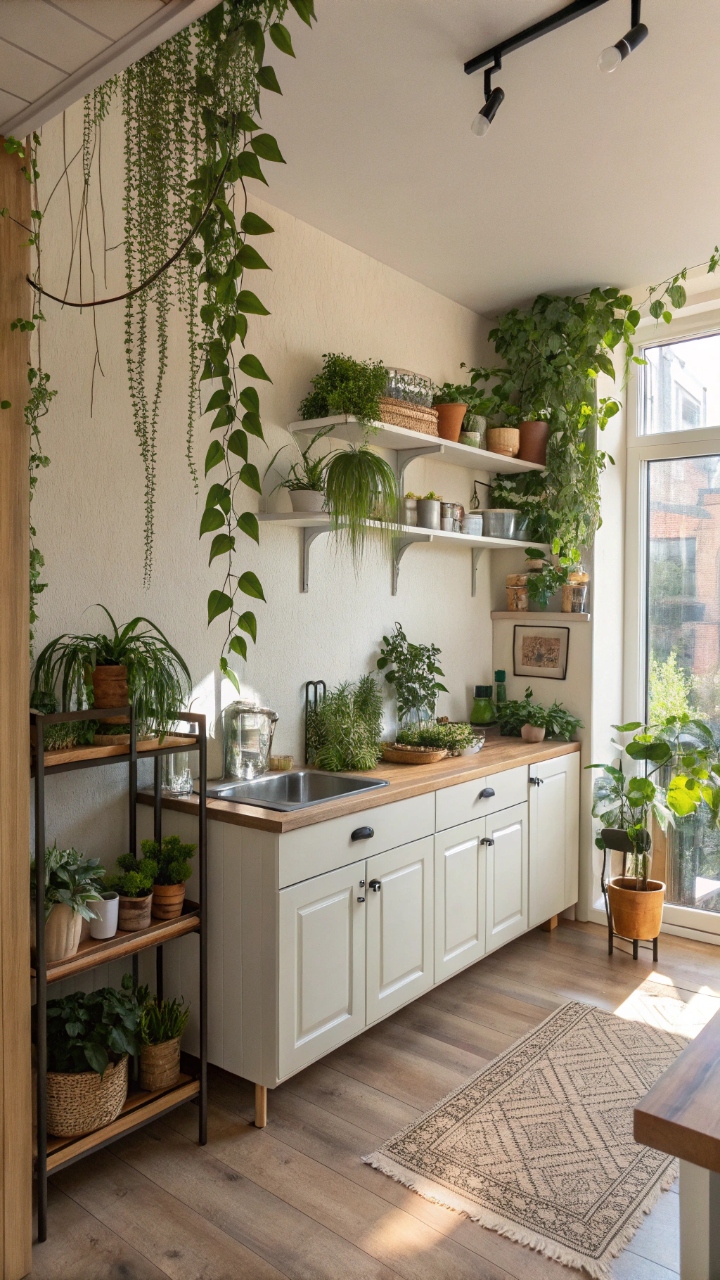
After years of carefully placing one plant here and another there, I eventually embraced a fuller indoor kitchen jungle, and the layered greenery made the room feel more personal than any perfectly styled decor ever had. The secret involves combining tall floor plants, trailing vines, compact countertop greenery, and practical herbs so the kitchen feels lush at different heights without losing important cooking and walking space. Morning sunlight filtering through overlapping leaves creates shifting shadows across the cabinets, while the scent of herbs and damp soil adds an earthy freshness that makes everyday routines feel surprisingly restorative. Why settle for a sterile kitchen when carefully chosen plants can turn the room into a vibrant space that encourages you to slow down, cook, gather, and enjoy being home? Keep the arrangement manageable by grouping plants with similar watering needs and leaving clear surfaces around food preparation zones, because nobody wants potting soil beside the chopping board.
Pro Tip: Schedule one weekly plant-care session to water, rotate, prune, clean leaves, and inspect for pests before small maintenance problems become overwhelming.
Conclusion
Bringing plants into the kitchen has taught me that decorating a home does not always require expensive renovations, trendy accessories, or dramatic changes because sometimes a few living leaves can completely shift the feeling of a room. From fragrant herbs glowing on sunny windowsills to trailing vines softening cabinet edges, each plant kitchen idea offers an opportunity to make everyday cooking spaces feel warmer, fresher, and more connected to nature. I still enjoy the quiet ritual of watering herbs before breakfast, wiping dust from broad leaves, and watching new growth slowly unfold beside the places where ordinary family routines happen. These small moments remind me that beautiful kitchens grow through personal choices, thoughtful habits, and objects that bring genuine pleasure rather than temporary decorating trends. Whether you start with one hardy pothos or create an entire indoor kitchen jungle, allow your greenery to develop naturally and adapt the arrangement as you discover what works for your space. A fresh, plant-filled kitchen should support your lifestyle, brighten your daily routines, and make you feel happy to walk through the doorway.
Looking back at that first little basil plant on my windowsill, I realize it gave me much more than fresh leaves for dinner because it encouraged me to see my kitchen as a living space that could change, grow, and become more personal over time. Plants soften the hard surfaces we cook around, fill forgotten corners with color, and create peaceful visual pauses during busy mornings when everything else feels rushed. You do not need perfect sunlight, endless countertops, or a green thumb to begin; you simply need to choose one suitable plant, give it a thoughtful home, and learn what helps it thrive. As your confidence grows, you can add another herb, hang a trailing vine, or create a larger display that reflects your own decorating style and daily routines. The best plant kitchen ideas never demand perfection because they invite patience, curiosity, and a little bit of trial and error along the way. Start small, enjoy the process, and let your kitchen become a fresher, greener, and more welcoming place one beautiful leaf at a time.

Leave a Reply