The first time I fell hard for a French chateau kitchen, I was not standing inside a castle in the Loire Valley or sipping coffee beside some grand limestone fireplace, although that would have been very on brand for my daydreams. I was actually standing in a tiny antique shop, holding a chipped creamware bowl that looked like it had survived generations of Sunday lunches, late-night soup, and flour-dusted pastry mornings. Something about that bowl pulled me into a whole world of old European homes, where kitchens feel less like showrooms and more like living, breathing rooms with stories tucked into every corner. I remember thinking, why do modern kitchens try so hard to look untouched when the most beautiful kitchens seem loved, layered, and just a little imperfect?
That little bowl came home with me, of course, because I have very little chill around anything that looks like it belongs in a French countryside kitchen. I placed it on my counter beside a wooden cutting board, a bunch of herbs in a glass jar, and a linen towel that never folds quite neatly, and suddenly my regular kitchen felt softer and warmer. It did not become a chateau kitchen overnight, but it gained that European-home feeling I had been craving: relaxed elegance, natural texture, and a sense that beauty should support real life instead of interrupting it. Since then, I have paid attention to every detail that makes French chateau kitchens so stunning, from aged brass hardware to stone floors, creamy cabinetry, open shelving, and those dreamy ranges that make even scrambled eggs feel romantic.
What I love most about French chateau kitchen design is that it never feels like it is begging for attention, even when the room looks completely breathtaking. These kitchens whisper instead of shout, and they invite you to cook slowly, set out fresh bread, pour something warm, and enjoy the little rituals that make a home feel deeply personal. They blend rustic French country charm with European elegance, which means you can borrow the look whether you live in a cottage, a suburban home, a city apartment, or a place where your “pantry” is really just one ambitious cabinet. So if you have ever wanted a kitchen that feels timeless, soulful, and a little bit fancy without becoming stiff, these French chateau kitchen ideas will give you so much inspiration.
Limestone Walls And Creamy Cabinetry
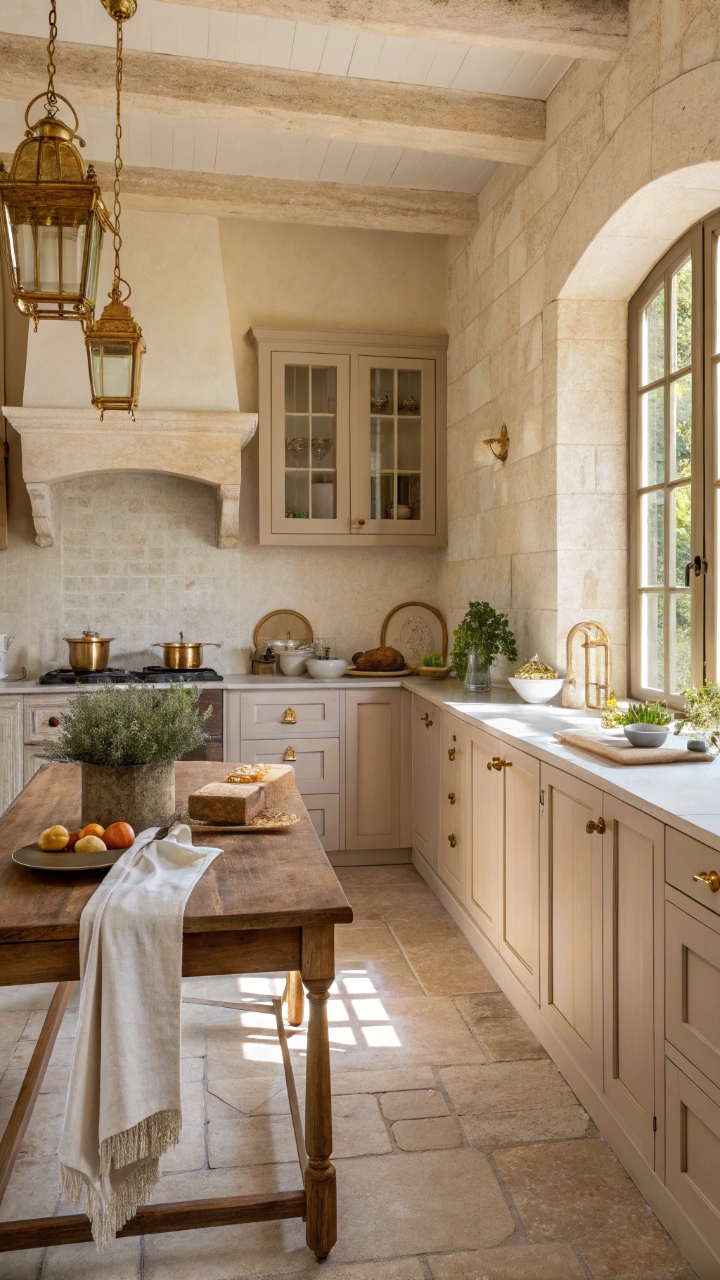
A French chateau kitchen with limestone walls and creamy cabinetry feels like stepping into a quiet European morning, where the air smells faintly of butter, coffee, and fresh herbs waiting on the counter. I love how soft cream cabinets calm the room while the stone brings in that old-world texture you simply cannot fake with flat painted walls. The beauty comes from contrast, because the cabinetry feels refined while the limestone feels earthy, weathered, and full of history. Wouldn’t you rather have a kitchen that looks collected over time instead of installed in one rushed weekend? This style works beautifully with unlacquered brass knobs, antique-style sconces, and a pale oak table that looks ready for croissants, soup bowls, or late-night tea.
Pro Tip: Choose warm cream paint with beige or greige undertones so your cabinets feel aged and elegant, not stark or yellow.
A Grand French Range As The Centerpiece
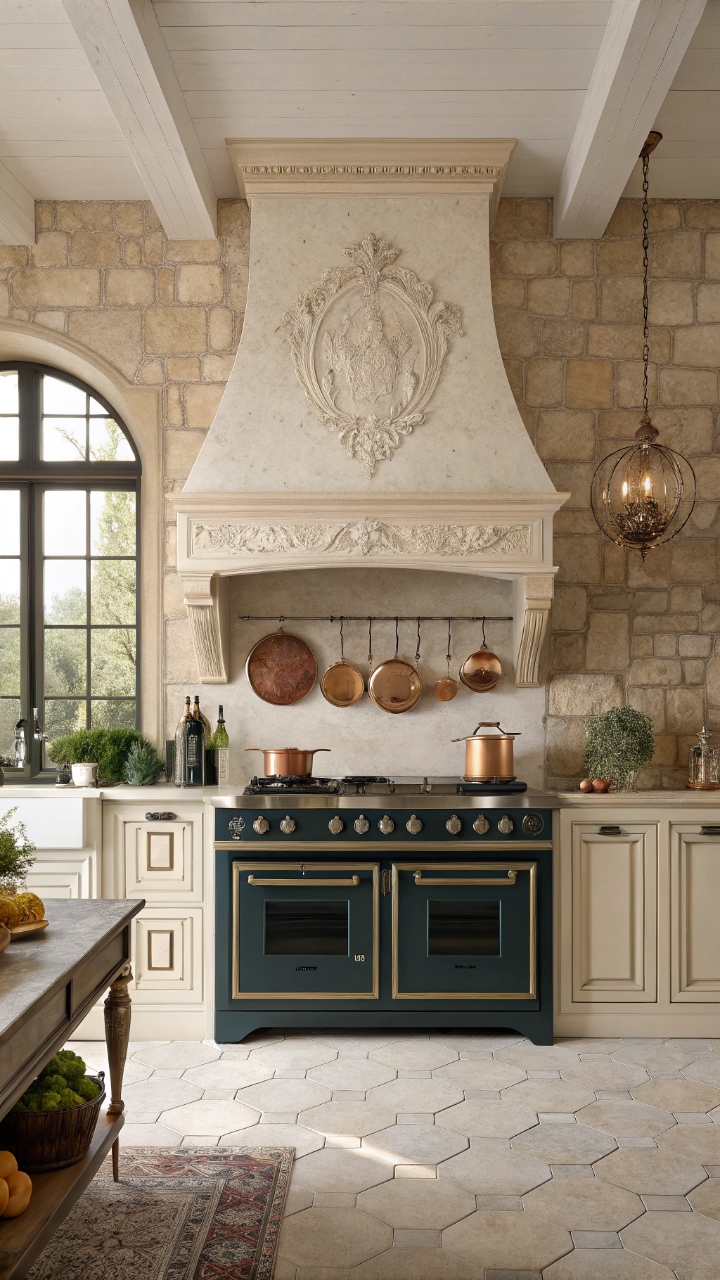
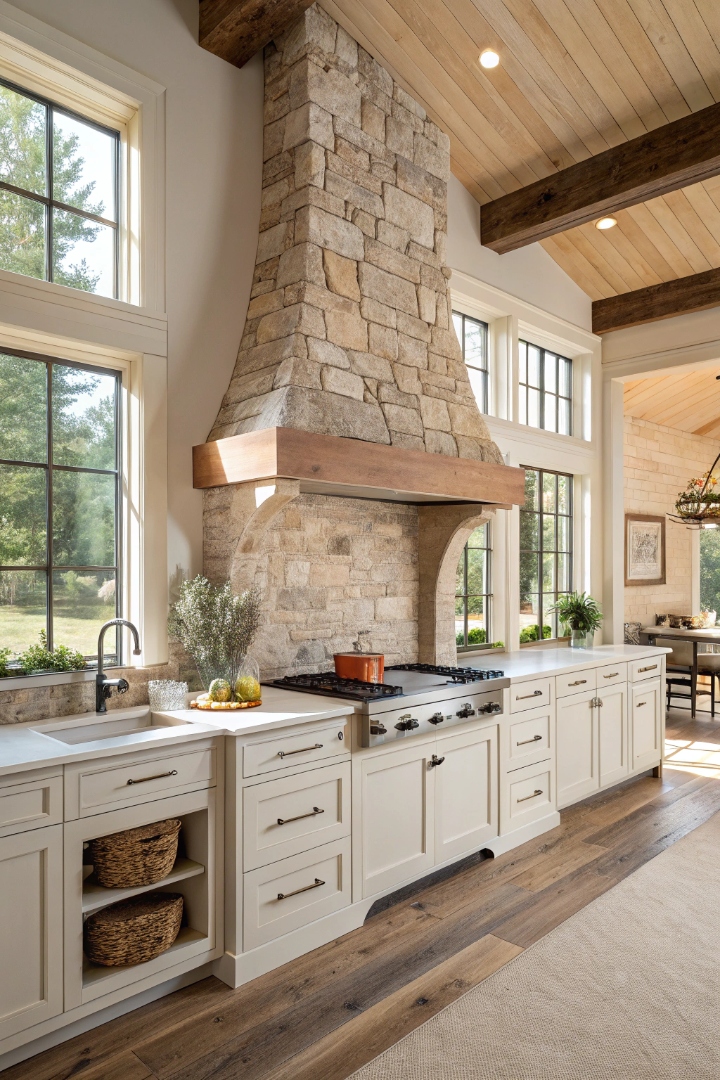
Nothing says French chateau kitchen quite like a grand range that anchors the whole room with confidence, charm, and a tiny bit of drama. I always think of the range as the kitchen’s fireplace, because everyone naturally gathers around it, especially when something delicious bubbles, roasts, or sizzles nearby. A statement French-style range in ivory, black, navy, or deep green can make even a simple kitchen feel custom and deeply European. Isn’t it wild how one appliance can shift the entire mood from basic to bonjour-level beautiful? Pair it with a plaster hood, brass rail, hanging copper pans, and stone backsplash so the whole cooking wall feels intentional and layered.
Pro Tip: If a luxury range is not in the budget, create the same focal-point effect with a decorative range hood, brass accents, and a beautiful backsplash behind your existing stove.
Weathered Wood Beams Overhead
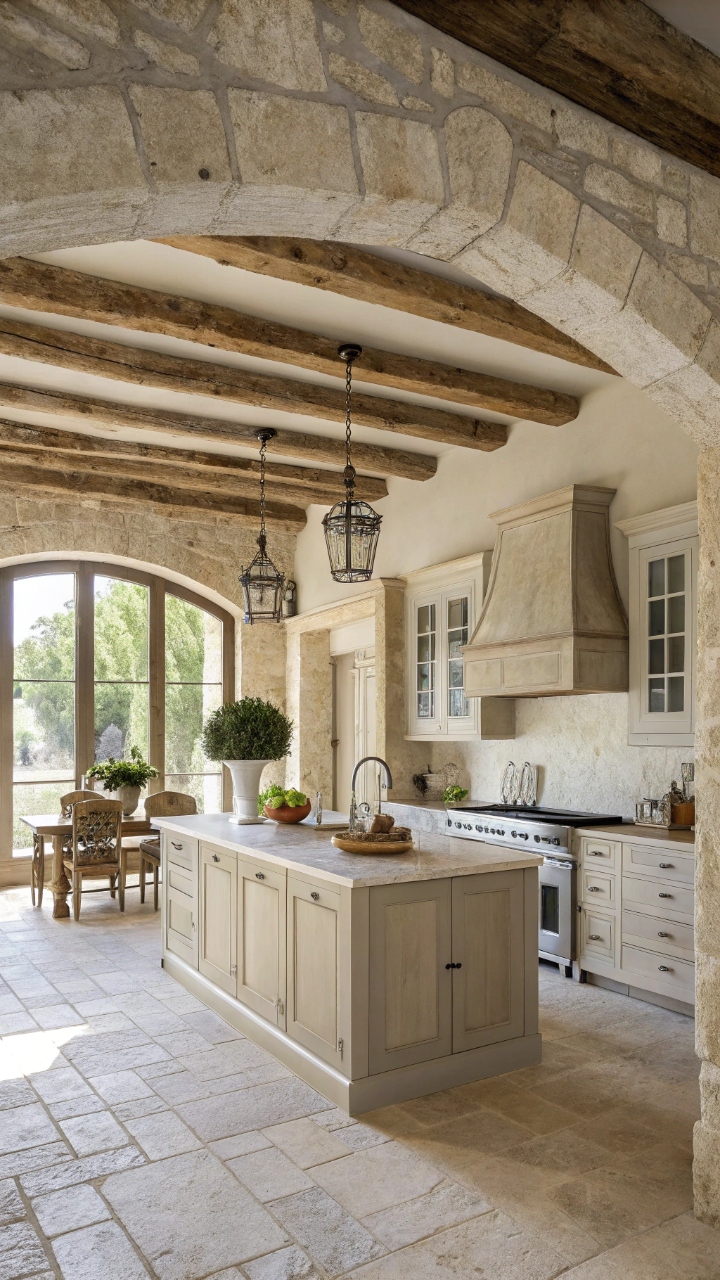
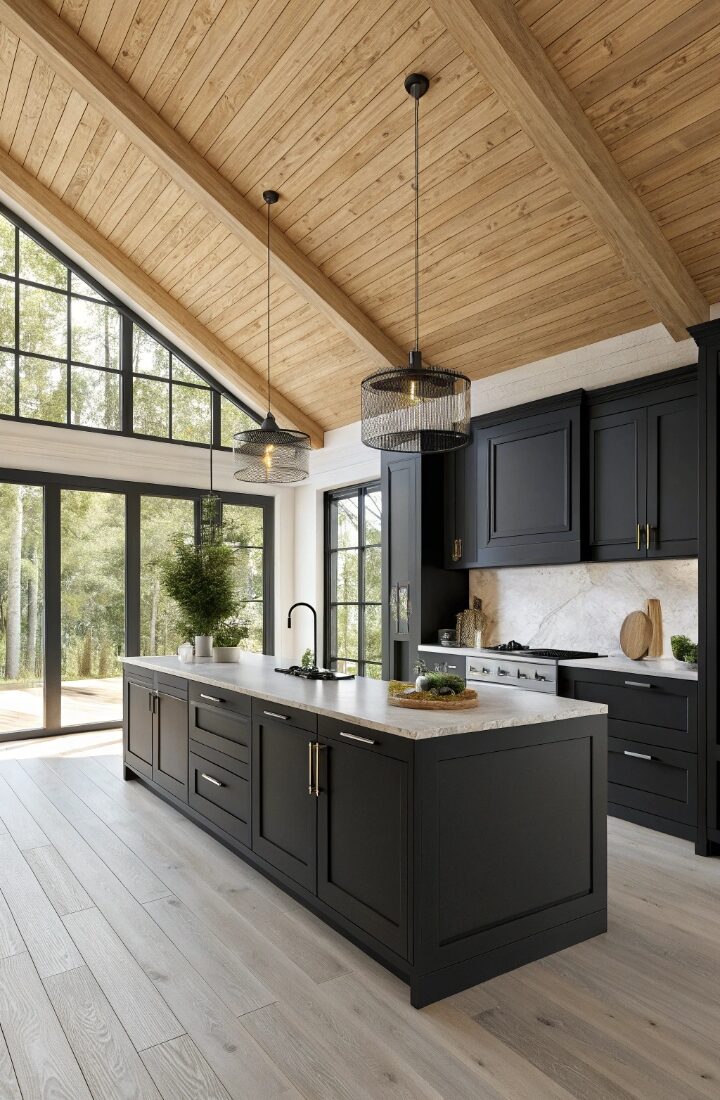
Weathered wood beams instantly give a French chateau kitchen that grounded, romantic feeling I always associate with old European homes tucked into the countryside. The texture overhead makes the kitchen feel warmer, especially when the rest of the space uses pale stone, white plaster, or soft neutral cabinets. I love aged oak beams because they bring a rugged honesty into a room that might otherwise feel too polished or precious. Have you ever noticed how a ceiling detail can make a kitchen feel taller, older, and more soulful all at once? Even faux beams can look gorgeous when you choose a realistic wood tone and keep the finish matte instead of shiny.
Pro Tip: Use beams to visually frame the island or dining area so the kitchen feels architectural, not randomly decorated.
Marble Counters With Soft Veining
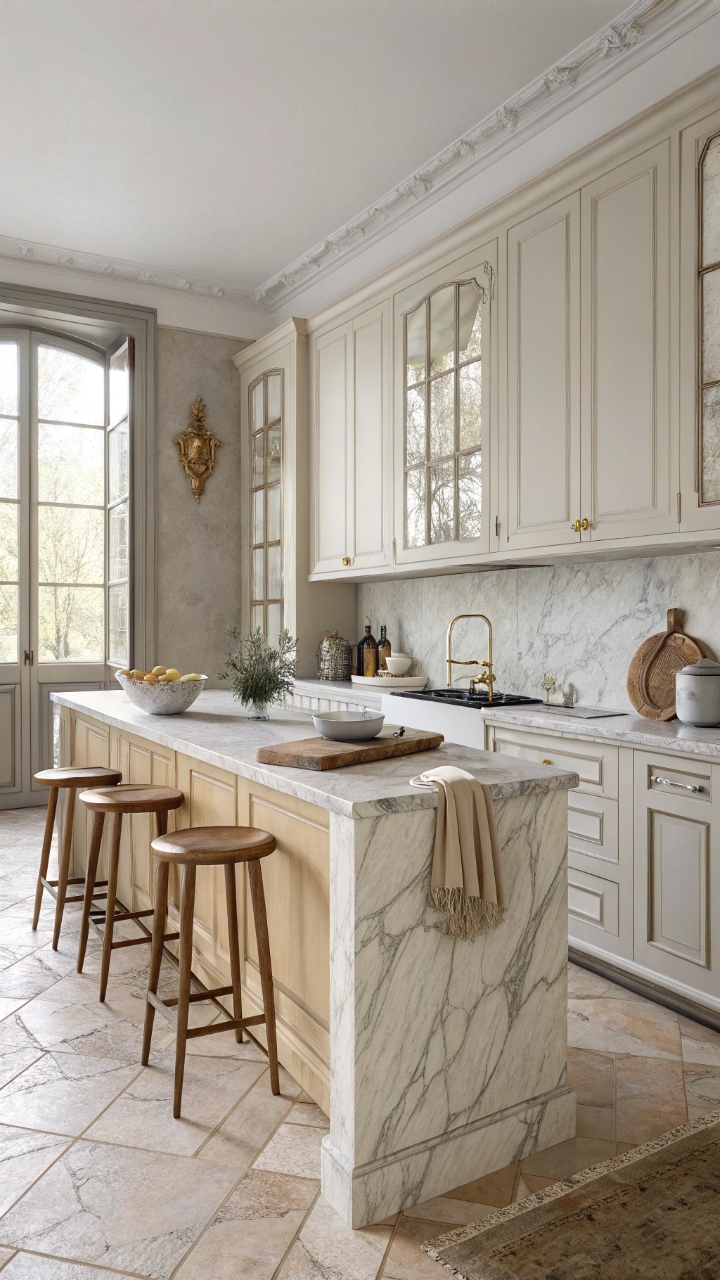
Marble counters in a French chateau kitchen feel luxurious, but not in a flashy way, which is exactly why I adore them. The best versions have soft gray or beige veining that moves gently across the surface like watercolor instead of screaming for attention. I know marble can be high-maintenance, but part of its charm comes from the way it ages, marks, and slowly becomes part of the home’s story. Isn’t that so much more romantic than chasing a surface that never changes? When you pair marble with creamy cabinets, brass fixtures, and rustic wood stools, the room feels elegant but still approachable enough for flour spills and coffee rings.
Pro Tip: If real marble feels too delicate, choose quartz or porcelain with subtle veining and a honed finish for a similar chateau-inspired look.
Copper Pots Hanging Near The Stove
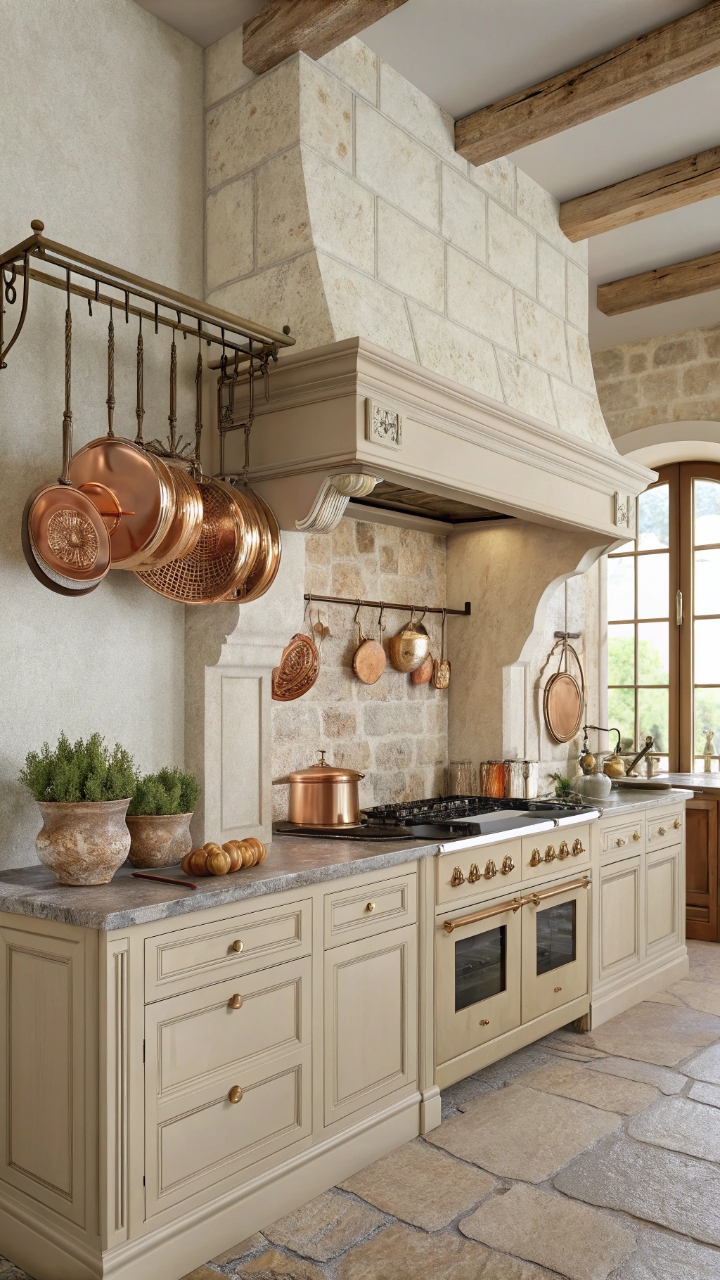
Copper pots bring instant French kitchen magic because they look practical, beautiful, and just a little chef-y in the best possible way. I love seeing warm copper cookware hanging from a rail or pot rack because it adds glow, movement, and that collected-over-generations feeling. Even if you only own one copper saucepan, displaying it near the stove can make the whole space feel more European and lived-in. Why hide the prettiest tools when they can become part of the decor? The trick is to mix copper with natural textures like stone, linen, wood, and ceramic so it feels authentic instead of overly staged.
Pro Tip: Start with two or three copper pieces and hang them at slightly varied heights for a relaxed, old-world look that does not feel cluttered.
A Rustic Farmhouse Table Instead Of An Island
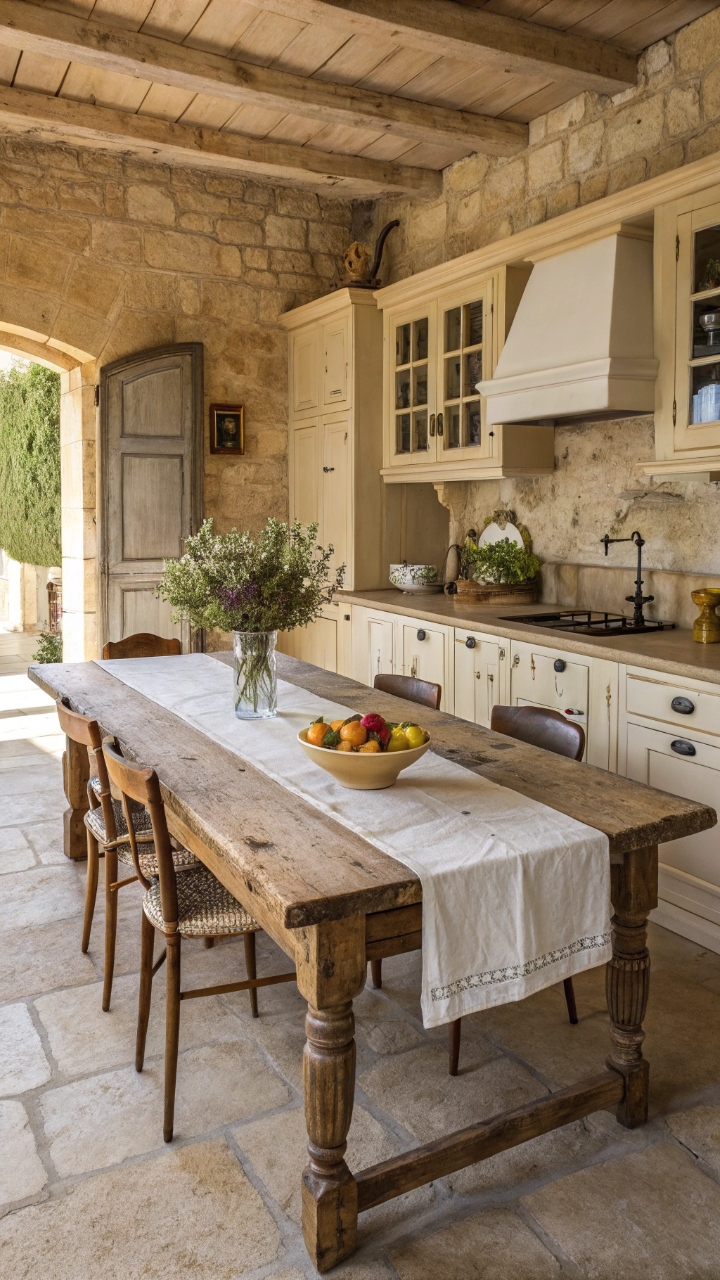
A rustic farmhouse table in the middle of a French chateau kitchen creates the kind of warmth that makes people want to sit down and stay awhile. I love this idea because a table feels more relaxed than a built-in island, and it brings that European habit of cooking, gathering, chopping, and chatting into one shared space. A worn wooden table with turned legs, scratches, and a slightly uneven surface adds instant soul to the room. Can you picture rolling pastry there in the morning and serving wine and cheese there at night? Add simple chairs, a linen runner, a bowl of fruit, and maybe one low vase of garden flowers for that effortless French country kitchen look.
Pro Tip: Choose a table with enough clearance for stools or chairs so it functions as both prep space and casual dining.
Open Shelving With Collected Ceramics
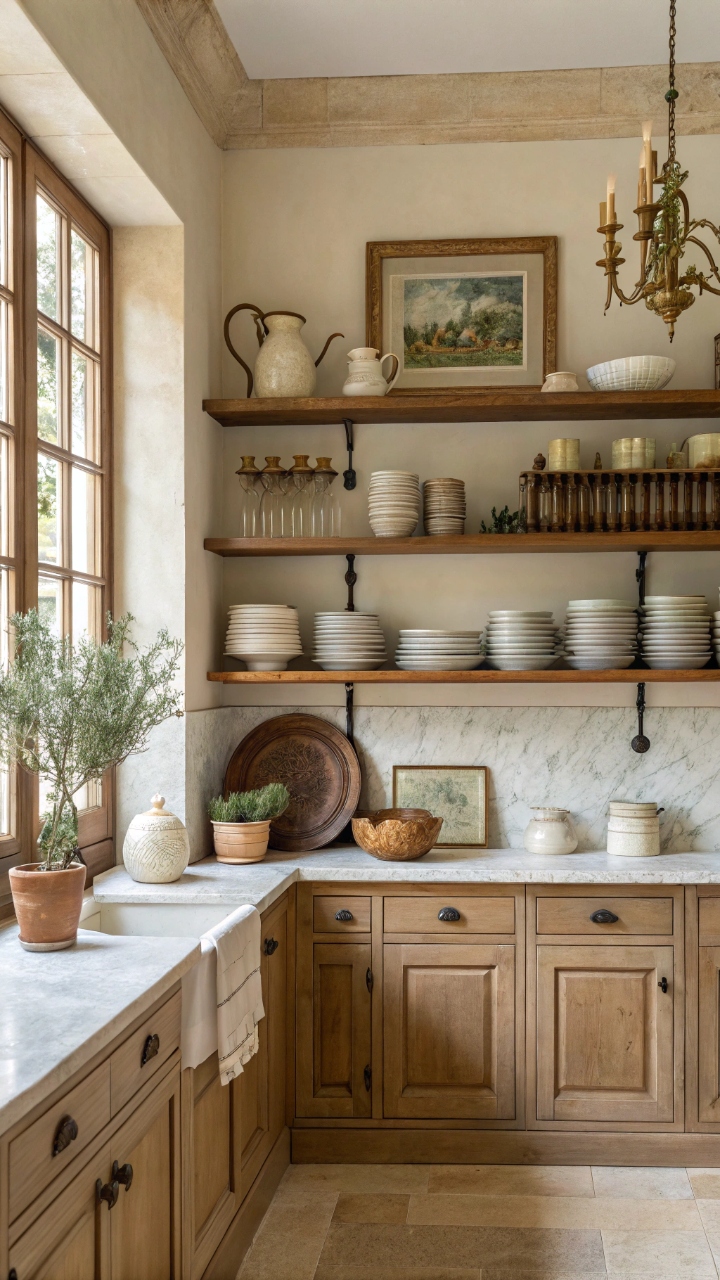
Open shelving feels especially beautiful in a French chateau kitchen when it holds pieces that look useful, imperfect, and lovingly gathered over time. I always prefer creamware plates, ironstone pitchers, glass jars, and handmade bowls over perfectly matching sets because they create depth and personality. The shelves should feel styled, yes, but not so styled that you feel nervous reaching for a mug. Isn’t the whole point of a beautiful kitchen to make daily rituals feel sweeter? Use wood or marble shelves with simple brackets, then layer plates upright, stack bowls, tuck in a small framed painting, and add one trailing herb plant if you want that soft lived-in charm.
Pro Tip: Keep your color palette tight with whites, creams, wood tones, and muted accents so open shelving looks curated instead of chaotic.
A Plaster Range Hood With Old-World Shape
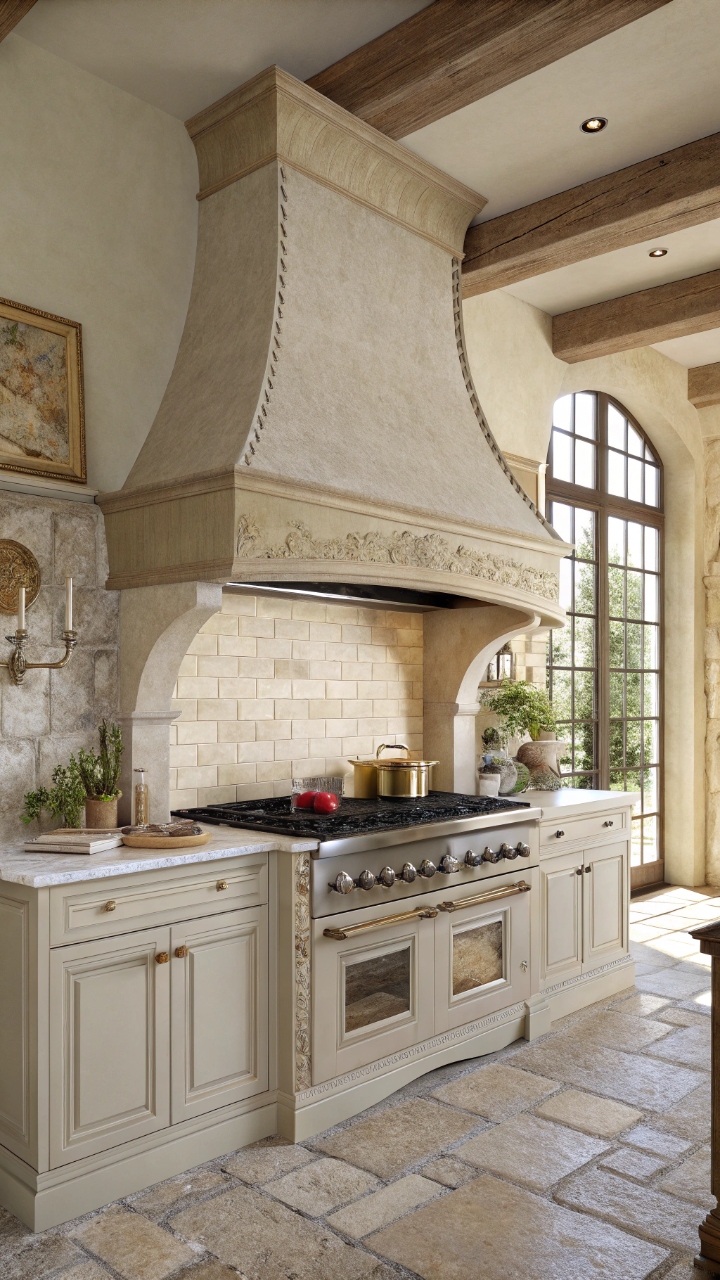
A plaster range hood can transform a kitchen faster than almost any other architectural detail because it adds softness, height, and that unmistakable European silhouette. I love curved or gently tapered hoods because they feel handcrafted, almost like something shaped by artisans rather than ordered from a catalog. The matte plaster finish also pairs beautifully with stone backsplashes, brass rails, and creamy cabinets. Wouldn’t a simple cooking wall feel more romantic with a sculptural hood rising above the range? You can keep the shape clean for a modern chateau look or add corbels and trim if you want something more traditional.
Pro Tip: Paint or finish the hood in the same tone as the walls for a seamless, built-in look that feels calm and expensive.
Antique Brass Fixtures And Hardware
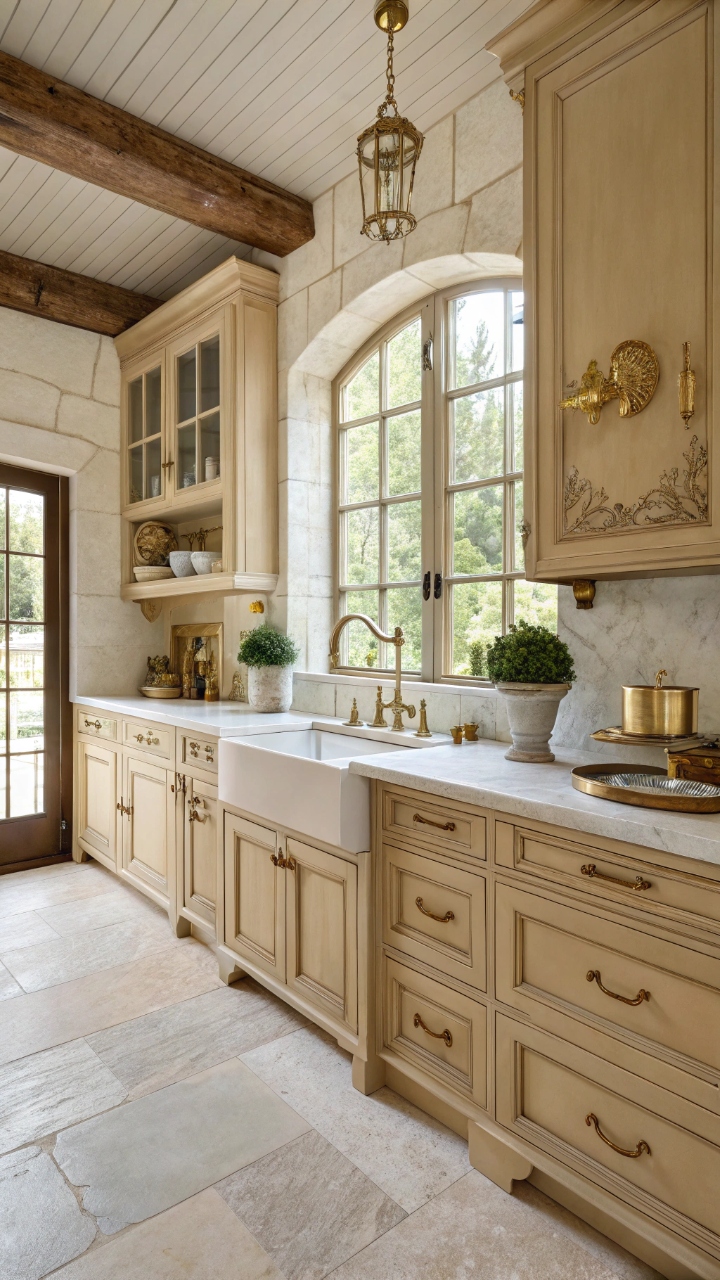
Antique brass fixtures bring that soft golden warmth French chateau kitchens need, especially when the room leans heavily on stone, marble, or pale cabinetry. I love unlacquered brass because it changes over time, developing a patina that makes the kitchen feel alive instead of showroom-perfect. Faucets, cabinet pulls, pot rails, sconces, and even switch plates can all carry that warm metallic thread through the room. Have you ever noticed how shiny new hardware can make a kitchen feel too crisp, while aged brass makes it feel instantly softer? The best part is that you do not need a huge renovation to make this change; hardware can shift the mood in one afternoon.
Pro Tip: Mix knobs and pulls in the same brass finish to create a custom European look without overwhelming the cabinetry.
Stone Floors With A Timeworn Feel
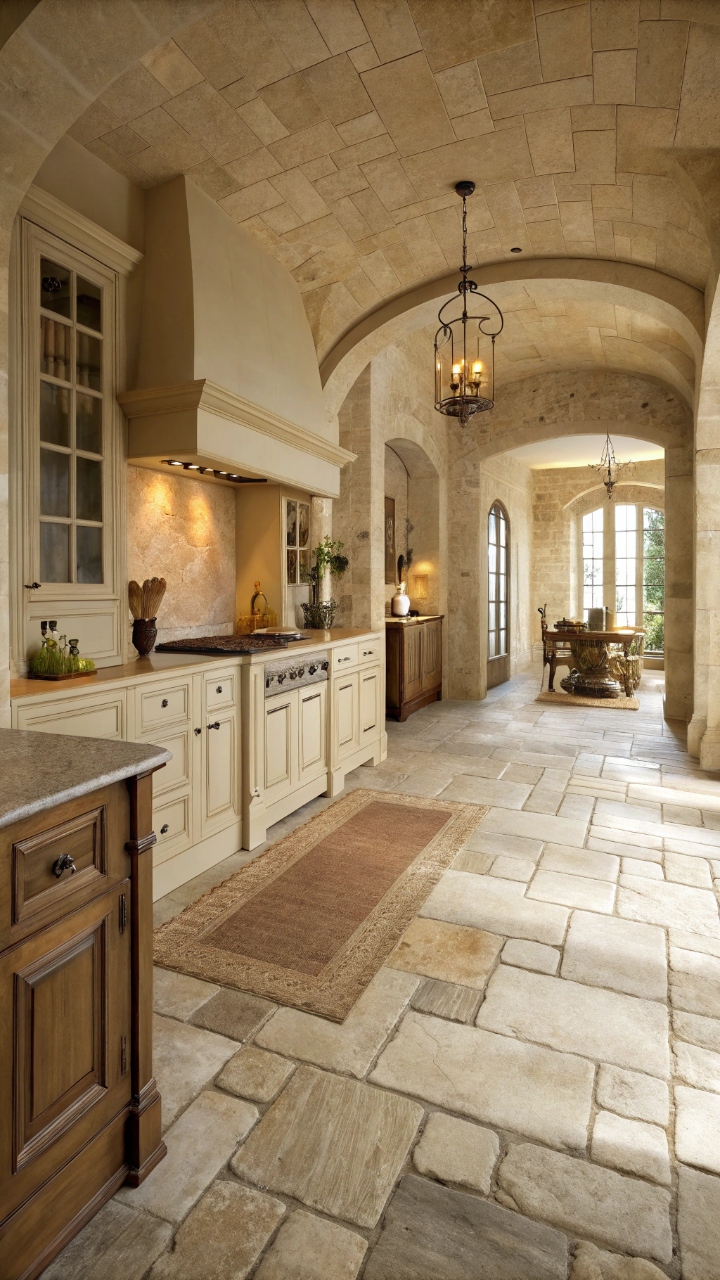
Stone floors give a French chateau kitchen that grounded, historic beauty that makes every step feel connected to something older and slower. I adore limestone, travertine, tumbled marble, and aged-look porcelain tiles because they bring texture underfoot without stealing attention from the rest of the room. A slightly uneven, matte finish feels more authentic than anything glossy or too perfect. Doesn’t a kitchen feel more inviting when the floor looks ready for muddy garden shoes, flour dust, and a sleepy dog stretched in the sun? Pair stone floors with soft rugs, wood furniture, and warm lighting so the room does not feel cold.
Pro Tip: Choose large-format tiles in warm neutral tones and use a grout color close to the stone for a seamless chateau-inspired foundation.
Soft Blue Cabinets With French Country Charm
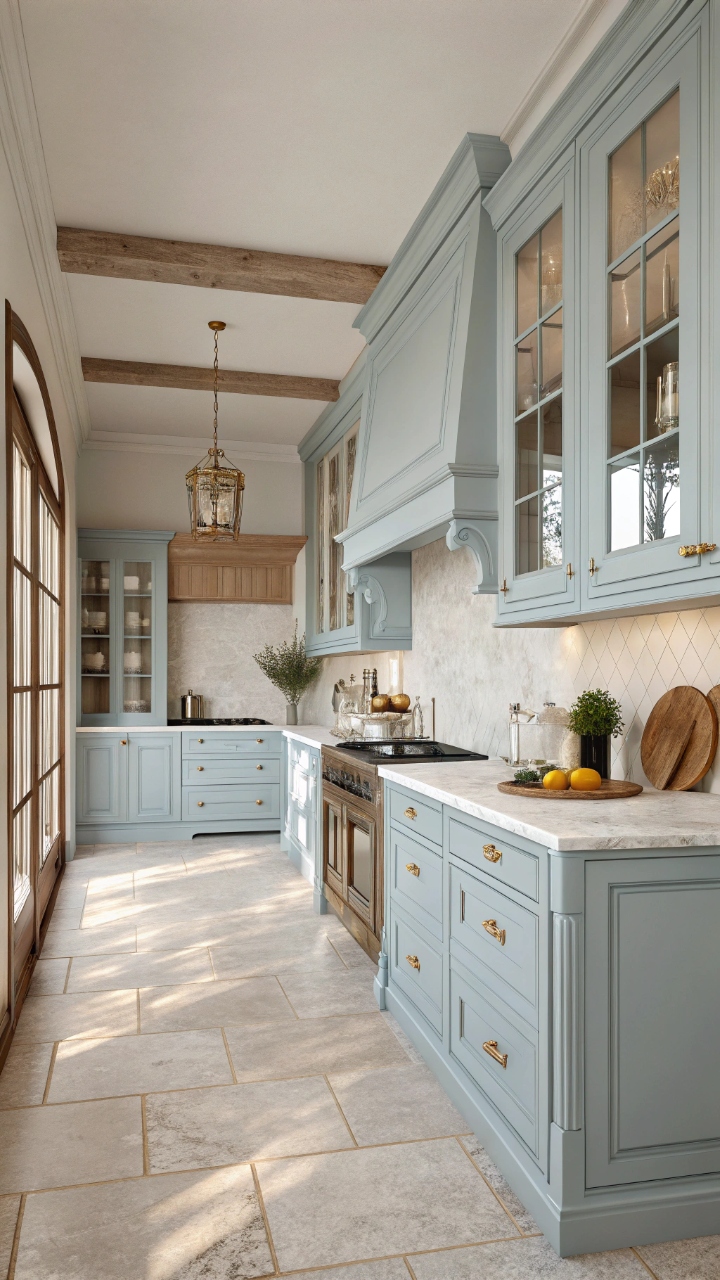
Soft blue cabinets can make a French chateau kitchen feel peaceful, romantic, and quietly memorable without overpowering the space. I love shades like dusty blue, blue-gray, and muted French blue because they remind me of painted shutters, faded textiles, and cloudy European skies. This color works especially well with marble counters, brass hardware, and natural wood accents. Wouldn’t it feel dreamy to make coffee every morning in a kitchen that feels like a countryside escape? Keep the rest of the palette gentle with cream walls, stone floors, and simple linen shades so the blue feels timeless instead of trendy.
Pro Tip: Test blue paint samples at different times of day because natural light can make blue cabinets look brighter, grayer, or cooler than expected.
Glass-Front Cabinets For Heirloom Display
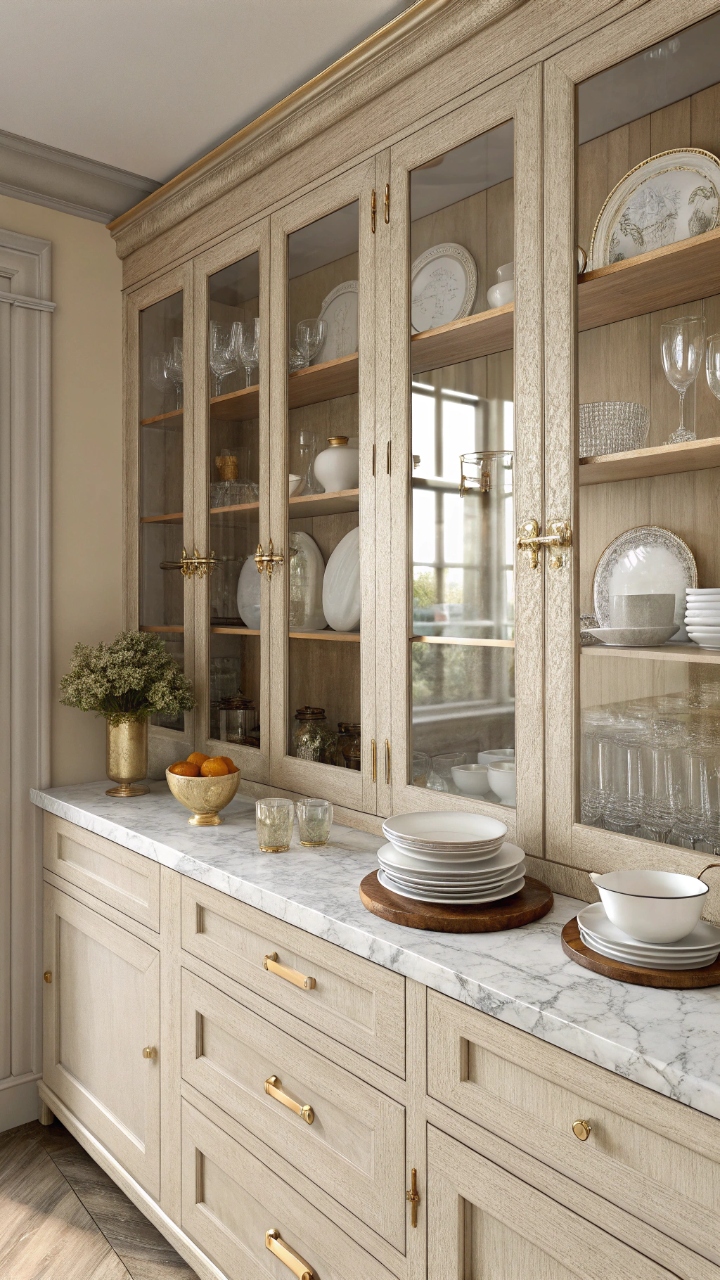
Glass-front cabinets add elegance to a French chateau kitchen because they let everyday pieces become part of the room’s beauty. I love using seeded glass or antique-style glass because it hides tiny imperfections while still showing off stacks of plates, crystal glasses, and pretty serving bowls. The effect feels graceful, but not stiff, especially when the cabinet interiors use warm wood or soft cream paint. Why keep your favorite dishes tucked away when they can bring charm to the whole kitchen? This detail works beautifully on upper cabinets, a pantry wall, or even one freestanding hutch if you want a less permanent option.
Pro Tip: Display pieces in small color families, such as white dishes, clear glass, and warm wood, so the cabinets look calm and intentional.
A Freestanding Hutch With European Soul
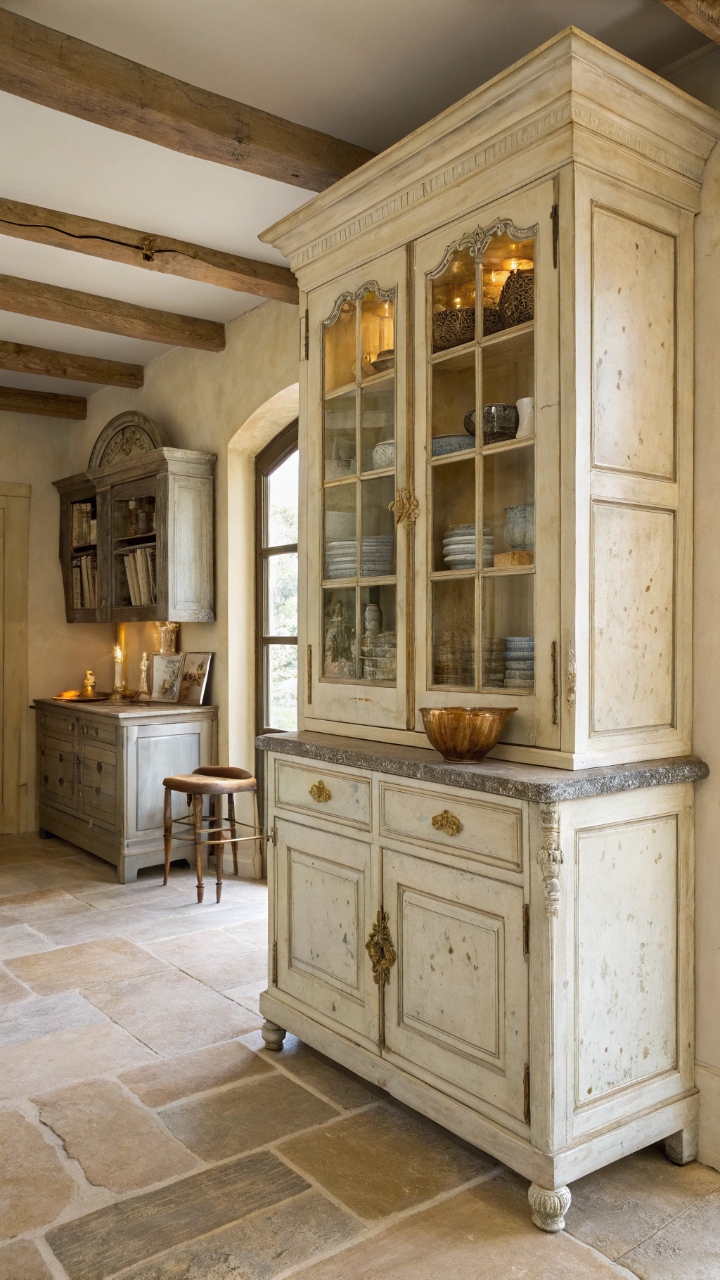
A freestanding hutch brings that collected European-home feeling I can never resist, especially when it looks like it came from a flea market or family dining room. I love painted hutches, raw wood cabinets, and antique cupboards because they break up built-in cabinetry and make the kitchen feel less manufactured. A hutch can hold dishes, linens, cookbooks, candles, or all the odd little things that never seem to have a home. Isn’t it comforting when a kitchen has furniture, not just cabinets? Choose one with glass doors, carved details, or worn paint if you want extra French country charm, then style it with restraint so the piece itself can breathe.
Pro Tip: Place a hutch near the dining side of the kitchen to create a natural bridge between cooking, serving, and gathering.
Layered Lighting With Sconces And Lanterns
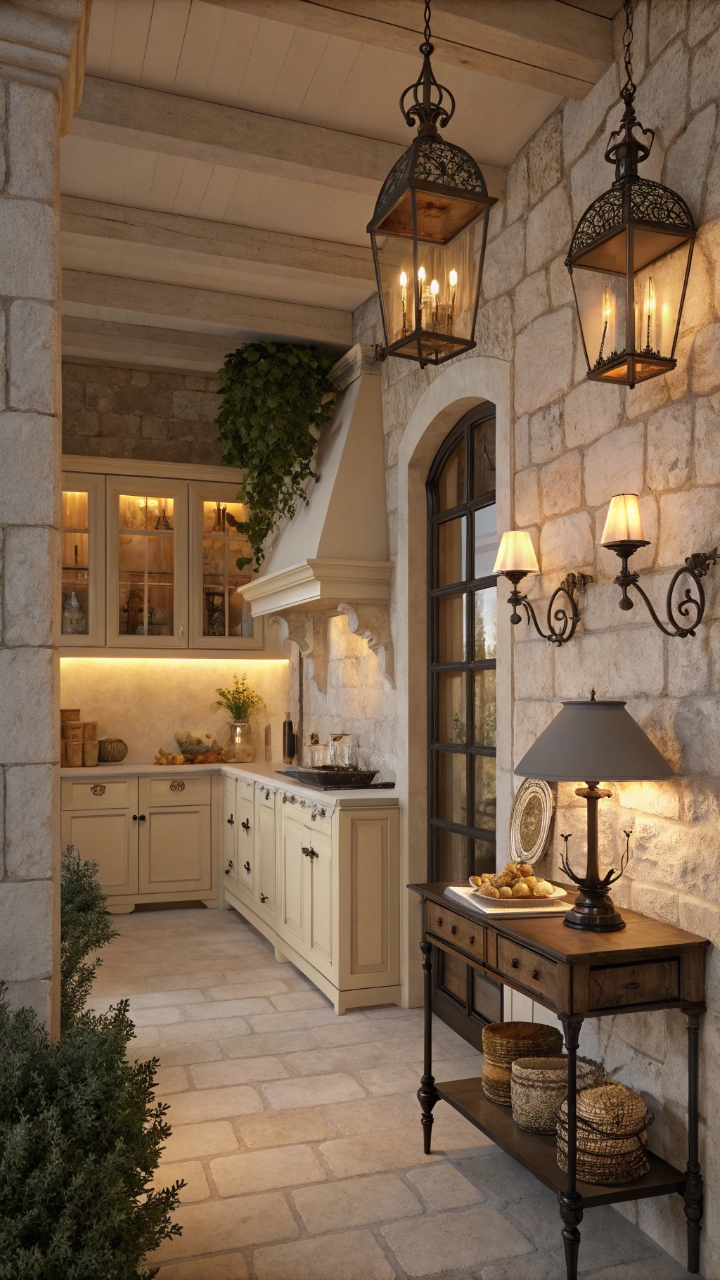
Layered lighting makes a French chateau kitchen glow, and I mean that literally and emotionally, because the right light changes everything. I love wall sconces, lantern pendants, and small lamps because they create pools of warmth instead of blasting the whole room with one harsh overhead fixture. A kitchen should feel bright when you cook, but it should also feel soft when you wander in for tea after dinner. Isn’t that cozy evening glow half the reason we fall in love with European interiors? Try lanterns over the island or table, sconces beside open shelves, and a small shaded lamp on a counter if you have the space.
Pro Tip: Use warm white bulbs and dimmers wherever possible so your kitchen can shift from practical prep space to romantic evening retreat.
Linen, Herbs, And Everyday French Details
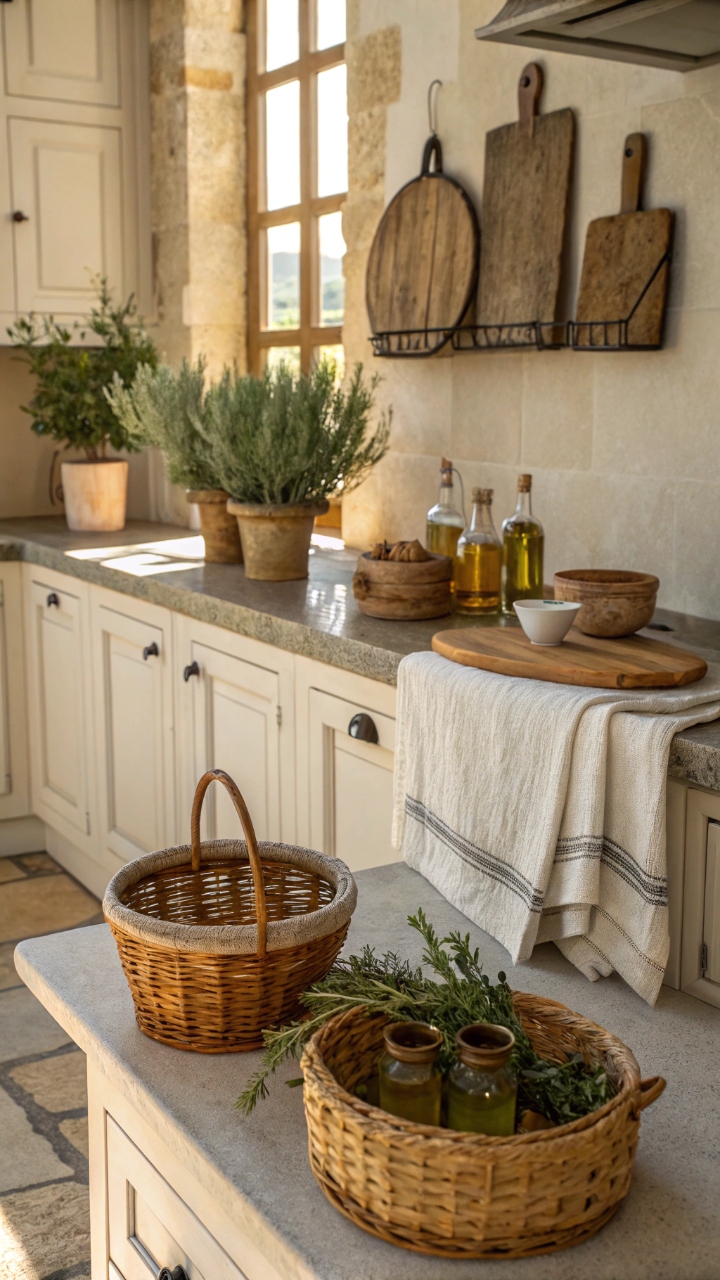
The smallest details often make a French chateau kitchen feel real, and that is where linen, herbs, baskets, and simple ceramics do their quiet little magic. I love washed linen towels, potted rosemary, woven market baskets, wooden boards, and glass jars because they add softness and function at the same time. These pieces make the kitchen smell, feel, and look more alive, especially when sunlight hits the counter in the late afternoon. Wouldn’t you rather style with things you actually use instead of decor that only sits there looking awkward? This is where the whole room gets its “oh wow, this feels like home” moment, no cap.
Pro Tip: Keep one tray or shallow basket on the counter to group herbs, oil, salt, and a linen towel so everyday essentials look beautifully intentional.
Conclusion
A French chateau kitchen does not need to be grand, expensive, or historically perfect to feel beautiful. What matters most is the feeling it creates when you walk in, touch the cool counter, hear a pan warming on the stove, and see morning light sliding across wood, stone, and linen. These kitchens remind us that home decor can hold memory, comfort, and everyday pleasure all at once. They invite us to slow down a little, cook with more presence, and let useful things become beautiful through repetition and care. I think that is why this style stays so loved, because it honors both elegance and real life. A kitchen can look stunning and still welcome crumbs, laughter, busy mornings, and imperfect dinners.
If you want to bring this look into your own home, start with one detail that makes your heart do a tiny happy flip. Maybe that means swapping shiny hardware for antique brass, adding a rustic wooden board beside the stove, hanging copper pans, or painting a thrifted hutch in a soft French blue. You do not have to renovate everything at once, and honestly, the best chateau-inspired kitchens often look better when they evolve slowly. Let your kitchen gather texture, warmth, and personal meaning over time, because that collected feeling gives European homes their magic. Choose materials that age well, colors that soothe you, and objects that make daily routines feel a little more special. In the end, the most stunning French chateau kitchen is the one that makes you want to linger.
Leave a Reply