I like traditional pizzas with tomato sauce and mozzarella, but there’s something truly refreshing about the Mediterranean version. The hummus or olive tapenade base adds a creamy texture and rich flavor that you don’t find in regular pizzas. Every ingredient feels intentional, and the mix of salty, savory, and slightly tangy notes makes it both comforting and elegant. The Mediterranean Pizza is one of those dishes that brings sunshine to your table no matter the season. With its colorful toppings, fresh herbs, and mix of creamy and tangy flavors, it’s a meal that makes you feel like you’re enjoying lunch by the sea. Every bite bursts with the taste of feta, olives, artichokes, and juicy tomatoes. It’s light yet satisfying—a true celebration of the Mediterranean spirit.
I have made this recipe many times, especially when I want something easy but still impressive. I use store-bought pizza dough when I’m in a hurry, but if I have time, I make my own dough for that homemade touch. Always drizzle a bit of olive oil on top before baking—it brings out all the flavors and gives the crust a golden, crisp finish.
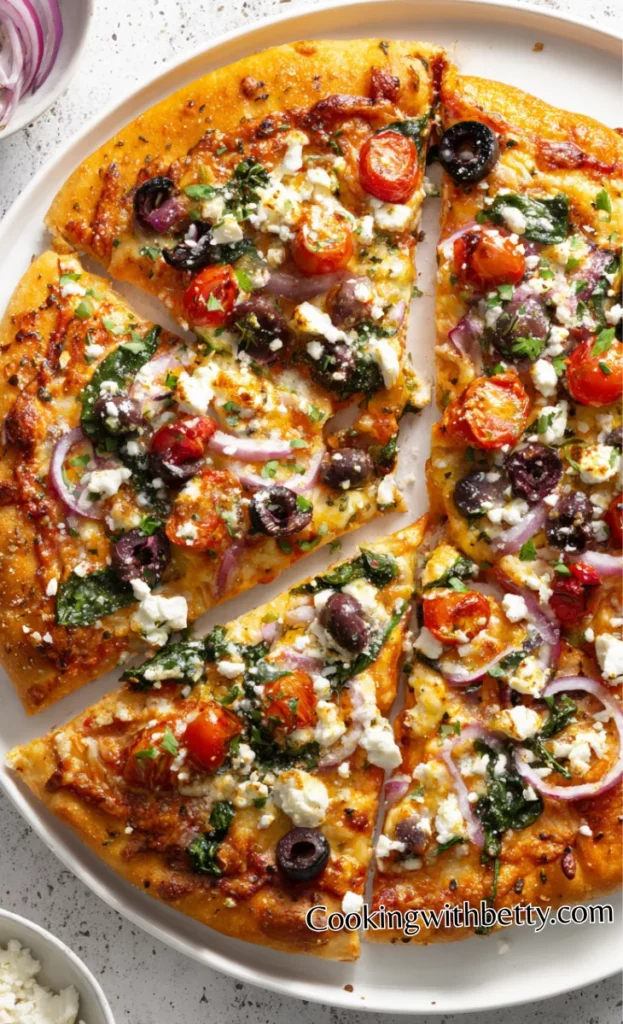
You can serve Mediterranean Pizza with a side of Greek salad, some lemony roasted potatoes, or even a bowl of creamy tzatziki. It also pairs beautifully with sparkling water infused with cucumber and mint or a glass of white wine.
It’s Perfect For:
- A cozy weekend dinner with family
- Impressing guests at small get-togethers
- Light lunches that still feel gourmet
- Vegetarian-friendly gatherings
- A quick, flavorful meal after a long day
Ingredients
- 1 prepared pizza dough (store-bought or homemade)
- 1/2 cup hummus or olive tapenade (as sauce base)
- 1 cup shredded mozzarella cheese
- 1/2 cup crumbled feta cheese
- 1/2 red onion, thinly sliced
- 1/2 cup cherry tomatoes, halved
- 1/4 cup black olives, sliced
- 1/4 cup artichoke hearts, chopped
- 1/2 cup baby spinach leaves
- 1 tablespoon olive oil
- 1 teaspoon dried oregano
- Fresh basil or parsley, for garnish
Kitchen Equipment You’ll Need
- Rolling pin or your hands to shape the dough
- Baking sheet or pizza stone
- Mixing bowl for toppings
- Measuring spoons and cups
- Pastry brush (for olive oil)
- Sharp knife or pizza cutter
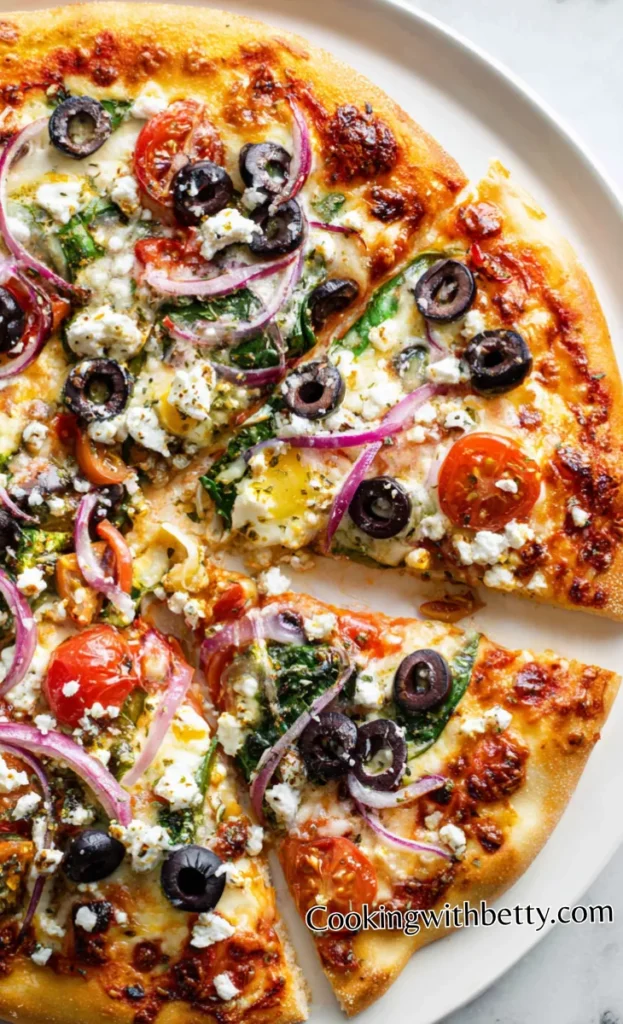
How to Make Mediterranean Pizza
Step 1
Prepare the dough: Preheat your oven to 475°F (245°C). If you’re using a pizza stone, place it in the oven to heat up. Roll out your pizza dough on a lightly floured surface until it’s about 12 inches wide. Transfer it onto parchment paper or a lightly oiled pizza pan.
Step 2
Create the base: Spread a thin, even layer of hummus or olive tapenade over the dough, leaving about an inch of crust around the edges. This sauce adds a rich Mediterranean flavor that pairs beautifully with the toppings.
Step 3
Add the toppings: Sprinkle mozzarella evenly across the surface. Then layer on the feta, red onion, cherry tomatoes, olives, and artichoke hearts. Add spinach leaves last so they wilt gently while baking. Drizzle with olive oil and sprinkle with oregano for an aromatic finish.
Step 4
Bake the pizza: Transfer the pizza to the oven and bake for 12–15 minutes, or until the crust turns golden brown and the cheese starts to melt and bubble. Keep an eye on the edges—they should be crisp but not burnt.
Step 5
Finish and serve: Once baked, remove the pizza from the oven and let it rest for about 2–3 minutes before slicing. Garnish with fresh basil or parsley for a bright, fresh finish. Cut into slices and serve warm.
Tips for the Perfect Mediterranean Pizza
- Use a hot oven. Bake your pizza at 475°F (245°C) for a crisp crust and evenly melted cheese. A preheated stone makes a big difference.
- Don’t overload the toppings. Mediterranean ingredients are flavorful on their own—less is more to keep your crust from getting soggy.
- Brush olive oil on the crust edges. It gives your pizza a golden color and enhances the aroma.
- Try blending hummus and tapenade. Mixing them creates a richer, more balanced base for your sauce.
- Use fresh vegetables. Cherry tomatoes, spinach, and red onions should be fresh for a bright taste and texture.
- Add feta at the end. Sprinkle feta after baking to keep its creamy, crumbly texture intact.
- Rest before slicing. Let your pizza sit for two minutes after baking to prevent the cheese and toppings from sliding off.
Optional Ingredients
- Sun-dried tomatoes for extra tang
- Roasted red peppers for sweetness
- Capers for a salty bite
- Fresh arugula for peppery flavor
- Grilled zucchini slices for more texture
- A drizzle of balsamic glaze before serving
How to Serve Mediterranean Pizza?
I love serving Mediterranean Pizza warm from the oven with a light drizzle of extra virgin olive oil on top. It gives the toppings a glossy finish and enhances the aroma. When entertaining, I cut it into smaller squares instead of slices—perfect for sharing and snacking with friends while chatting around the table.
I also like to serve it on a wooden pizza board or large serving platter, surrounded by small bowls of dips like tzatziki, roasted garlic aioli, or extra hummus. These sides make it feel like a restaurant experience right at home. Add a few lemon wedges for guests who enjoy a light citrus touch on their pizza—it complements the olives and feta beautifully.
If it’s a cozy dinner for two, I pair it with a fresh salad tossed in olive oil and lemon juice or roasted vegetables drizzled with balsamic glaze. For drinks, a cold glass of white wine, sangria, or even cucumber-infused sparkling water matches perfectly. The balance of creamy, tangy, and fresh flavors makes every bite feel like a Mediterranean vacation.
Is Mediterranean Pizza Healthy?
Yes, Mediterranean Pizza can be quite healthy compared to traditional pizzas. It’s loaded with vegetables, olive oil, and heart-friendly fats from olives and feta. The ingredients are fresh, natural, and nutrient-rich, which makes it a lighter meal option.
If you use whole wheat dough or a cauliflower crust, you can make it even healthier. The focus on vegetables, moderate cheese, and olive oil fits well with the Mediterranean diet, known for supporting heart health and balanced eating.
Variations and Substitutions
- Vegan Mediterranean Pizza: Replace cheese with vegan mozzarella and feta alternatives, and use hummus as the base instead of tapenade.
- Chicken Mediterranean Pizza: Add grilled or shredded chicken breast for extra protein while keeping the same toppings and flavors.
- Spicy Mediterranean Pizza: Add a sprinkle of red chili flakes or sliced jalapeños for a little kick without overpowering the herbs.
- Pita Bread Pizza: Use pita bread or flatbread instead of pizza dough for a quicker, crispier version perfect for snacks.
- Gluten-Free Mediterranean Pizza: Choose a gluten-free dough or cauliflower crust for a lighter and more digestive-friendly base.
- Mediterranean Breakfast Pizza: Add scrambled eggs and skip the feta for mozzarella—great for brunch.
- Seafood Mediterranean Pizza: Add shrimp or anchovies for a coastal twist that pairs beautifully with olives and lemon zest.
- No-Oven Skillet Pizza: Cook your pizza on a stovetop skillet for 10 minutes, then cover and steam to melt the cheese—perfect when you don’t want to use the oven.
How to Store and Reheat
To store leftover Mediterranean Pizza, let it cool completely, then place the slices in an airtight container with parchment paper between each layer. Keep it in the refrigerator for up to three days. You can also freeze individual slices for up to one month if you want to make meal prep easier.
When reheating, place the pizza on a baking sheet and warm it in the oven at 375°F (190°C) for about 8–10 minutes. This keeps the crust crisp and the cheese soft. Avoid microwaving if possible—it makes the crust chewy and the toppings watery.
Frequently Asked Questions About Mediterranean Pizza
Can I make this pizza without cheese?
Yes! Mediterranean Pizza still tastes delicious without cheese. You can use hummus or olive tapenade as your main base, which gives it a creamy texture and plenty of flavor. To make it richer, add mashed avocado or roasted eggplant spread as a dairy-free alternative.
What type of dough works best for this pizza?
Thin crust or whole wheat dough is ideal because it allows the toppings to shine and keeps the pizza light. You can also try homemade dough with olive oil—it gives a beautiful aroma and a crispy golden edge that matches the Mediterranean vibe perfectly.
Can I grill Mediterranean Pizza instead of baking it?
Absolutely! Grilling your pizza gives it a smoky, slightly charred flavor that complements the feta and olives. Brush the dough lightly with olive oil and grill for about 4–5 minutes per side on medium heat, adding toppings halfway through.
How can I make Mediterranean Pizza gluten-free or low-carb?
Use a gluten-free dough or cauliflower crust. Both are great options and hold up well under toppings. For a quicker version, you can even use gluten-free pita or tortilla wraps—it’s perfect for a lighter meal or snack.
Mediterranean Pizza
Ingredients
- 1 prepared pizza dough store-bought or homemade
- 1/2 cup hummus or olive tapenade as sauce base
- 1 cup shredded mozzarella cheese
- 1/2 cup crumbled feta cheese
- 1/2 red onion thinly sliced
- 1/2 cup cherry tomatoes halved
- 1/4 cup black olives sliced
- 1/4 cup artichoke hearts chopped
- 1/2 cup baby spinach leaves
- 1 tablespoon olive oil
- 1 teaspoon dried oregano
- Fresh basil or parsley for garnish
Instructions
- Prepare the dough: Preheat your oven to 475°F (245°C). If you’re using a pizza stone, place it in the oven to heat up. Roll out your pizza dough on a lightly floured surface until it’s about 12 inches wide. Transfer it onto parchment paper or a lightly oiled pizza pan.
- Create the base: Spread a thin, even layer of hummus or olive tapenade over the dough, leaving about an inch of crust around the edges. This sauce adds a rich Mediterranean flavor that pairs beautifully with the toppings.
- Add the toppings: Sprinkle mozzarella evenly across the surface. Then layer on the feta, red onion, cherry tomatoes, olives, and artichoke hearts. Add spinach leaves last so they wilt gently while baking. Drizzle with olive oil and sprinkle with oregano for an aromatic finish.
- Bake the pizza: Transfer the pizza to the oven and bake for 12–15 minutes, or until the crust turns golden brown and the cheese starts to melt and bubble. Keep an eye on the edges—they should be crisp but not burnt.
- Finish and serve: Once baked, remove the pizza from the oven and let it rest for about 2–3 minutes before slicing. Garnish with fresh basil or parsley for a bright, fresh finish. Cut into slices and serve warm.
Leave a Reply