Last month I prepared this pot roast for a family gathering, but the difference in a slow cooker is how effortlessly it brings everything together and allows the flavors to develop slowly and evenly. It’s a forgiving method, and in a slow cooker, even tougher cuts of beef turn soft, juicy, and flavorful without needing complicated techniques or constant checking. Slow Cooker Pot Roast is one of those comforting meals that feels like home in every bite. The meat becomes incredibly tender after hours of slow cooking, soaking up all the rich flavors from the broth, herbs, and vegetables.
It’s a simple dish that doesn’t require constant attention, yet it delivers a deeply satisfying result. I love how it fills the kitchen with a warm aroma that makes everyone eager for dinner. This recipe is perfect for busy days when you want something hearty without spending too much time in the kitchen.
I have always kept simple ingredients in my pantry and fridge, and I use fresh herbs, good quality beef, and a balanced broth always. The combination of Worcestershire sauce, garlic, and herbs gives the dish a deep savory taste without needing anything fancy or complicated. Keeping it simple is what makes this recipe truly shine.
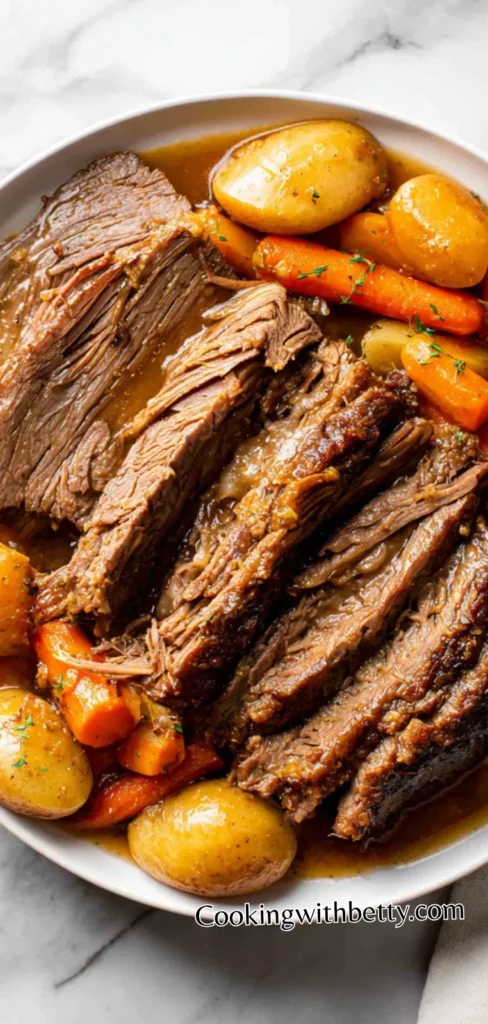
You can serve Slow Cooker Pot Roast with creamy mashed potatoes, some roasted vegetables, also with crusty bread to soak up the gravy. It pairs beautifully with a fresh green salad or even steamed rice if you prefer something lighter on the side. The gravy ties everything together and adds richness to each bite.
Its Perfect For:
- Family dinners on busy weekdays
- Cozy weekend meals at home
- Meal prep for the week ahead
- Holiday gatherings with simple sides
- Comfort food cravings during cold weather
Ingredients
- 3–4 lbs chuck roast
- 2 tablespoons olive oil
- 1 teaspoon salt
- 1/2 teaspoon black pepper
- 1 teaspoon garlic powder
- 1 teaspoon onion powder
- 1 teaspoon dried thyme
- 1 teaspoon dried rosemary
- 1 large onion, sliced
- 4 cloves garlic, minced
- 4 carrots, cut into chunks
- 4 potatoes, peeled and cut into chunks
- 2 cups beef broth
- 2 tablespoons Worcestershire sauce
- 2 tablespoons tomato paste
- 1 tablespoon cornstarch (optional, for thickening gravy)
- 2 tablespoons water (for slurry, optional)
- Fresh parsley for garnish (optional)
Kitchen Equipment You’ll Need
- Slow cooker (Crockpot)
- Large skillet for searing
- Cutting board
- Sharp knife
- Mixing bowl
- Measuring cups and spoons
- Tongs or spatula
How to make Slow Cooker Pot Roast
Step 1
Sear the roast: Heat olive oil in a large skillet over medium-high heat. Season the chuck roast evenly with salt, pepper, garlic powder, onion powder, thyme, and rosemary. Sear the roast for about 3–4 minutes per side until browned on all sides. This step helps build a deeper, richer flavor, so make sure each side develops a nice crust before moving on.
Step 2
Prepare the slow cooker: Add the sliced onions and minced garlic to the bottom of the slow cooker. Layer the carrots and potatoes over the onions to create a base that will absorb the juices while cooking. Place the seared chuck roast on top of the vegetables so it stays elevated slightly above the liquid.
Step 3
Add liquids and seasoning: In a mixing bowl, combine the beef broth, Worcestershire sauce, and tomato paste. Stir well until the tomato paste is fully dissolved and the mixture is smooth. Pour this liquid evenly over the roast and vegetables, ensuring everything is partially submerged to promote even cooking and tenderness.
Step 4
Slow cook the roast: Cover with the lid and cook on low for 8 hours or on high for 4–5 hours, until the beef is fork-tender and easily pulls apart. Avoid opening the lid frequently during cooking, as this releases heat and can slow down the process.
Step 5
Optional gravy thickening: Once the roast is done, carefully remove the beef and vegetables from the slow cooker and set them aside. In a small bowl, mix cornstarch with water to form a slurry, then stir it into the remaining cooking liquid. Let it cook on high for 5–10 minutes until the sauce thickens into a rich gravy consistency.
Step 6
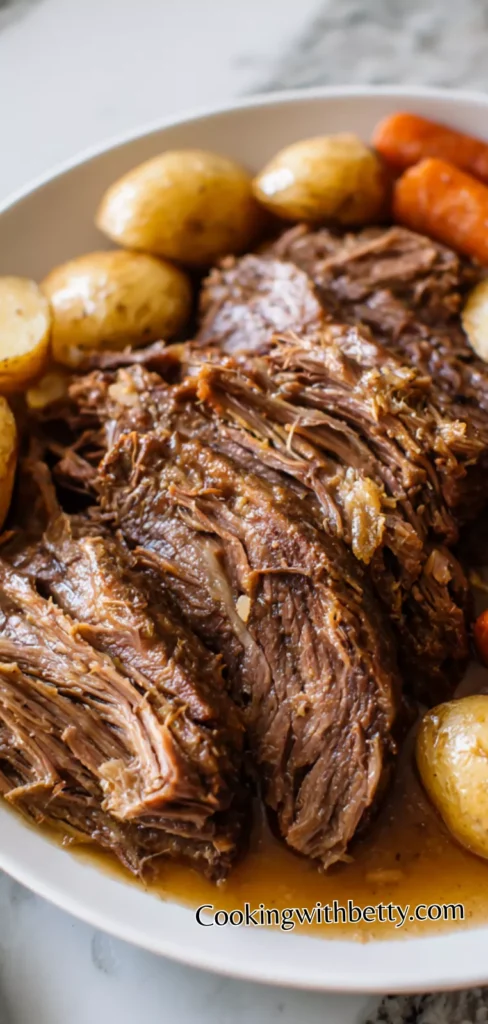
Serve the pot roast: Slice or shred the beef and arrange it with the vegetables on a serving platter. Spoon the warm gravy over the top and garnish with fresh parsley if desired. Serve hot for the best taste and texture.
How to serve Slow Cooker Pot Roast?
I like to serve Slow Cooker Pot Roast fresh and hot, right after it finishes cooking, when the meat is at its most tender and flavorful. I usually transfer the beef onto a large serving platter and gently arrange the vegetables around it, keeping everything neat and inviting. Then I spoon a generous amount of the warm gravy over the top so the meat glistens and stays moist. This simple presentation makes the dish feel comforting yet special.
I often pair it with creamy mashed potatoes, buttered noodles, or steamed rice, depending on what my family is in the mood for. The rich gravy blends beautifully with these sides, adding depth and warmth to every bite. A slice of crusty bread or dinner rolls on the side is also perfect for soaking up any extra sauce left on the plate.
I sometimes balance the richness by adding a light side dish such as a fresh green salad or lightly steamed vegetables like green beans or broccoli. This adds freshness and color to the meal while keeping it well-rounded. Serving everything family-style at the table also creates a warm and inviting dining experience where everyone can build their own plate just the way they like it.
Is Slow Cooker Pot Roast healthy?
Slow Cooker Pot Roast can be considered moderately healthy when enjoyed in balanced portions. It provides a good source of protein from the beef along with essential nutrients like iron, zinc, and vitamins from the vegetables. The slow cooking method also allows the ingredients to retain much of their natural flavor without needing excessive added fats.
To make it a bit healthier, you can trim visible fat from the roast, choose low-sodium broth, and control the amount of added salt and gravy. Including more vegetables and pairing it with lighter sides like salad or steamed greens can help balance the meal while still keeping it satisfying and hearty.
Tips
- Sear the meat before slow cooking
Browning the roast in a hot pan adds a rich flavor that enhances the final dish. It creates a caramelized crust that locks in juices and improves taste significantly.
Even though it’s optional, this step is highly recommended for better results. - Use the right cut of beef
Chuck roast is the best choice because it has enough fat and connective tissue. These break down slowly, making the meat tender and juicy after long cooking.
Avoid lean cuts, as they may turn dry and less flavorful. - Do not skip seasoning
Season the meat generously before cooking to build flavor from the inside out. Salt, pepper, and herbs help bring balance to the richness of the dish.
Proper seasoning ensures every bite is well flavored. - Layer ingredients properly
Place vegetables at the bottom and meat on top so everything cooks evenly. This allows the juices to flow down and flavor the vegetables as well.
It also prevents the meat from becoming too soggy. - Avoid lifting the lid often
Opening the slow cooker releases heat and increases cooking time. It can also affect the tenderness of the meat.
Trust the process and let it cook undisturbed. - Adjust liquid if needed
Make sure there is enough broth to keep the roast moist but not fully submerged. Too much liquid can dilute flavor, while too little can dry it out.
Find a balance for the best texture and taste. - Let it rest before serving
After cooking, allow the meat to rest for a few minutes before slicing or shredding. This helps the juices redistribute inside the meat.
Resting improves tenderness and keeps the meat juicy.
Optional Ingredients
- Red wine for deeper flavor
- Mushrooms for added earthiness
- Bay leaves for subtle aroma
- Fresh thyme instead of dried herbs
- Pearl onions for a sweeter taste
- Baby potatoes for convenience
Variations and Substitutions
- Red Wine Pot Roast
Replace part of the beef broth with red wine for a richer, deeper flavor. The wine adds complexity and enhances the overall aroma of the dish.
This variation is perfect for special occasions or when you want a more gourmet touch. - Herb-Heavy Version
Increase the amount of fresh herbs like thyme, rosemary, and parsley. Fresh herbs give a brighter and more aromatic profile.
This works well if you enjoy a more garden-fresh flavor. - Mushroom Pot Roast
Add sliced mushrooms during cooking for an earthy and savory twist. Mushrooms absorb the juices and become very flavorful.
This version adds depth and texture to the dish. - Spicy Pot Roast
Include chili flakes or a dash of hot sauce for mild heat. It balances the richness of the beef with a subtle kick.
Perfect for those who enjoy a little spice in comfort food. - Tomato-Based Version
Add crushed tomatoes or more tomato paste to create a slightly tangy gravy. This gives the dish a different flavor profile.
It pairs well with pasta or rice as a side. - Garlic Lover’s Version
Increase the amount of garlic for a stronger, more aromatic taste. Roasted garlic can also be added for sweetness.
This version is bold and very flavorful. - Low-Carb Version
Replace potatoes with cauliflower or extra non-starchy vegetables. This reduces carbohydrates while keeping the dish filling.
Great for those following low-carb diets. - Slow Cooker Creamy Pot Roast
Stir in a bit of cream or sour cream at the end for a creamy gravy. This makes the sauce richer and smoother.
It adds a luxurious texture to the final dish.
How to store Slow Cooker Pot Roast
Store leftover pot roast in an airtight container and keep it in the refrigerator for up to 3–4 days. Make sure the meat and vegetables are fully cooled before sealing to maintain freshness. Keeping the gravy with the meat helps prevent it from drying out and preserves its flavor.
For longer storage, you can freeze the pot roast in freezer-safe containers for up to 2–3 months. Divide it into portions for easier reheating later. Label the containers with the date so you can keep track of freshness.
How to reheat Slow Cooker Pot Roast
To reheat, place the pot roast in a saucepan over low to medium heat and add a little broth or water to keep it moist. Stir occasionally until heated through evenly. This helps maintain the tenderness of the meat and prevents it from drying out.
Alternatively, you can reheat it in the microwave using a covered dish. Heat in short intervals, stirring in between to ensure even warming. If frozen, thaw it overnight in the refrigerator before reheating for best results.
Frequently Asked Questions About Slow Cooker Pot Roast
Can I cook pot roast on high instead of low?
Yes, you can cook it on the high setting for about 4–5 hours if you’re short on time. However, cooking on low for 7–8 hours usually results in more tender, juicy meat. The slower process allows the connective tissues to break down more evenly, improving texture and flavor.
What cut of meat is best for pot roast?
Chuck roast is the best option because of its marbling and connective tissue. These elements melt during slow cooking and make the meat soft and flavorful. Other cuts like brisket or round roast can work, but they may not be as tender as chuck roast.
Do I need to add water to the slow cooker?
You don’t need to add plain water if you already have broth or another liquid in the recipe. The juices from the meat and vegetables will also contribute to the liquid. Adding too much liquid can dilute the flavor, so it’s best to follow the recommended amount of broth.
Can I add vegetables later in the cooking process?
Yes, softer vegetables like peas, zucchini, or green beans can be added in the last 30–60 minutes. This prevents them from becoming overly soft or mushy. Hard vegetables such as carrots and potatoes should go in at the beginning so they cook properly.
Slow Cooker Pot Roast
Ingredients
- 3 –4 lbs chuck roast
- 2 tablespoons olive oil
- 1 teaspoon salt
- 1/2 teaspoon black pepper
- 1 teaspoon garlic powder
- 1 teaspoon onion powder
- 1 teaspoon dried thyme
- 1 teaspoon dried rosemary
- 1 large onion sliced
- 4 cloves garlic minced
- 4 carrots cut into chunks
- 4 potatoes peeled and cut into chunks
- 2 cups beef broth
- 2 tablespoons Worcestershire sauce
- 2 tablespoons tomato paste
- 1 tablespoon cornstarch optional, for thickening gravy
- 2 tablespoons water for slurry, optional
- Fresh parsley for garnish optional
Instructions
- Sear the roast: Heat olive oil in a large skillet over medium-high heat. Season the chuck roast evenly with salt, pepper, garlic powder, onion powder, thyme, and rosemary. Sear the roast for about 3–4 minutes per side until browned on all sides. This step helps build a deeper, richer flavor, so make sure each side develops a nice crust before moving on.
- Prepare the slow cooker: Add the sliced onions and minced garlic to the bottom of the slow cooker. Layer the carrots and potatoes over the onions to create a base that will absorb the juices while cooking. Place the seared chuck roast on top of the vegetables so it stays elevated slightly above the liquid.
- Add liquids and seasoning: In a mixing bowl, combine the beef broth, Worcestershire sauce, and tomato paste. Stir well until the tomato paste is fully dissolved and the mixture is smooth. Pour this liquid evenly over the roast and vegetables, ensuring everything is partially submerged to promote even cooking and tenderness.
- Slow cook the roast: Cover with the lid and cook on low for 8 hours or on high for 4–5 hours, until the beef is fork-tender and easily pulls apart. Avoid opening the lid frequently during cooking, as this releases heat and can slow down the process.
- Optional gravy thickening: Once the roast is done, carefully remove the beef and vegetables from the slow cooker and set them aside. In a small bowl, mix cornstarch with water to form a slurry, then stir it into the remaining cooking liquid. Let it cook on high for 5–10 minutes until the sauce thickens into a rich gravy consistency.
- Serve the pot roast: Slice or shred the beef and arrange it with the vegetables on a serving platter. Spoon the warm gravy over the top and garnish with fresh parsley if desired. Serve hot for the best taste and texture.




Leave a Reply