Making this Thai Peanut Chicken Buddha Bowl is simple but requires attention to layering flavors properly in order to achieve the best result. The chicken needs to be cooked until juicy and lightly golden, while the peanut sauce should be smooth, creamy, and well-balanced between sweet, salty, and tangy notes. The vegetables should remain fresh and slightly crisp, not overcooked, so they provide contrast in every bite. Timing is important, but the process itself is straightforward and beginner-friendly.
Thai Peanut Chicken Buddha Bowl is a colorful, nourishing, and satisfying meal that brings together tender chicken, fresh vegetables, fluffy rice, and a rich, creamy peanut sauce. This dish is inspired by Thai flavors but adapted into a balanced bowl that is easy to prepare at home. It combines sweet, salty, tangy, and slightly spicy elements in one dish, making every bite full of contrast and depth.
I have always found that using fresh ingredients and properly seasoning each component separately makes a noticeable difference in the final taste. I use freshly minced garlic, grated ginger, and good-quality peanut butter always because these ingredients build the base of the sauce’s flavor. Keeping the rice fluffy and not overcooked is also important so it absorbs the sauce well without becoming mushy.
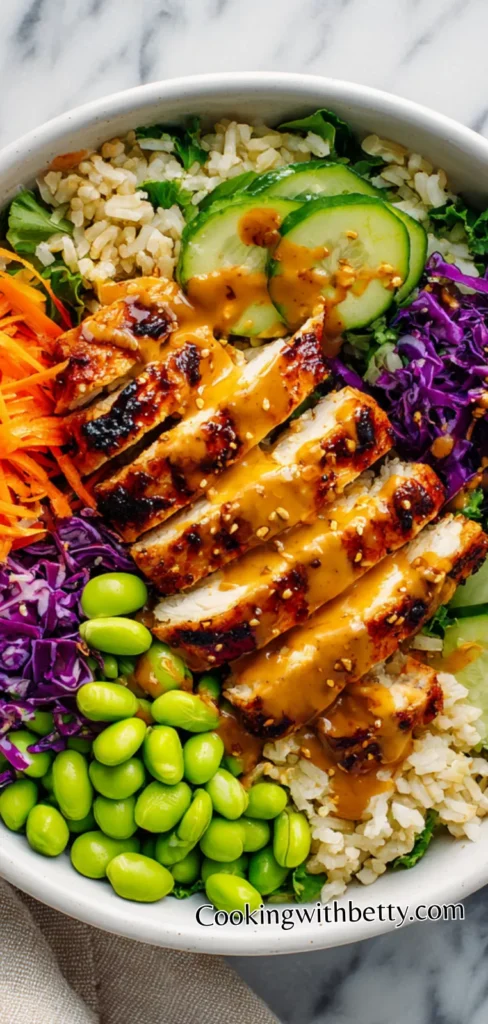
You can serve this bowl as a complete meal on its own, some people also enjoy it with extra lime wedges, also with additional chili sauce or crushed peanuts for extra crunch and heat. It works beautifully as a lunch or dinner option and can be customized easily depending on personal preference.
Its Perfect For:
- Quick weeknight dinners when you want something healthy and filling
- Meal prep for the week because it stores well and reheats easily
- Family meals where everyone can customize their own bowl
- Light yet satisfying lunches that keep you energized
- Balanced diets with protein, carbs, and vegetables in one dish
Ingredients
- 1 lb boneless, skinless chicken breast (or thighs), cut into bite-sized pieces
- 2 cups cooked jasmine rice (or brown rice/quinoa)
- 1 cup shredded carrots
- 1 cup cucumber, sliced
- 1 cup red cabbage, thinly sliced
- 1/2 cup edamame (shelled, cooked)
- 2 tablespoons olive oil
- Salt and pepper to taste
For the peanut sauce:
- 1/3 cup creamy peanut butter
- 2 tablespoons soy sauce
- 1 tablespoon lime juice
- 1 tablespoon honey or maple syrup
- 1 teaspoon sesame oil
- 1–2 teaspoons sriracha (optional, for heat)
- 1/4 cup warm water (more as needed to thin)
- 1 clove garlic, minced
- 1/2 teaspoon grated ginger
For garnish:
- 2 tablespoons chopped peanuts
- 2 tablespoons chopped fresh cilantro
- 1 tablespoon sesame seeds
- Lime wedges
Kitchen Equipment You’ll Need
- Large skillet or frying pan
- Medium mixing bowls
- Whisk or fork for mixing sauce
- Cutting board
- Sharp knife
- Measuring cups and spoons
- Rice cooker or pot for cooking rice
- Serving bowls
How to make Thai Peanut Chicken Buddha Bowl
Step 1
Prepare the peanut sauce: In a bowl, whisk together peanut butter, soy sauce, lime juice, honey, sesame oil, sriracha (if using), garlic, and ginger. Gradually add warm water while stirring until the sauce becomes smooth, creamy, and pourable. Adjust the consistency by adding a little more water if it feels too thick, or a small spoon of peanut butter if you prefer it richer. Set aside to let the flavors meld while you prepare the rest of the bowl.
Step 2
Cook the chicken: Heat olive oil in a large skillet over medium-high heat. Season the chicken pieces with salt and pepper, then add them to the pan in a single layer without overcrowding. Cook for about 6–8 minutes, stirring occasionally, until the chicken is golden on the outside and fully cooked through. Make sure all sides are evenly browned and the internal temperature is fully reached for safety and best texture.
Step 3
Warm the grains: If your rice or grain is chilled, gently reheat it in the microwave or on the stovetop with a splash of water to keep it soft and fluffy. Fluff with a fork afterward to separate the grains and improve texture before assembling the bowls.
Step 4
Assemble the bowls: Divide the rice evenly into four serving bowls. Layer the cooked chicken on top, then neatly arrange the shredded carrots, cucumber slices, red cabbage, and edamame around the bowl for a colorful, balanced presentation. This helps maintain texture contrast while keeping each ingredient distinct and fresh.
Step 5
Add the sauce and garnish: Drizzle the peanut sauce generously over each bowl, ensuring even coverage across the chicken and vegetables. Finish by sprinkling chopped peanuts, sesame seeds, and fresh cilantro on top. Serve with lime wedges on the side so each person can squeeze fresh lime juice over their bowl for a bright, citrusy finish.
Helpful Tips
- Use fresh ingredients whenever possible
Fresh vegetables and aromatics improve the flavor significantly. Crisp cabbage, fresh cucumber, and bright herbs give contrast. Avoid pre-cut vegetables if they look dry. Freshness keeps the bowl vibrant. - Do not overcook the chicken
Cook the chicken until just done to keep it juicy. Overcooking will make it dry and chewy. Stir occasionally but allow some browning for better flavor. A golden exterior improves taste. - Adjust peanut sauce consistency carefully
Add warm water gradually while mixing. This helps control thickness. Too thick will feel heavy, while too thin will not coat well. Aim for smooth and pourable texture. - Season each component separately
Lightly season chicken, vegetables, and rice individually. This builds layers of flavor throughout the bowl. Avoid relying only on the sauce for seasoning. Balanced seasoning improves depth. - Keep vegetables crisp
Do not cook the vegetables unless preferred. Raw vegetables give crunch and freshness. Slice them evenly for consistent texture. This contrast enhances the eating experience. - Taste and adjust sauce before serving
Always taste the peanut sauce before assembling. Adjust sweetness, saltiness, or acidity if needed. A small tweak can improve the overall balance of the dish. - Assemble just before serving
For best texture, assemble the bowl shortly before eating. This prevents vegetables from becoming soggy. It also keeps the rice fluffy and the chicken warm.
Optional Ingredients
- Avocado slices for creaminess
- Pickled red onions for tangy contrast
- Chili flakes for extra heat
- Fresh mint or basil for added freshness
- Crushed roasted peanuts for extra crunch
- A drizzle of extra sesame oil for deeper aroma
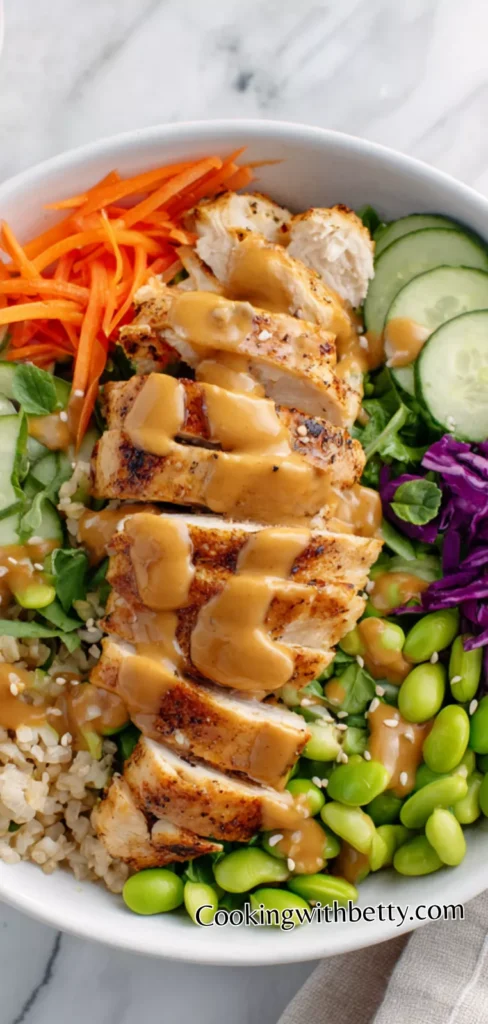
How to serve Thai Peanut Chicken Buddha Bowl?
I like to serve this dish warm with all components arranged neatly in a bowl so each ingredient is visible and easy to mix while eating. Start with a base of rice, then layer the chicken and vegetables in sections to create a visually appealing presentation. This not only looks beautiful but also allows each bite to have a mix of textures and flavors depending on how you scoop it.
I often place the peanut sauce on top as a final drizzle rather than mixing everything together in advance. This keeps the vegetables crisp and prevents the bowl from becoming too heavy or soggy. Serving the sauce separately on the side also allows everyone to add as much as they prefer, which is especially helpful when serving guests or family members with different taste preferences.
I recommend adding garnishes just before serving for the best texture and freshness. Chopped peanuts, sesame seeds, and fresh herbs bring a finishing touch that enhances both flavor and appearance. A wedge of lime on the side is also important because a squeeze of citrus brightens the entire bowl and balances the richness of the peanut sauce.
Is Thai Peanut Chicken Buddha Bowl healthy?
This Thai Peanut Chicken Buddha Bowl is considered a healthy and balanced meal because it includes a combination of lean protein, complex carbohydrates, healthy fats, and fresh vegetables. The chicken provides protein that supports muscle health, while the vegetables add fiber, vitamins, and minerals. The peanut sauce contributes healthy fats, which help keep you full and satisfied for longer periods.
Although the sauce contains peanut butter, which is calorie-dense, it is used in moderation and balanced with other nutritious ingredients. By controlling portion sizes and using natural ingredients like honey instead of refined sugar, the overall dish remains wholesome. It can also be adjusted to suit specific dietary needs, such as using brown rice for more fiber or reducing sodium in the sauce.
Variations and Substitutions
- Swap chicken with tofu
Use firm tofu instead of chicken for a vegetarian version. Press and pan-fry the tofu until crispy. It absorbs the peanut sauce well. This keeps the dish plant-based and protein-rich. - Use shrimp instead of chicken
Shrimp cooks quickly and adds a slightly sweet seafood flavor. Sauté for just a few minutes until pink and opaque. It works well with the peanut sauce. - Replace rice with quinoa
Quinoa adds extra protein and a slightly nutty taste. It also provides a lighter texture. This option is great for a gluten-free and high-protein version. - Make it low-carb with cauliflower rice
Cauliflower rice reduces carbohydrates while maintaining volume. Lightly sauté it or use it raw for a fresh base. It keeps the bowl light and healthy. - Add noodles instead of rice
Rice noodles or soba noodles can replace rice for a different texture. Toss them lightly with the sauce for better flavor distribution. This turns the bowl into a noodle-style dish. - Make it vegan
Replace chicken with tofu or chickpeas and use maple syrup instead of honey. Ensure the peanut sauce is plant-based. This keeps the dish fully vegan. - Adjust spice level
Increase or decrease sriracha in the sauce depending on preference. Add chili flakes for extra heat. Keep it mild for a family-friendly version. - Use different vegetables
Swap cabbage and cucumber with bell peppers, zucchini, or snap peas. This allows flexibility based on what you have available. Seasonal vegetables work best for freshness.
How to store, How to reheat
To store Thai Peanut Chicken Buddha Bowl, keep each component in separate airtight containers in the refrigerator. This helps maintain texture and prevents the vegetables from becoming soggy. The chicken, rice, and peanut sauce can be stored for up to 3–4 days. Vegetables should ideally be kept fresh and added when serving.
To reheat, warm the chicken and rice separately in the microwave or on the stovetop until heated through. Avoid overheating the vegetables; instead, add them fresh after reheating the warm components. The peanut sauce can be used cold or slightly warmed if it has thickened. If needed, stir in a small amount of warm water to restore its smooth consistency before drizzling over the bowl.
Frequently Asked Questions About Thai Peanut Chicken Buddha Bowl
Can I make the peanut sauce ahead of time?
Yes, the peanut sauce can be prepared in advance and stored in an airtight container in the refrigerator for up to 5 days. As it sits, it may thicken slightly due to the natural ingredients. When ready to use, simply stir it well and add a small amount of warm water to bring it back to a smooth, pourable consistency. This makes it very convenient for meal prep and quick assembly during busy days.
Can I serve this bowl cold?
Yes, this Thai Peanut Chicken Buddha Bowl can be enjoyed cold, at room temperature, or warm depending on your preference. It works especially well as a cold lunch option because the flavors continue to develop after chilling. If serving cold, make sure the chicken is fully cooked and properly stored beforehand, and keep the vegetables fresh and crisp for the best texture and taste.
What type of peanut butter should I use?
Creamy peanut butter is the best choice for achieving a smooth and well-blended sauce. Natural peanut butter is also a great option, but it may require extra mixing before use since the oils can separate. Try to choose a peanut butter with minimal added sugar or preservatives so the flavor stays balanced and not overly sweet. Stir thoroughly to ensure the sauce mixes evenly.
Can I make this dish gluten-free?
Yes, this recipe can easily be made gluten-free by using gluten-free soy sauce or tamari in the peanut sauce. Double-check all packaged ingredients to ensure they do not contain hidden gluten additives. All the other core ingredients such as chicken, vegetables, rice, and peanut butter are naturally gluten-free, making this a safe and satisfying option for gluten-sensitive diets.
Thai Peanut Chicken Buddha Bowl
Ingredients
- 1 lb boneless skinless chicken breast (or thighs), cut into bite-sized pieces
- 2 cups cooked jasmine rice or brown rice/quinoa
- 1 cup shredded carrots
- 1 cup cucumber sliced
- 1 cup red cabbage thinly sliced
- 1/2 cup edamame shelled, cooked
- 2 tablespoons olive oil
- Salt and pepper to taste
For the peanut sauce:
- 1/3 cup creamy peanut butter
- 2 tablespoons soy sauce
- 1 tablespoon lime juice
- 1 tablespoon honey or maple syrup
- 1 teaspoon sesame oil
- 1 –2 teaspoons sriracha optional, for heat
- 1/4 cup warm water more as needed to thin
- 1 clove garlic minced
- 1/2 teaspoon grated ginger
For garnish:
- 2 tablespoons chopped peanuts
- 2 tablespoons chopped fresh cilantro
- 1 tablespoon sesame seeds
- Lime wedges
Instructions
- Prepare the peanut sauce: In a bowl, whisk together peanut butter, soy sauce, lime juice, honey, sesame oil, sriracha (if using), garlic, and ginger. Gradually add warm water while stirring until the sauce becomes smooth, creamy, and pourable. Adjust the consistency by adding a little more water if it feels too thick, or a small spoon of peanut butter if you prefer it richer. Set aside to let the flavors meld while you prepare the rest of the bowl.
- Cook the chicken: Heat olive oil in a large skillet over medium-high heat. Season the chicken pieces with salt and pepper, then add them to the pan in a single layer without overcrowding. Cook for about 6–8 minutes, stirring occasionally, until the chicken is golden on the outside and fully cooked through. Make sure all sides are evenly browned and the internal temperature is fully reached for safety and best texture.
- Warm the grains: If your rice or grain is chilled, gently reheat it in the microwave or on the stovetop with a splash of water to keep it soft and fluffy. Fluff with a fork afterward to separate the grains and improve texture before assembling the bowls.
- Assemble the bowls: Divide the rice evenly into four serving bowls. Layer the cooked chicken on top, then neatly arrange the shredded carrots, cucumber slices, red cabbage, and edamame around the bowl for a colorful, balanced presentation. This helps maintain texture contrast while keeping each ingredient distinct and fresh.
- Add the sauce and garnish: Drizzle the peanut sauce generously over each bowl, ensuring even coverage across the chicken and vegetables. Finish by sprinkling chopped peanuts, sesame seeds, and fresh cilantro on top. Serve with lime wedges on the side so each person can squeeze fresh lime juice over their bowl for a bright, citrusy finish.
Leave a Reply