From time to time, I love trying new desserts, but nothing in my kitchen is as comforting as a slice of Greek Baklava. The combination of golden layers, aromatic spices, and sweet syrup is timeless and brings back warm memories of family celebrations and Sunday desserts. Making it may seem complicated at first, but with a little patience, the process is straightforward and incredibly rewarding.
Greek Baklava is one of the most famous desserts from Greece. It is a rich, sweet pastry made with layers of crispy phyllo dough, filled with finely chopped nuts, and soaked in a fragrant honey-lemon syrup. Every bite melts in your mouth, with a perfect balance of crunchiness and sticky sweetness. It’s a treat that is both elegant and comforting, perfect for holidays, family gatherings, or even a cozy afternoon tea.
I have been making baklava for years, and I use fresh nuts, real butter, and pure honey whenever possible. Always brush each phyllo sheet with butter to ensure it bakes crispy and golden. I also like to add a touch of cinnamon and cloves to the nut mixture for a deeper flavor that lingers on the palate.
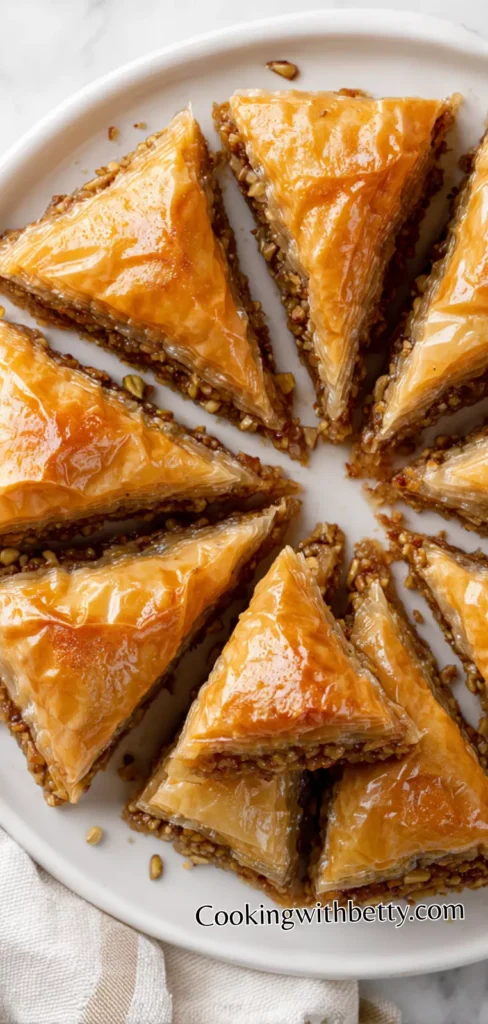
You can serve Greek Baklava on its own, with a cup of strong coffee or black tea. Some people enjoy it with a dollop of whipped cream, or even a small scoop of vanilla ice cream for an indulgent twist. Also, adding a few chopped pistachios on top makes it look festive and adds extra crunch.
It’s Perfect For:
- Family celebrations and Sunday gatherings
- Holiday desserts like Christmas or Easter
- Afternoon tea or coffee with friends
- Special occasions such as birthdays or anniversaries
- Impressing guests at dinner parties
Ingredients
- 1 package (16 oz) phyllo dough, thawed
- 2 cups unsalted butter, melted
- 2 1/2 cups walnuts, finely chopped
- 1/2 cup almonds, finely chopped (optional)
- 1 teaspoon ground cinnamon
- 1/4 teaspoon ground cloves
- 1 cup granulated sugar
- 1 teaspoon vanilla extract
- 1 cup water
- 1/2 cup honey
- Zest of 1 lemon
- 1 tablespoon lemon juice
Kitchen Equipment You’ll Need
- 9×13-inch baking pan
- Pastry brush for butter
- Medium mixing bowls
- Sharp knife for cutting baklava
- Small saucepan for syrup
- Measuring cups and spoons
- Oven and cooling rack
How to Make Greek Baklava
Step 1
Prepare the nut filling: In a medium bowl, combine chopped walnuts, almonds (if using), cinnamon, and cloves. Mix well so the spices are evenly distributed. Set aside.
Step 2
Prepare the phyllo layers: Preheat the oven to 350°F (175°C). Unroll the phyllo dough carefully and cover with a slightly damp towel to prevent it from drying out. Brush a 9×13-inch baking pan generously with melted butter.
Step 3
Layer the phyllo and nuts: Place one sheet of phyllo in the pan and brush it lightly with melted butter. Repeat this process for about 6 sheets, layering butter between each sheet. Spread a thin layer of the nut mixture evenly over the phyllo. Continue layering 5–6 sheets of buttered phyllo on top, then another layer of nuts. Repeat until all nuts are used, finishing with a top layer of 6–8 buttered phyllo sheets. Make sure every sheet is brushed with butter for a crisp, golden finish.
Step 4
Cut before baking: Using a sharp knife, cut the baklava into diamond or square shapes all the way through to the bottom of the pan. This ensures easy serving after baking.
Step 5
Bake the baklava: Place the pan in the preheated oven and bake for 45–50 minutes, or until the top is golden brown and crisp. Keep an eye on the edges to prevent over-browning.
Step 6
Prepare the syrup: While the baklava is baking, combine sugar, water, honey, lemon zest, and lemon juice in a medium saucepan. Bring to a boil, then reduce heat and simmer for 10 minutes. Remove from heat and let cool slightly.
Step 7
Pour syrup over baklava: Once the baklava is out of the oven, immediately pour the warm syrup evenly over the hot pastry. Allow the baklava to absorb the syrup for several hours or overnight at room temperature. This creates the signature sweet, sticky layers.
Step 8
Serve: Arrange the baklava on a serving plate, making sure the syrup has soaked into each piece. Optionally, garnish with a few finely chopped nuts or a light drizzle of extra honey. Serve at room temperature and enjoy this classic Greek dessert!
Tips for Making Perfect Baklava
- Always thaw phyllo dough completely before using. Cover sheets with a damp towel to prevent drying out. Work quickly to keep layers flexible.
- Chop nuts finely but not into dust. A slight texture gives the baklava a better crunch and mouthfeel.
- Brush each phyllo sheet generously with melted butter. Skipping this step will make the pastry dry and less golden.
- Cut the baklava before baking. This ensures even pieces and makes serving much easier.
- Use fresh honey and lemon for the syrup. It adds brightness and balances the sweetness naturally.
- Let syrup cool slightly before pouring over hot baklava. This prevents it from becoming soggy while still absorbing flavor.
- Allow the baklava to rest for several hours or overnight. The flavors deepen, and the layers hold together beautifully.
Optional Ingredients
- Almonds instead of walnuts for a milder taste
- Pistachios for color and extra crunch
- Ground nutmeg for subtle warmth
- Orange zest for citrus fragrance
- Clove powder for aromatic spice
- Maple syrup in place of honey for a twist
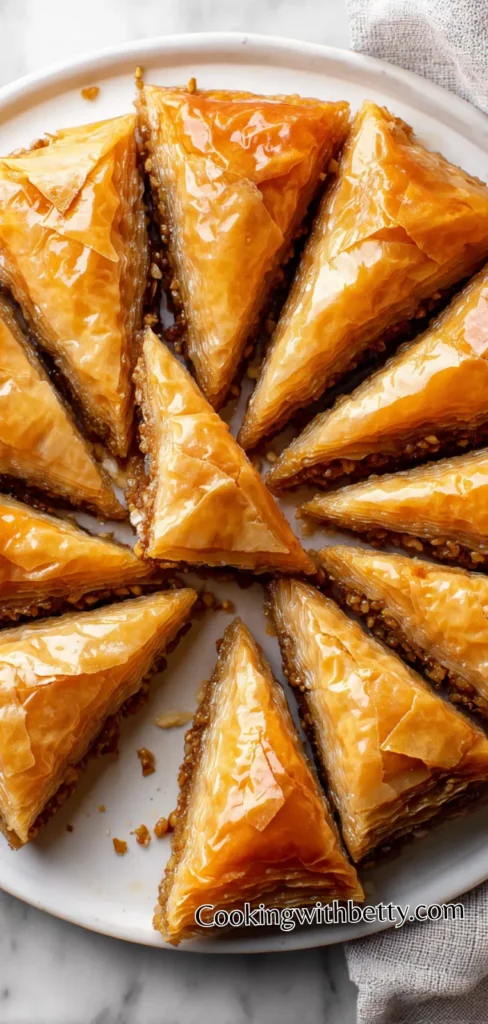
How to Serve Greek Baklava
I love serving baklava at room temperature because this allows the syrup to fully soak into the layers, creating that perfect balance of crispiness and sweetness. I usually arrange the pieces on a decorative platter, making sure the diamond shapes are clearly defined for a beautiful presentation. Each slice looks elegant and inviting, perfect for family gatherings or holiday tables.
I sometimes pair baklava with a small cup of strong Greek coffee, black tea, or even lightly spiced chai. The slight bitterness of the drinks balances the richness of the nuts and syrup perfectly. For an extra touch of indulgence, I like to serve a scoop of creamy vanilla ice cream or a dollop of lightly whipped cream alongside the baklava. Crushed pistachios or a small drizzle of honey on top make it look festive and add extra flavor.
I also enjoy giving baklava as a gift or serving it at parties. I place individual pieces in small boxes or clear cellophane bags tied with ribbons. It makes the dessert feel extra special, and it’s always a hit with friends and family. Watching everyone’s eyes light up as they enjoy a bite of this sweet, layered pastry is one of my favorite moments in the kitchen.
Is Greek Baklava Healthy?
Baklava is rich and sweet, so it should be enjoyed in moderation. The nuts provide protein, healthy fats, and fiber, while honey adds natural sweetness. Though it is not a low-calorie dessert, using real ingredients makes it better than store-bought alternatives.
In small portions, Greek Baklava can fit into a balanced diet. The combination of nuts and honey has some nutritional benefits, and the phyllo layers are lighter than other pastries. Moderation and mindfulness make it an occasional indulgence without guilt.
Variations and Substitutions
- Walnut & Almond Baklava: Swap half the walnuts with almonds. The taste is milder and nutty, perfect for those who prefer less intense flavor.
- Pistachio Baklava: Replace walnuts with pistachios. This gives a green color, slightly sweeter flavor, and a festive look.
- Chocolate Drizzle Baklava: Add melted chocolate on top after syruping. It creates a decadent twist for chocolate lovers.
- Orange Honey Baklava: Mix orange zest in syrup. Adds a citrusy aroma that brightens the dessert.
- Maple Baklava: Use maple syrup instead of honey. Slightly less sticky, but adds a rich, earthy sweetness.
- Vegan Baklava: Replace butter with coconut oil and honey with agave syrup. It’s plant-based but still delicious.
- Spiced Baklava: Add nutmeg, cardamom, or allspice to the nut mix. Provides a warm, aromatic flavor.
- Mini Baklava Cups: Use phyllo cups instead of sheets. Perfect for serving at parties or as bite-sized treats.
How to Store and Reheat
Store baklava in an airtight container at room temperature. Avoid refrigeration as it can harden the syrup and dry the pastry. Properly stored, it lasts up to 5 days. You can also freeze it for longer storage; thaw at room temperature before serving.
To reheat, place baklava in a preheated oven at 300°F (150°C) for 5–10 minutes. This restores crispness without melting the syrup. Avoid microwaving, as it can make the pastry soggy.
Frequently Asked Questions About Greek Baklava
Can I use other nuts besides walnuts?
Yes! Almonds, pistachios, or a mix of your favorite nuts can work beautifully. Using a combination creates more texture and layers of flavor. I often mix walnuts and pistachios for a colorful, nutty presentation that also tastes delicious.
Do I have to use phyllo dough?
Traditional baklava uses phyllo because it bakes into light, crisp layers that absorb syrup perfectly. Puff pastry or filo alternatives can be used, but the texture will be heavier and less delicate. For authentic Greek baklava, phyllo is the best choice.
Can baklava be made ahead?
Absolutely! Baklava actually tastes better if made ahead because the syrup has time to soak in and the flavors blend beautifully. I often bake it a day before serving and let it rest at room temperature. Just store it in an airtight container to keep it fresh and crisp.
How do I make syrup without sugar?
You can substitute sugar with honey or maple syrup for a more natural sweetness. Reduce the liquid slightly to ensure it’s thick enough for soaking. Adjust the sweetness to your preference and add lemon or orange zest for extra flavor.
Greek Baklava
Ingredients
- 1 package 16 oz phyllo dough, thawed
- 2 cups unsalted butter melted
- 2 1/2 cups walnuts finely chopped
- 1/2 cup almonds finely chopped (optional)
- 1 teaspoon ground cinnamon
- 1/4 teaspoon ground cloves
- 1 cup granulated sugar
- 1 teaspoon vanilla extract
- 1 cup water
- 1/2 cup honey
- Zest of 1 lemon
- 1 tablespoon lemon juice
Instructions
- Prepare the nut filling: In a medium bowl, combine chopped walnuts, almonds (if using), cinnamon, and cloves. Mix well so the spices are evenly distributed. Set aside.
- Prepare the phyllo layers: Preheat the oven to 350°F (175°C). Unroll the phyllo dough carefully and cover with a slightly damp towel to prevent it from drying out. Brush a 9×13-inch baking pan generously with melted butter.
- Layer the phyllo and nuts: Place one sheet of phyllo in the pan and brush it lightly with melted butter. Repeat this process for about 6 sheets, layering butter between each sheet. Spread a thin layer of the nut mixture evenly over the phyllo. Continue layering 5–6 sheets of buttered phyllo on top, then another layer of nuts. Repeat until all nuts are used, finishing with a top layer of 6–8 buttered phyllo sheets. Make sure every sheet is brushed with butter for a crisp, golden finish.
- Cut before baking: Using a sharp knife, cut the baklava into diamond or square shapes all the way through to the bottom of the pan. This ensures easy serving after baking.
- Bake the baklava: Place the pan in the preheated oven and bake for 45–50 minutes, or until the top is golden brown and crisp. Keep an eye on the edges to prevent over-browning.
- Prepare the syrup: While the baklava is baking, combine sugar, water, honey, lemon zest, and lemon juice in a medium saucepan. Bring to a boil, then reduce heat and simmer for 10 minutes. Remove from heat and let cool slightly.
- Pour syrup over baklava: Once the baklava is out of the oven, immediately pour the warm syrup evenly over the hot pastry. Allow the baklava to absorb the syrup for several hours or overnight at room temperature. This creates the signature sweet, sticky layers.
- Serve: Arrange the baklava on a serving plate, making sure the syrup has soaked into each piece. Optionally, garnish with a few finely chopped nuts or a light drizzle of extra honey. Serve at room temperature and enjoy this classic Greek dessert!
Leave a Reply